Butterfly Network
Butterfly Network handheld point-of-care ultrasound: single-probe whole-body POCUS with on-device AI like Auto Bladder Volume and Auto
Butterfly is the handheld POCUS pick for clinicians who want one probe covering the whole body, and the iQ3 is the version to buy unless the $2,699 iQ+ price is decisive. Auto Bladder Volume and Auto B-Lines do genuine clinical work, and CompassAI turns a fleet of probes into a managed program. The tradeoff is honest: advanced echo and deep abdominal imaging still belong on a cart, and membership costs ride on top of the probe price.
Verified 1d ago · liveness 70/100 · cite: rightaichoice.com/tools/butterfly-network
- Emergency physicians needing fast bedside FAST, lung and bladder ultrasound during assessment
- Hospitalists and intensivists performing daily POCUS on rounds
- Primary care providers adding ultrasound to office visits without buying a cart
- Health systems standardizing a POCUS program on CompassAI documentation, QA and billing
- Advanced echocardiography needing 3D or strain imaging — a cart system is the right tool
- High-resolution deep abdominal or vascular exams that require specialty probes
- Cardiology specialists who want a dedicated phased-array probe instead of a whole-body handheld
We scan live Reddit threads, YouTube comments, X posts, G2 reviews and other communities — and hand you an honest verdict in under a minute.
- Honest verdict, not marketing
- Real pros & cons from real users
- Attributed quotes with receipts
3 free scans · no card needed
Skip Butterfly if your work is advanced echocardiography, 3D or strain imaging, or high-resolution deep abdominal and vascular exams, where a cart with specialty probes remains the right tool.
The probe price is only the entry ticket — Core Technology adds $299/yr on top of $3,899 or $2,699, so total ownership is higher than the sticker you see on the buy page
Butterfly sits in the affordable end of handheld POCUS: $3,899 for an iQ3 probe plus $299/yr Core or $420/yr Advanced is well under a traditional cart system, and beneath handheld competitors sold as capital equipment with service contracts. It is not the cheapest handheld route — the recurring membership is what separates it from a one-time-purchase device — but the bundled Academy courses and CompassAI software give you capability the cheaper probe-only options do not include.
In short
Butterfly Network — Butterfly Network handheld point-of-care ultrasound: single-probe whole-body POCUS with on-device AI like Auto Bladder Volume and Auto. Best for Emergency physicians needing fast bedside FAST, lung and bladder ultrasound during assessment, Hospitalists and intensivists performing daily POCUS on rounds, Primary care providers adding ultrasound to office visits without buying a cart. Plans from $2,699/yr.
No head-to-head comparison for Butterfly Network yet — the alternatives below are the closest matches we list.
What's new in Butterfly Network
Checked 2 days agoAcross the latest 4 updates: 3 launches and 1 pricing change.
Introducing iQ3 Vet – Next-Gen Veterinary Imaging Solution
Butterfly launched iQ3 Vet, an all-species veterinary ultrasound solution based on the iQ3 probe, expanding its market beyond human medicine into animal care.
Introducing Butterfly Move – All-in-One POCUS Cart
Butterfly introduced its first all-in-one POCUS cart, integrating the iQ3 probe for stationary hospital use alongside the handheld lineup.
CompassAI Enterprise Workflow Platform Now Available
CompassAI, an enterprise platform for managing ultrasound programs across documentation, billing and analytics, became available to health systems.
Trade-In Program: Up to $1,500 Credit Toward iQ3
Existing iQ and iQ+ owners can get up to $1,500 credit when upgrading to the third-generation iQ3 probe.
What people actually say about Butterfly Network — is it worth it?
We scanned public community sources for Butterfly Network on Oct 9, 2026 and could not establish that the discussion we found is about this tool rather than something else sharing its name. Only 1 of the posts we fetched could be positively tied to Butterfly Network. Rather than publish a sentiment score built on the wrong subject, we publish nothing here and re-run the scan.
Viability Score
How well maintained and how widely used is Butterfly Network? Built from what the vendor actually publishes (docs, changelog, tutorials, integrations, pricing), whether the site is live, and how much real users discuss it. How we calculate this
Last calculated: October 2026
How we score →Key Features
- Single-probe whole-body handheld ultrasound for bedside POCUS
- Ultrasound-on-Chip semiconductor technology replaces multiple piezoelectric probes
- iQ3 third-generation probe with double the processing power of iQ+
- Connects to a compatible iPhone or Android smartphone or tablet
- Auto Bladder Volume delivers automated volume calculations with 3D visualization in seconds
- Auto B-Line Counter produces a B-line count from a six-second ultrasound clip
- iQ Slice captures multiple images across a wide angle from one held probe position (iQ3 only)
- iQ Fan lung-dedicated real-time virtual tilting (iQ3 only)
- Needle Viz highlights needles in-plane for injections and line placement
- Needle: Out-of-Plane preset for needle tip visualization within 1 mm (iQ3 only)
- Subxiphoid Tilt angles the beam to reduce shallow-angle pressure during capture (iQ3 only)
- Biplane Imaging shows long and short axes simultaneously for MSK, nerve, soft tissue and vascular access
- Power Doppler and Pulsed-Wave Doppler (Advanced Technology membership)
- M-Mode, Color Doppler, OB Calculations, Manual Gastric Volume Calculation and Umbilical Artery Doppler Labeling
- Velocity-Time Integral and Cardiac Output modes (iQ3 only)
About Butterfly Network
Butterfly Network sells handheld point-of-care ultrasound (POCUS) built on Ultrasound-on-Chip semiconductor technology, which puts whole-body imaging into one probe instead of the multiple piezoelectric probes a traditional cart requires. The probe pairs with a compatible iPhone or Android phone or tablet, so exams happen at the bedside, in clinic, or in the field. The current lineup spans the third-generation iQ3 (double the processing power and clearer images than its predecessor, plus extended battery life), the second-generation iQ+ for a lower entry price, the iQ+ Bladder bladder scanner, and iQ3 Vet for all-species veterinary imaging. Butterfly Move, the company's first all-in-one POCUS cart, serves stationary hospital use. On-device AI does clinical work rather than demo work. Auto Bladder Volume returns automated volume calculations with 3D visualization in seconds, and Auto B-Line Counter produces a B-line count from a six-second clip to support dyspnea assessment. Advanced Technology memberships add Power Doppler and Pulsed-Wave Doppler plus imaging tools including iQ Slice, iQ Fan, Biplane Imaging, Needle Viz, Needle: Out-of-Plane, Subxiphoid Tilt and VTI/Cardiac Output — most of those are iQ3-exclusive. Above the probe sits CompassAI, the enterprise layer that centralizes documentation, quality assurance, billing and analytics for a whole ultrasound program, plus Butterfly Academy for assigned curricula, TeleGuidance for remote peer support, and an AI Marketplace with a developer program. Butterfly reports 145,000+ customers worldwide across emergency departments, ICUs, operating rooms, outpatient clinics and resource-limited settings. Positioning matters at purchase time: single-probe convenience and a price far below conventional cart systems come with a fidelity ceiling, and dedicated carts still win for advanced echo and deep abdominal work. Buyers also need to budget the membership, not just the probe.
Behind the Verdict
Start with where this fits. Butterfly is the pick when a clinician needs ultrasound during the assessment itself, at the bedside or in the field, and waiting for an x-ray, CT or the shared cart system slows the decision down. Emergency physicians, hospitalists, intensivists, anesthesiologists, primary care and nursing staff all show up in Butterfly's own customer list for exactly that reason. Pass when the exam demands fidelity the platform can't deliver. Advanced echocardiography, deep abdominal and vascular work needing specialty probes still argue for a cart. If a phased-array probe is what a cardiologist wants, the whole-body approach is the wrong compromise. The closest alternative isn't another handheld — it's the cart already in the department. Butterfly's argument is cost and immediacy: one probe, software modes, and a price far under conventional systems. The counter-argument is image quality and workflow depth, and that's a clinical call, not a spreadsheet one. We'd reach for the iQ3 over the iQ+ in most purchases. The $3,899 probe carries a three-year warranty against the iQ+'s one year, and the useful advanced tools — iQ Slice, iQ Fan, Needle: Out-of-Plane, Subxiphoid Tilt, VTI and Cardiac Output — are iQ3-only. The $1,200 gap buys more than pixels. Membership is where buyers misjudge the total cost. Core Technology runs $299/yr and covers 20+ clinical applications, M-Mode and Color Doppler, unlimited cloud storage and Butterfly Academy courses. Advanced Technology adds the Doppler modes and the advanced imaging and AI tools for $420/yr, or $1,500 as a one-time payment with software access guaranteed for five years. Run five-year math before choosing. Two operational caveats. Online purchase caps at two probes under the memberships and one probe with
Researching Butterfly Network? Get your full AI stack in 60 seconds.
Free, no signup — tell us your goal and get tools matched to your budget & existing stack.
Real-world workflow fit
Concrete scenarios for the personas Butterfly Network actually fits — and what changes day-one when you adopt it.
You pull the iQ3 from a coat pocket, launch the app on your phone, and run a FAST exam plus a lung assessment on a hypotensive patient. Auto B-Line Counter turns a six-second clip into a countable number to support the dyspnea workup, and you share the study via de-identified link to the attending for a consult.
Outcome: Bedside assessment without waiting on x-ray or CT, with a documented, shareable study and an objective B-line count for the record.
Each morning you scan a patient's bladder to assess retention using Auto Bladder Volume, which returns a 3D visualization and volume in seconds rather than requiring manual measurement. You annotate with real-time commenting and the study syncs to unlimited cloud storage.
Outcome: Consistent daily measurements that less-experienced scanners can reproduce, with documentation that supports billing and QA review.
You use Needle Viz to highlight the needle in-plane during a challenging injection, and Needle: Out-of-Plane for earlier needle-tip visualization within 1 mm of entry. If you need a second opinion mid-procedure, TeleGuidance connects a remote peer to your bedside view.
Outcome: Better first-pass success on vascular access and regional anesthesia, with remote expert backup available in real time.
Use Cases
- Emergency department FAST exams and cardiac assessment at the bedside
- Rural clinic point-of-care imaging for triage and diagnosis
- Primary care bladder volume measurement and MSK evaluation
- Anesthesiology guided procedures and vascular access
- Intensivist and hospitalist daily POCUS on rounds in ICU and OR settings
- OB/GYN limited obstetric exams with gestational age tool
- Medical education: scan training and certification programs with assigned curricula
- Veterinary imaging for all species with iQ3 Vet
Limitations
- The iQ3 and iQ+ are handheld point-of-care probes priced at $3,899 and $2,699 respectively, and each requires a membership to unlock the full mode set: Core Technology at $299/yr, or Advanced Technology at $420/yr (or $1,500 one-time).
- Power Doppler, Pulsed-Wave Doppler, iQ Slice, iQ Fan, Biplane, Needle Viz and the AI tools all sit behind Advanced.
- Most advanced imaging packages are iQ3-exclusive, so choosing iQ+ to save money also costs you those features.
- The perpetual Advanced option guarantees software access for five years and allows a one-probe online purchase, versus two probes on the annual plans.
- Handheld fidelity is the structural ceiling — this is a point-of-care assessment device, not a replacement for a cart in advanced echo or deep abdominal imaging.
- The provided evidence does not detail specific image-quality limits beyond that positioning.
as of 2026-09-28
Verification history
We have re-verified Butterfly Network 22 times since . Each pass re-reads the vendor's own pages and re-checks every listed field against that evidence; passes where nothing had changed are marked as such.
- — re-checked, vendor evidence unchanged
- — re-verified summary, description, our verdict, our analysis, pricing model, pricing tiers, features, integrations, who it suits, who should skip it
- — re-verified summary, description, our verdict, our analysis, pricing model, pricing tiers, features, integrations, who it suits, who should skip it
- — re-verified summary, description, our verdict, our analysis, pricing model, pricing tiers, features, integrations, who it suits, who should skip it
- — re-verified summary, description, our verdict, our analysis, pricing model, pricing tiers, features, integrations, who it suits, who should skip it
- — re-verified summary, description, our verdict, our analysis, pricing model, pricing tiers, features, integrations, who it suits, who should skip it
Showing the 6 most recent of 22 verification passes.
Free to cite with attribution — this page re-verifies continuously.
12-month cost
Project the real annual outlay, including the implied monthly cost when only an annual tier is published.
Vendor list price only. Add-on usage, seat overages, and contract minimums are surfaced under Hidden costs & gotchas.
Plans compared
For each published Butterfly Network tier: who it actually fits, and what it adds vs. the previous tier. Cross-reference the cost calculator above for projected annual outlay.
iQ+ with Core Technology
$2,699 probe + $299/yr
Ideal for
Cost-sensitive individual clinicians and clinics adding basic bedside POCUS who accept a second-generation probe and a one-year warranty
What this tier adds
Starting tier at $2,699 for the probe — cheapest full entry into Butterfly imaging, with 20+ applications, M-Mode, Color Doppler and unlimited cloud storage
iQ3 with Core Technology
$3,899 probe + $299/yr
Ideal for
Individual clinicians who want the current-generation probe and its improved image quality and battery life, but do not yet need advanced Doppler or the AI tools
What this tier adds
Upgrades the probe to third-generation iQ3 with double the processing power of iQ+ and a three-year warranty; same Core Technology software set
iQ3 with Advanced Technology (annual)
$3,899 probe + $420/yr
Ideal for
Active POCUS users — emergency physicians, intensivists, anesthesiologists — who rely on Doppler and the AI measurement tools in daily practice
What this tier adds
Adds Power Doppler, Pulsed-Wave Doppler, iQ Slice, iQ Fan, Biplane and Needle Viz plus Auto Bladder Volume and Auto B-Lines for $420/yr; still allows two probes purchased online
iQ3 with Advanced Technology (perpetual)
$3,899 probe + $1,500 one-time
Ideal for
Buyers who want the full Advanced toolset without a recurring software fee and are confident a single probe covers their practice
What this tier adds
Same Advanced toolset for a $1,500 one-time payment with software access guaranteed five years, but caps online probe purchases at one instead of two
Where the pricing makes sense
The company stage and team size where Butterfly Network's pricing actually pencils out — and where peers do it cheaper.
Butterfly sits in the affordable end of handheld POCUS: $3,899 for an iQ3 probe plus $299/yr Core or $420/yr Advanced is well under a traditional cart system, and beneath handheld competitors sold as capital equipment with service contracts. It is not the cheapest handheld route — the recurring membership is what separates it from a one-time-purchase device — but the bundled Academy courses and CompassAI software give you capability the cheaper probe-only options do not include.
Setup time & first value
How long it actually takes to get something useful out of Butterfly Network — broken out by persona, not the marketing-page minute.
Individual clinicians: minutes — the probe pairs with your iPhone or Android device and you are imaging the same day; expect a short ramp on presets and AI tool placement. Health systems standardizing a program: days to weeks, driven by provisioning CompassAI for documentation, billing and analytics plus assigning Butterfly Academy curricula to specific clinicians. Medical school and residency
Switching to or from Butterfly Network
How to bring data in from common predecessors and how to get it back out — written for the switcher, not the buyer.
- →From a traditional cart ultrasound system: replace selected point-of-care exams with the iQ3 while keeping the cart for advanced echo and deep abdominal work
- →From iQ or iQ+: upgrade to iQ3 and use Butterfly's trade-in program, which offers up to $1,500 credit toward an iQ3
- →From a standalone bladder scanner: move to iQ+ Bladder for automated calculations in seconds with results routed into the same cloud study library
- →From no POCUS program at all: start with iQ3 plus Core Technology, then layer Butterfly Academy curricula and CompassAI once clinicians are scanning
- ↗To a full cart system: keep Butterfly for bedside POCUS and move advanced echo, 3D or strain imaging and deep abdominal exams to the cart
- ↗To a dedicated phased-array handheld: if your caseload is primarily cardiology, a specialty probe is the better fit than a whole-body device
- ↗To a one-time-purchase imaging device: if recurring membership fees are a hard constraint, budget for the $1,500 perpetual Advanced option or a probe with no software subscription
Resources & Guides
- Tutorialbutterflynetwork.com
Ultrasound Training Videos For Education
Step-by-step walkthrough from butterflynetwork.com
- Resourcebutterflynetwork.com
Access POCUS thought leadership in one place.
Helpful link from butterflynetwork.com
- Resourcebutterflynetwork.com
Butterfly Network blog
Helpful link from butterflynetwork.com
- Quickstartbutterflynetwork.com
iQ+ Getting Started Portal
Get up and running fast from butterflynetwork.com
- Resourcebutterflynetwork.com
Ultrasound Training Videos For Education
Helpful link from butterflynetwork.com
- Resourcebutterflynetwork.com
Butterfly Pricing | iQ+, iQ3, & Compass
Helpful link from butterflynetwork.com
Tutorials & Learning
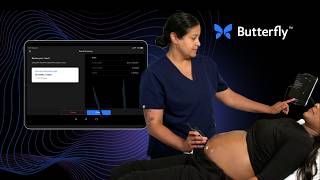
ButterflyのAI搭載妊娠週数計測ツールの使い方|ステップバイステップ・チュートリアル
Butterfly Network
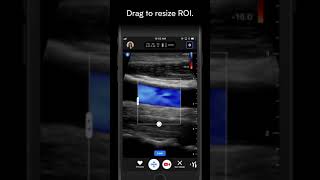
How To Scan in Color Doppler | Butterfly Network
Butterfly Network

3 Butterfly App Tips Every Ultrasound User Should Know | Butterfly Network
Butterfly Network
YouTube returned 6 videos for “Butterfly Network”, and we withheld 1: 1 did not mention Butterfly Network. Showing the 5 we can prove are about Butterfly Network.
Official links
Tools that pair well with Butterfly Network
Common stack mates teams adopt alongside Butterfly Network, with the specific reason each pairing earns its keep.
Viz.ai
Viz.ai is AI care coordination software that auto-detects stroke, cardiac, vascular, and pulmonary disease from imaging and alerts the

InVision Medical Technology
FDA-cleared echocardiography AI that automates LVEF and screens for cardiac amyloidosis, now backed by a Medicare NTAP.

Saama
AI clinical analytics platform that automates clinical data management, medical coding, and statistical submissions for pharma sponsors and
Alternatives to Butterfly Network
View allViz.ai
Viz.ai is AI care coordination software that auto-detects stroke, cardiac, vascular, and pulmonary disease from imaging and alerts the
InVision Medical Technology
FDA-cleared echocardiography AI that automates LVEF and screens for cardiac amyloidosis, now backed by a Medicare NTAP.
Frequently Asked Questions
Used Butterfly Network? Help shape our editorial sentiment research.