
DataMorf
DataMorf is a no-code GTM orchestration platform that turns buying signals into pipeline with Extract, Enrich, Activate workflows.
Pick DataMorf if your bottleneck is multi-tool lead routing rather than the automation engine — the execution-based model genuinely rewards complex workflows, and Growth at €151–159/mo can undercut per-task tools on heavy sequences. Pass if you need thousands of app connectors or general back-office automation; the connector list is deliberately GTM-shaped. Just budget for credits separately, since enrichment and AI run on a pay-as-you-go wallet that no plan includes.
Verified 2d ago · liveness 73/100 · cite: rightaichoice.com/tools/datamorf
- RevOps teams automating multi-tool lead routing, enrichment, and CRM sync
- SDR/BDR teams coordinating LinkedIn and email outreach from one pipeline
- Growth marketers running signal-based targeting with real-time lead scoring
- Lead-gen agencies replacing Zapier or n8n with a GTM-specific stack
- Teams needing general-purpose automation well beyond go-to-market use cases
- Companies requiring on-premise or self-hosted deployment
- Workflows that depend on thousands of app connectors outside the GTM stack
We scan live Reddit threads, YouTube comments, X posts, G2 reviews and other communities — and hand you an honest verdict in under a minute.
- Honest verdict, not marketing
- Real pros & cons from real users
- Attributed quotes with receipts
3 free scans · no card needed
Skip DataMorf if your automation needs sit mostly outside the sales and marketing stack, or if you want a single flat fee with enrichment and AI usage bundled in rather than a separate pay-as-you-go credits wallet.
Data credits are a separate wallet from your plan — email finders, phone lookups, scrapers, and AI transformations are all billed against it, and no plan includes an allowance.
Core at €71/mo billed yearly fits a small RevOps or two-person SDR setup running under 10k workflow executions a month. Growth at €151/mo billed monthly or €159/mo billed yearly suits teams pushing 50k runs across LinkedIn and email with 10 seats. Both sit below per-task pricing on Zapier or Make for complex multi-step workflows, and well below Hightouch-style reverse-ETL contracts, but above raw n8n self-hosting once you factor in the time you spend maintaining it.
In short
DataMorf — DataMorf is a no-code GTM orchestration platform that turns buying signals into pipeline with Extract, Enrich, Activate workflows. Best for RevOps teams automating multi-tool lead routing, enrichment, and CRM sync, SDR/BDR teams coordinating LinkedIn and email outreach from one pipeline, Growth marketers running signal-based targeting with real-time lead scoring. Free to start; paid plans from €71/mo.
What's new in DataMorf
Checked todayAcross the latest 2 updates: 1 changelog entry and 1 news mention.
Customer Story: How Exxcelerate Group Cut Automation Costs by 70% and Replaced Zapier and n8n with One Reliable Stack
Exxcelerate Group replaced Zapier and n8n with DataMorf, reporting a 70% cut in automation costs and a more reliable single stack for lead enrichment, scoring, and CRM sync.
Tutorial: List Processing in Datamorf — How to Run Workflows Item by Item at Scale
A tutorial covering DataMorf's List Processing engine, which fires a destination once per item with rate limiting and retries so large-scale campaigns process every record without dropping any.
What people actually say about DataMorf — is it worth it?
We ran a structured research pass across product reviews, community discussions, and post-purchase forum threads to surface the patterns vendors won't publish themselves. Below: the recurring strengths, the hidden costs people mention most, and the cohort that consistently regrets adopting this tool.
10 mentions across 2 sources (YouTube, Product Hunt) · researched Aug 1, 2026.
Average across the 2 sources that answered — each source counts once, not each post.
- +Purpose-built for GTM workflows, unlike generic automation tools.
- +Money-saving execution-based pricing — one run equals one full workflow.
- +Pre-built templates: AI lead scoring, outreach cleanup, and custom.
- +Reverse ETL built in, so data syncs back to your CRM.
- +Real-time data extraction from HubSpot, Salesforce, and other sources.
- −Only 2 real posts; nobody has independently tested it yet.
- −No support, reliability, or performance data from actual users.
- −No business-critical evidence — might be a hobby project.
- −Enterprise tier starts at €900/mo — steep without proof.
- −Credits sold separately could lead to surprise costs.
- • Credits for AI transformations, email finders, and phone lookups are sold separately and don't expire — they can add up.
Viability Score
How well maintained and how widely used is DataMorf? Built from what the vendor actually publishes (docs, changelog, tutorials, integrations, pricing), whether the site is live, and how much real users discuss it. How we calculate this
Last calculated: October 2026
How we score →Key Features
- No-code workflow builder built on Extract, Enrich, Activate steps
- Execution-based pricing: one run equals one full workflow, any number of tasks
- List Processing engine that fires a destination once per item with rate limiting and retries
- Pre-built templates for AI lead scoring and outreach platform cleanup
- Multi-channel outreach orchestration across LinkedIn and email
- Signal-based targeting that reaches accounts showing real buying intent
- Real-time lead scoring and segmentation by fit and intent
- Leads routed and prioritized inside HubSpot with no manual triage
- Reverse ETL data extractor to pull and push filtered records from your CRM
- Built-in sources and AI: email finders, phone lookups, scrapers, AI transformations
- Credits wallet for pay-as-you-go data and AI that never expires
- Custom code transformations and computations inside workflows
- Call Brief Engine for meeting preparation
- Comment Harvester Engine for social listening
- Chrome Extension for on-the-go GTM actions
About DataMorf
DataMorf is a no-code GTM orchestration platform for RevOps, SDR, and growth teams who are tired of stitching their CRM, outreach tools, and databases together by hand. Every workflow you build follows the same three-step shape: Extract pulls live records out of HubSpot, Instantly, Salesforce, or a warehouse so those systems stop acting like dead-end silos; Enrich layers on company insights, custom attributes, and real-time scoring so you can segment by fit and intent; Activate routes the finished lead into an outreach sequence, a CRM field, or a Slack alert the moment it is ready. Non-technical teams start from a template — AI lead scoring, outreach platform cleanup, or a blank custom build — then adjust scoring criteria and routing rules and let it run. A List Processing engine fires the destination once per item with rate limiting and retries, which matters when you are pushing thousands of records through a campaign and cannot afford silent dropouts. Built-in sources and AI cover email finders, phone lookups, scrapers, and AI transformations, paid from a separate credits wallet rather than your plan. The pricing model is the real differentiator. Runs are execution-based — one run equals one full workflow execution no matter how many steps sit inside it — so a five-step enrichment-and-routing job costs the same as a one-step one. Published plans run from Core at €71/mo billed yearly (10k runs, 2 seats, 5 integrations, 10 workflows, 7-day run history) to Growth at €151/mo billed monthly or €159/mo billed yearly (50k runs/mo, 10 seats, unlimited integrations and workflows, priority support). Enterprise starts at €900/mo with multi-workspace, unlimited users, and professional implementation. Extra engines — Call Brief Engine, Comment Harvester, Chrome Extension, and Relay Capture — extend past the core pipeline. Against Zapier, Make, or n8n, DataMorf trades general-purpose breadth for a GTM-specific vocabulary and predictable per-execution costs. Exxcelerate
Behind the Verdict
The pitch that lands with most buyers is simple: stop paying per task. Zapier and Make bill you for every step, so a workflow that extracts, enriches, scores, and routes five leads gets expensive fast. DataMorf counts the whole thing as one run. On paper that is a meaningful discount for anyone running genuinely complex sequences, and it is the reason Exxcelerate could claim a 70% cost cut while consolidating two tools into one. Where it bites is the credits wallet. Runs cover the workflow machinery, but email finders, phone lookups, scrapers, and AI transformations are billed from a separate pay-as-you-go balance. That is honest and the credits never expire, but it means your real monthly bill depends on how much enrichment you actually do. Budget-conscious teams should model credit spend before committing to a tier. The Core tier at €71/mo billed yearly is a genuine starting point rather than a crippled demo — 10k runs, 10 workflows, 2 seats — but the 5-integration cap and 7-day run history are the first things you will outgrow. Growth removes both ceilings and adds priority support. If you are a two-person shop doing light prospecting, the math probably does not clear; stay on a cheaper general tool until volume justifies the jump. The closest alternative is n8n, and the comparison is not about raw capability. n8n gives you more nodes, more control, and self-hosting. DataMorf gives you a GTM-shaped builder, pre-built Extract/Enrich/Activate logic, and a price model that does not punish long workflows. RevOps teams with no dedicated engineer tend to prefer the second; platform engineers who want to own every branch will prefer the first. In practice the List Processing engine is the unsung piece. Firing a destination once per item with rate limiting and retries
Researching DataMorf? Get your full AI stack in 60 seconds.
Free, no signup — tell us your goal and get tools matched to your budget & existing stack.
Real-world workflow fit
Concrete scenarios for the personas DataMorf actually fits — and what changes day-one when you adopt it.
Pick the AI lead scoring template, connect HubSpot and Apollo, set the scoring threshold that routes to Salesforce, and let the workflow enrich every new inbound contact and assign the right rep.
Outcome: Inbound leads arrive pre-scored and pre-routed instead of sitting in a queue for manual triage.
Use List Processing to feed a large TAM list through enrichment and segmentation, then activate into Instantly and HeyReach with rate limiting so nothing is dropped.
Outcome: The team runs continuous multi-channel sequences against a TAM that stays enriched and categorized without added headcount.
Replace the Zapier and n8n chains that sync client CRMs with a single DataMorf workflow that extracts, enriches, and pushes records to BigQuery and the client's HubSpot.
Outcome: One reliable stack instead of several brittle chains, with execution-based runs keeping the per-client automation cost predictable.
Use Cases
- Connect HubSpot to Instantly so new contacts automatically enter a multi-channel sequence.
- Enrich incoming leads with company data from Apollo and route them to the right rep in Salesforce.
- Score leads with AI and push high-fit prospects to a Slack alert for immediate outreach.
- Sync Typeform responses to BigQuery in real time for analytics without writing code.
- Process a large lead list item by item with rate limiting and retries so nothing gets dropped.
- Clean and deduplicate your CRM by extracting, comparing, and updating records across tools.
- Reach accounts showing real intent rather than static list criteria with signal-based targeting.
- Run a two-person prospecting operation that keeps the TAM continuously enriched and categorized.
Models Under the Hood
as of 2026-10-11
Limitations
- The platform is GTM-centric, so use cases outside sales and marketing pipelines get less support.
- Pricing is execution-based: one run equals one full workflow, and Core at €71/mo billed yearly caps runs at 10k/month, seats at 2, and integrations at 5, with only 7 days of run history — restrictive for growing teams.
- Data credits for enrichment and AI are pay-as-you-go and are not included in any plan, so heavy email-finder or phone-lookup usage adds cost on top of the subscription.
- If you choose to keep workflows running past your monthly run limit, the extra runs are charged at the end of your billing cycle.
as of 2026-10-09
Verification history
We have re-verified DataMorf 9 times since . Each pass re-reads the vendor's own pages and re-checks every listed field against that evidence; passes where nothing had changed are marked as such.
- — re-verified summary, description, our verdict, our analysis, pricing model, pricing tiers, features, integrations, who it suits, who should skip it
- — re-verified summary, description, our verdict, our analysis, pricing model, pricing tiers, features, integrations, who it suits, who should skip it
- — re-checked, vendor evidence unchanged
- — re-verified summary, description, our verdict, our analysis, pricing model, pricing tiers, features, integrations, who it suits, who should skip it
- — re-checked, vendor evidence unchanged
- — re-verified summary, description, our verdict, our analysis, pricing model, pricing tiers, features, integrations, who it suits, who should skip it
Showing the 6 most recent of 9 verification passes.
Free to cite with attribution — this page re-verifies continuously.
12-month cost
Project the real annual outlay, including the implied monthly cost when only an annual tier is published.
Vendor list price only. Add-on usage, seat overages, and contract minimums are surfaced under Hidden costs & gotchas.
Plans compared
For each published DataMorf tier: who it actually fits, and what it adds vs. the previous tier. Cross-reference the cost calculator above for projected annual outlay.
Core (Billed yearly)
€71/mo
Ideal for
A solo RevOps operator or two-person SDR team running under 10k workflow executions a month on a stack of five tools or fewer.
What this tier adds
Starting tier: 10k runs/mo, 10 workflows, 2 seats, 5 integrations, 7-day run history, community support.
Growth (Billed monthly)
€151/mo
Ideal for
A scaling outbound team that wants to avoid an annual commitment while running up to 50k executions across LinkedIn and email.
What this tier adds
Adds 50k runs/mo, unlimited workflows and integrations, 10 seats, and priority email support over Core.
Growth (Billed yearly)
€159/mo
Ideal for
A team that has committed to DataMorf for the year and wants the lower rate plus headroom to expand runs up to 1M.
What this tier adds
Same Growth quotas as monthly billing but at €159/mo billed yearly, with run volume expandable to 1M.
Enterprise
From €900/mo
Ideal for
A multi-team or multi-client organization needing custom run volumes, workspaces for separate business units, and dedicated support.
What this tier adds
Adds unlimited users, multi-workspace, custom transformations and integrations, phone/video support, recurrent credits top-up, and professional implementation services.
Where the pricing makes sense
The company stage and team size where DataMorf's pricing actually pencils out — and where peers do it cheaper.
Core at €71/mo billed yearly fits a small RevOps or two-person SDR setup running under 10k workflow executions a month. Growth at €151/mo billed monthly or €159/mo billed yearly suits teams pushing 50k runs across LinkedIn and email with 10 seats. Both sit below per-task pricing on Zapier or Make for complex multi-step workflows, and well below Hightouch-style reverse-ETL contracts, but above raw n8n self-hosting once you factor in the time you spend maintaining it.
Setup time & first value
How long it actually takes to get something useful out of DataMorf — broken out by persona, not the marketing-page minute.
Non-technical teams can pick a template and connect HubSpot, Instantly, HeyReach, and Apollo in minutes, then adjust scoring and routing rules and go live the same day. Custom workflows with code transformations or multiple destinations take longer — expect a few hours to a working first run. Enterprise deployments with custom integrations and multi-workspace setup involve implementation services
Switching to or from DataMorf
How to bring data in from common predecessors and how to get it back out — written for the switcher, not the buyer.
- →From Zapier: rebuild your highest-volume lead routing zaps as one Extract/Enrich/Activate workflow so each execution bills as a single run.
- →From n8n: replace self-hosted maintenance with a GTM-specific workflow; custom code transformations carry over into the Enrich step.
- →From Make: consolidate multi-module scenarios into one DataMorf workflow with unlimited tasks inside a single execution.
- →From manual CRM hygiene: start with the outreach platform cleanup template to deduplicate and update records before wiring in routing.
- ↗To Zapier: export destination logic and rebuild each step as a separate task, accepting per-task billing on complex workflows.
- ↗To n8n: recreate the Extract/Enrich/Activate logic as self-hosted nodes if you want full control and are willing to maintain the infrastructure.
- ↗To Hightouch or a reverse-ETL tool: migrate the data extractor syncs if your primary need shifts to warehouse-to-app sync rather than GTM orchestration.
Integrations
Resources & Guides
Tutorials & Learning
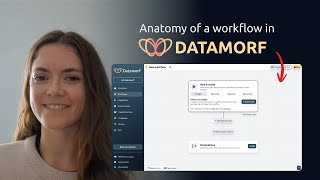
YouTube returned 6 videos for “DataMorf”, and we withheld 5: 5 could not be judged, because “DataMorf” is a single word that other videos use for other things. Showing the 1 we can prove is about DataMorf.
Official links
Tools that pair well with DataMorf
Common stack mates teams adopt alongside DataMorf, with the specific reason each pairing earns its keep.

Instabase
Instabase (now SuperApp) turns multi-document packets into auditable, verifiable intelligence with packet-aware AI agents.
Glide
Glide turns spreadsheets, prompts, and files into internal business apps and AI agents for desktop and mobile.

Trag AI
Trag AI builds no-code RAG crypto trading agents that cite RSI, MACD, and news data behind every signal.
Featured Head-to-Head Comparisons
Datamorf vs Chili Piper
For RevOps teams that need to orchestrate multi-channel outreach and data sync across many tools, DataMorf’s execution-based pricing and no-code builder offer flexible automation with lower upfront cost. If your priority is converting high inbound traffic into instant booked meetings, especially in a Salesforce-centric enterprise stack, Chili Piper’s AI agents and deep CRM integration deliver proven results but at a higher price and complexity. Choose DataMorf for workflow automation, Chili Piper for instant meeting booking.
Datamorf vs Presto Voice
DataMorf and Presto Voice serve entirely different verticals. Choose Datamorf if you're optimizing B2B GTM workflows with signal-based targeting and multi-channel automation at an execution-based cost. Choose Presto Voice if you operate QSR drive-thrus and want to automate order taking with voice AI to boost revenue and efficiency. They are not competitors.
Datamorf vs Weglot
If your priority is automating GTM workflows, multi-channel outreach, and CRM enrichment, DataMorf is the clear choice with its no-code pipeline and execution-based pricing. If you need to launch a multilingual website quickly with AI translations and SEO benefits, Weglot wins with its freemium model and extensive CMS integrations. Choose based on whether your team needs outbound automation or global content localization.
Alternatives to DataMorf
View all

Frequently Asked Questions
Best-of guides
Used DataMorf? Help shape our editorial sentiment research.