
Fashn Vton
FASHN VTON v1.5 is an open-source maskless virtual try-on model that swaps garments directly in pixel space — no segmentation masks, Apache 2.0 code and
If your try-on pipeline chokes on masks — clipped hemlines, shirts leaking through hair, tattoos erased — v1.5 is the most credible open fix, and Apache 2.0 means you can actually ship it. The 576x864 ceiling on the open weights is the real tax: fine for social, product pages, and staging, not for print or hero banners. Pair it with the hosted app when you'd rather not budget for H100-class GPUs — Basic is $19/mo monthly, and paying annually gets you roughly two months free at the same feature set.
Verified 5d ago · liveness 65/100 · cite: rightaichoice.com/tools/fashn-vton
- Fashion brands generating on-model product imagery for e-commerce at scale
- Marketing agencies producing campaign visuals across multiple markets and models
- Developers who need a self-hostable virtual try-on model under Apache 2.0
- AI researchers studying pixel-space diffusion and maskless inference for fashion
- Teams that need output above 576x864 from the open-source model
- Real-time video try-on with sub-second latency expectations
- Shoppers wanting physical fit or size recommendations from a photo
We scan live Reddit threads, YouTube comments, X posts, G2 reviews and other communities — and hand you an honest verdict in under a minute.
- Honest verdict, not marketing
- Real pros & cons from real users
- Attributed quotes with receipts
3 free scans · no card needed
Skip FASHN VTON v1.5 if you need print-resolution try-on above 576x864 from the open weights, or sub-second real-time video try-on — the open model targets ~5s per image on H100-class hardware.
Most tools start at 1 credit per output but higher resolutions and more detailed settings cost more, so a 4K-heavy month burns credits several times faster than the headline count suggests.
Basic at $19/mo monthly suits a solo operator or small brand testing try-on imagery. Pro at $49/mo monthly fits a team producing daily at 1080p video, and Agency at $99/mo monthly (or 2× Agency at twice the credits) fits high-volume studios needing custom Face References and 11 simultaneous generations. Annual billing saves roughly two months versus monthly at identical features. It is cheaper than a real photoshoot and far cheaper than enterprise fashion-imagery platforms, but you still budget
In short
Fashn Vton — FASHN VTON v1.5 is an open-source maskless virtual try-on model that swaps garments directly in pixel space — no segmentation masks, Apache 2.0 code and. Best for Fashion brands generating on-model product imagery for e-commerce at scale, Marketing agencies producing campaign visuals across multiple markets and models, Developers who need a self-hostable virtual try-on model under Apache 2.0. Free to start; paid plans from $19/mo.
What's new in Fashn Vton
Checked 5 days agoAcross the latest 5 updates: 3 feature updates, 1 launch and 1 pricing change.
[App] Radar Dashboard: See How Your Brand Shows Up in ChatGPT
Radar results for ChatGPT are live, showing mention frequency, how often ChatGPT recommends your brand, your rank against competitors, and the queries where you are missing.
[App] Videos with Audio in the FASHN Agent
The FASHN Agent can generate video with audio in sync with the action, across supported durations and resolutions; audio video costs twice the credits of silent video.
[App] Transparent Backgrounds in the FASHN Agent
Transparent generation, editing, background removal, and upscaling now work in the Agent, including semi-transparent tulle, lace, and mesh, with transparency preserved up to 4K.
[App] FASHN Agent Upgrade: Better Accuracy and Up to 6 References
The Agent now retains garment detail more reliably, keeps the same model face across a conversation, offers face reference on all plans, and accepts up to 6 image references per request.
[App] Unused Monthly Credits Now Roll Over
Monthly app credits no longer reset at the end of the billing cycle; rollover is capped at 600 credits on Basic, 2,250 on Pro, and 4,500 on Agency.
What people actually say about Fashn Vton — is it worth it?
We ran a structured research pass across product reviews, community discussions, and post-purchase forum threads to surface the patterns vendors won't publish themselves. Below: the recurring strengths, the hidden costs people mention most, and the cohort that consistently regrets adopting this tool.
2 mentions across 2 sources (Hacker News, Lemmy) · researched Jul 3, 2026.
Average across the 2 sources that answered — each source counts once, not each post.
- +Maskless virtual try-on eliminates segmentation preprocessing.
- +Pixel-space generation preserves garment details like logos.
- +Fast inference: ~5 seconds on H100 GPUs.
- +Open-source under Apache 2.0 for research and commercial use.
- +High fidelity without requiring true try-on triplets.
- −Limited community data; reliability concerns unaddressed.
- −Requires high-end GPU (H100) for interactive performance.
- −No official support or SLAs for enterprise users.
- −Technical setup hurdles for non-experts.
- −No integration with popular platforms like Zapier.
- • GPU compute costs for self-hosting the open-source model
- • API usage overages on freemium plan
Viability Score
How well maintained and how widely used is Fashn Vton? Built from what the vendor actually publishes (docs, changelog, tutorials, integrations, pricing), whether the site is live, and how much real users discuss it. How we calculate this
Last calculated: October 2026
How we score →Key Features
- Maskless virtual try-on generating results without segmentation masks
- Pixel-space diffusion operating directly on RGB pixels with no VAE encoding
- 972M parameter MMDiT with 8 double-stream and 16 single-stream blocks
- 4 patch-mixer blocks allowing up to 75% of tokens to be dropped during training
- Pose keypoint conditioning supplied as single-channel grayscale images
- Category embeddings for tops, bottoms, and one-pieces added to timestep conditioning
- Roughly 5 second inference on H100 GPUs
- Open-source release under Apache 2.0 with code and model weights
- Preserves tattoos, body identity, and cultural garments like hijabs during swaps
- Handles volume changes from slim outfits to puffer jackets and floor-length gowns
- Selective layered-outfit replacement that keeps an outer jacket intact
- Unified credit system shared between web, iOS, and Android apps
- AI video generation at 720p on Basic and 1080p on Pro and Agency
- Videos with generated audio via the FASHN Agent, at double the credit cost of silent video
- Transparent backgrounds including semi-transparent tulle, lace, and mesh, up to 4K upscale
About Fashn Vton
FASHN VTON v1.5 is an open-source virtual try-on model for fashion e-commerce and content production. Feed it a person image and a garment image and it returns a photorealistic try-on result generated directly on RGB pixels, skipping the VAE latent compression that distorts logos and patterns and skipping the segmentation masks that clip hemlines and erase tattoos or head coverings. FASHN reports it as the first permissive open-source virtual try-on model: Apache 2.0 covers both code and weights, so you can ship it in a commercial product. The architecture is a 972M-parameter MMDiT: 8 double-stream blocks for cross-modal attention between person and garment tokens, 16 single-stream blocks for self-attention over the concatenated sequence, and 4 patch-mixer blocks that let up to 75% of tokens drop during training. Pose keypoints arrive as single-channel grayscale images concatenated to both inputs; category embeddings for tops, bottoms, and one-pieces ride along on timestep conditioning. FASHN reports roughly 5-second inference on H100 GPUs. Maskless inference is what earns its keep on pants-to-skirt swaps that need real volume expansion, floor-length gowns and kurtas that extend past the original garment boundary, puffer jackets over slim outfits, hair overlapping dark fabric, layered outfits where only the inner top should change, and hijab preservation. Training ran in two phases — 18M masked try-on pairs first, then a 50/50 mix of masked pairs and 4M synthetic triplets generated by the Phase 1 checkpoint — so maskless behavior was learned rather than bolted on. FASHN is upfront about the tradeoffs: the open model tops out at 576x864, body characteristics can still shift slightly, and long-to-short conversions can leave traces of the original garment. FASHN also sells a hosted platform around the same family of tools — virtual try-on, Product to Model, Packshot, Model Swap, AI Fashion Models, and Short Videos — on a shared credit system across web, iOS, and Android. The hosted app adds video with audio (October 2026), transparent backgrounds including semi-transparent tulle and lace, and a chat-based FASHN Agent that accepts up to 6 image references and offers Face Reference on every plan.
Behind the Verdict
FASHN VTON v1.5 attacks a specific failure mode rather than chasing a benchmark. Masked try-on constrains every result to the boundaries of the original garment, so a wedding gown gets trimmed, a kurta gets cut at shirt length, and a tattoo underneath disappears because it sat in the masked region. FASHN's answer is to generate in pixel space with no mask at all, and the published examples show exactly where that pays off: pants-to-skirt volume changes, floor-length gowns, puffer jackets over slim outfits, hair over dark fabric, and hijab preservation. The two-phase training story matters here — 18M masked pairs followed by a 50/50 mix of masked pairs and 4M synthetic triplets from the Phase 1 checkpoint — because it means maskless output is a learned capability, not a post-hoc patch. The engineering choices are pragmatic. Pixel-space diffusion is expensive, so the 4 patch-mixer blocks let up to 75% of tokens drop during training, and the 972M-parameter MMDiT splits work into 8 double-stream cross-modal blocks, 16 single-stream self-attention blocks, and the patch mixers. FASHN reports roughly 5 seconds per generation on an H100, which is interactive rather than batch-only. The honest constraints: 576x864 maximum on the open model, body characteristics that can still shift slightly, and traces of the original garment left behind on long-to-short conversions. The hosted platform is a separate decision. It runs a unified credit system — most tools start at 1 credit per output, with higher resolutions and more detailed settings costing more — shared across web, iOS, and Android. Unused monthly credits now roll over (Basic 600, Pro 2,250, Agency 4,500, Agency 2× 9,000) and purchased top-ups stay valid 12 months, which changes the math for spiky campaign workloads. Top-ups run $0.10/credit with a 100-credit minimum. Subscriptions and top-ups are non-refundable, so the 10 complimentary signup credits are your real evaluation window. Where it fits: fashion brands and agencies producing on-model imagery at volume, and developers who need a self-hostable try-on model they can legally ship. Where it doesn't: anyone who needs print-resolution output from the open weights, sub-second real-time video try-on, or physical fit and sizing advice — this generates images, it does not measure bodies.
Researching Fashn Vton? Get your full AI stack in 60 seconds.
Free, no signup — tell us your goal and get tools matched to your budget & existing stack.
Real-world workflow fit
Concrete scenarios for the personas Fashn Vton actually fits — and what changes day-one when you adopt it.
You upload flat product shots and a person image, run try-on across the catalog, then upscale selected results to 4K for product pages.
Outcome: On-model listing images without booking a studio, with month-to-month credits rolling over so a quiet month funds a busy launch.
You pull the Apache 2.0 code and weights, host v1.5 on H100-class hardware, and wire the FASHN API for anything the open model tops out on.
Outcome: A shippable try-on feature at roughly 5 seconds per generation, with no licensing negotiation for commercial use.
You build a consistent AI model with Face Reference, run campaign variants with up to 6 image references in the FASHN Agent, then generate short video clips with audio for social.
Outcome: Campaign visuals across multiple markets from one shared credit pool across web and mobile, with Priority support on Pro and above.
Use Cases
- Generate photorealistic on-model images for e-commerce product listings without a photoshoot
- Integrate virtual try-on into mobile apps or websites using the FASHN API
- Swap models in existing product photos to match diverse body types and poses
- Create consistent AI fashion models for multi-variant product campaigns
- Produce short video clips with sound showing clothing movement for social media ads
- Generate catalog-grade packshots from on-model or flat product photos
- Research new diffusion architectures for pixel-space garment generation
- Render garments on transparent backgrounds so tulle and lace show the backdrop through the fabric
Models Under the Hood
as of 2026-10-15
Limitations
- FASHN VTON v1.5 is a 972M-parameter maskless pixel-space architecture optimized for interactive performance, at roughly 5 seconds per inference on H100 GPUs.
- The open-source release is Apache 2.0 with code and model weights but has no stated SLA and no published online demo yet (marked 'coming soon').
- Hosted plans are credit-based: 200 credits on Basic ($19/mo), 750 plus 50 daily on Pro ($49/mo), and 1,500 plus 100 daily on Agency ($99/mo), with rollover caps of 600, 2,250, and 4,500.
- AI video is capped at 720p on Basic and 1080p on Pro and Agency, and video with audio costs twice the credits of the same video without audio.
as of 2026-10-13
Verification history
We have re-verified Fashn Vton 9 times since . Each pass re-reads the vendor's own pages and re-checks every listed field against that evidence; passes where nothing had changed are marked as such.
- — re-verified summary, description, our verdict, our analysis, pricing model, pricing tiers, features, integrations, who it suits, who should skip it
- — re-verified summary, description, our verdict, our analysis, pricing model, pricing tiers, features, integrations, who it suits, who should skip it
- — re-verified summary, description, our verdict, our analysis, pricing model, pricing tiers, features, integrations, who it suits, who should skip it
- — re-checked, vendor evidence unchanged
- — re-verified summary, description, our verdict, our analysis, pricing model, pricing tiers, features, integrations, who it suits, who should skip it
- — re-checked, vendor evidence unchanged
Showing the 6 most recent of 9 verification passes.
Free to cite with attribution — this page re-verifies continuously.
12-month cost
Project the real annual outlay, including the implied monthly cost when only an annual tier is published.
Vendor list price only. Add-on usage, seat overages, and contract minimums are surfaced under Hidden costs & gotchas.
Plans compared
For each published Fashn Vton tier: who it actually fits, and what it adds vs. the previous tier. Cross-reference the cost calculator above for projected annual outlay.
Free
$0
Ideal for
Solo builder or evaluator who wants to test try-on, Product to Model, and Packshot before committing a budget.
What this tier adds
Free entry point: 10 complimentary credits on signup, no credit card required.
Basic
$19/mo
Ideal for
Solo creator or small brand publishing on-model imagery a few times a week at 720p video.
What this tier adds
Adds 200 monthly credits, 720p AI video, 2 team members, up to 4K image generation, 3 simultaneous generations, and rollover up to 600 credits.
Pro
$49/mo
Ideal for
In-house team producing imagery and video daily who need 1080p output and priority support.
What this tier adds
Raises to 750 monthly credits plus 50 daily bonus, 1080p video, 5 team members, 6 simultaneous generations, and rollover up to 2,250 credits.
Agency
$99/mo
Ideal for
High-volume studio or agency running multi-market campaigns with several concurrent generations.
What this tier adds
Reaches 1,500 monthly credits plus 100 daily bonus, 10 team members, uploadable or custom Face References, 11 simultaneous generations, and rollover up to 4,500 credits.
Where the pricing makes sense
The company stage and team size where Fashn Vton's pricing actually pencils out — and where peers do it cheaper.
Basic at $19/mo monthly suits a solo operator or small brand testing try-on imagery. Pro at $49/mo monthly fits a team producing daily at 1080p video, and Agency at $99/mo monthly (or 2× Agency at twice the credits) fits high-volume studios needing custom Face References and 11 simultaneous generations. Annual billing saves roughly two months versus monthly at identical features. It is cheaper than a real photoshoot and far cheaper than enterprise fashion-imagery platforms, but you still budget
Setup time & first value
How long it actually takes to get something useful out of Fashn Vton — broken out by persona, not the marketing-page minute.
Self-hosting the open weights: hours to days, since you need H100-class GPUs, the repo, and your own inference wrapper — there is no hosted open-weights endpoint. Hosted app: minutes to first value, because every new account starts with 10 complimentary credits and no credit card. Team rollout on Pro or Agency: about a day to set up shared seats, Face References, and credit-sharing across web,
Switching to or from Fashn Vton
How to bring data in from common predecessors and how to get it back out — written for the switcher, not the buyer.
- →From a photoshoot pipeline: replace studio shoots with try-on generation from existing flat product photos
- →From masked try-on models: port your person-and-garment inputs directly, since v1.5 needs no segmentation masks to be produced
- →From your own latent-diffusion try-on stack: swap in the Apache 2.0 v1.5 weights to drop VAE encoding from the path
- →From manual Photoshop compositing: use Product to Model and Model Swap instead of hand-masking garments onto models
- ↗To a hosted enterprise fashion-imagery platform: export your product and model libraries, then rebuild prompts and presets on the new tool
- ↗To a cloud GPU provider: download the Apache 2.0 weights and run v1.5 on your own infrastructure if credit costs outgrow the plans
- ↗To traditional photography: catalog assets generated here still need physical shoots for print-resolution hero imagery above 576x864
Resources & Guides
Tutorials & Learning
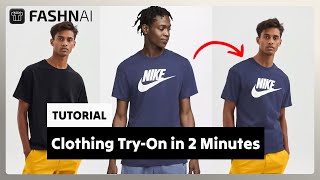
How to do Clothing Try-Ons in 2 Minutes | FASHN Web App Tutorial
FASHN
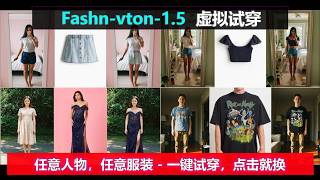
Fashn-vton-1.5 虚拟试穿 | 任意服装,任意人物,一键穿衣 | 0帧起手,点击就换~
AI工坊#十个骑士

Next.js、FastAPI、FASHN VTON v1.5を使ってAIバーチャル試着アプリを構築する方法
Raj Kapadia
YouTube returned 6 videos for “Fashn Vton”, and we withheld 1: 1 did not mention Fashn Vton. Showing the 5 we can prove are about Fashn Vton.
Official links
Tools that pair well with Fashn Vton
Common stack mates teams adopt alongside Fashn Vton, with the specific reason each pairing earns its keep.

The New Black
The New Black AI turns product photos, sketches or prompts into on-model fashion shots, 4K video, tech packs and Shopify listings

Lalaland.ai
Enterprise AI fashion models for Browzwear's 3D design ecosystem — 3D assets in, on-brand product imagery out.
Artbreeder
Artbreeder blends and remixes AI images with gene sliders, Splicer2, and a multi-model Prompter roster.
Featured Head-to-Head Comparisons
Fashn Vton vs The New Black
For fashion brands focused on creating photorealistic on-model images or virtual try-on experiences, Fashn Vton is the superior choice with its maskless pixel-space technology, AI video generation, and open-source availability. For apparel designers whose primary goal is conceptual design and tech pack creation, The New Black offers a purpose-built text-to-design workflow. Your decision hinges on whether you need to visualize existing garments on models (choose Fashn Vton) or generate new garment designs from scratch (choose The New Black).
Fashn Vton vs Qoves
Choose QOVES if you want a data-driven, non-surgical facial transformation plan based on 160+ beauty markers and scientific research. Choose Fashn Vton if you need photorealistic virtual try-on for fashion e-commerce or content creation, especially if you require fast, open-source technology. They serve completely different needs: personal beauty analysis vs. commercial fashion imagery.
Fashn Vton vs Adobe Firefly Services
If you need photorealistic virtual try-on for fashion e‑commerce and value speed + open‑source flexibility, Fashn Vton is your best bet. If you’re an enterprise team requiring compliant, scalable generative image APIs integrated with Adobe’s ecosystem (AEM, Workfront), Adobe Firefly Services is the more robust choice — though it comes at a higher cost and closed ecosystem.
Alternatives to Fashn Vton
View all
The New Black
The New Black AI turns product photos, sketches or prompts into on-model fashion shots, 4K video, tech packs and Shopify listings

Lalaland.ai
Enterprise AI fashion models for Browzwear's 3D design ecosystem — 3D assets in, on-brand product imagery out.
Artbreeder
Artbreeder blends and remixes AI images with gene sliders, Splicer2, and a multi-model Prompter roster.
Frequently Asked Questions
Categories
Best-of guides
Used Fashn Vton? Help shape our editorial sentiment research.