
Label Sleuth
Free, open-source no-code text annotation and classifier builder for domain experts.
Label Sleuth is a smart, free pick for domain experts who need custom text classifiers without coding. Its active learning and automatic training save time and lower the barrier to NLP. However, you handle installation and self-hosting yourself, and support is community-based. For teams wanting a managed cloud service with SLAs, look at commercial platforms like Prodigy or Document AI, but for a no-cost, privacy-preserving option, Label Sleuth is hard to beat.
Verified 1d ago · liveness 53/100 · cite: rightaichoice.com/tools/label-sleuth
- Domain experts needing custom text classifiers without coding
- NLP researchers wanting rapid prototyping
- Small teams building specialized text models without ML engineers
- Legal, healthcare, and social science professionals analyzing text
- Teams requiring managed cloud service with no installation
- Users needing image, audio, or video annotation
- Large-scale enterprise deployment with SLAs
We scan live Reddit threads, YouTube comments, X posts, G2 reviews and other communities — and hand you an honest verdict in under a minute.
- Honest verdict, not marketing
- Real pros & cons from real users
- Attributed quotes with receipts
3 free scans · no card needed
Skip Label Sleuth if you are not comfortable with installing Python packages via Anaconda and running a server locally, or if you need a managed cloud service with SLAs and official support.
You must provide your own compute and storage; there are no cloud credits included, so runtime costs depend on your hardware.
Label Sleuth is $0 forever, making it ideal for individuals, researchers, and small teams with minimal budgets. It undercuts commercial annotation platforms like Label Studio (which offers free tiers but has paid cloud plans) and Prodigy (which requires a paid license). If you can self-host, you get comparable functionality at zero cost, but you trade off convenience and support.
In short
Label Sleuth — Free, open-source no-code text annotation and classifier builder for domain experts. Best for Domain experts needing custom text classifiers without coding, NLP researchers wanting rapid prototyping, Small teams building specialized text models without ML engineers. Free to use.
What people actually say about Label Sleuth — is it worth it?
We ran a structured research pass across product reviews, community discussions, and post-purchase forum threads to surface the patterns vendors won't publish themselves. Below: the recurring strengths, the hidden costs people mention most, and the cohort that consistently regrets adopting this tool.
7 mentions across 2 sources (GitHub, Lemmy) · researched Jul 5, 2026.
- +No-code interface lets domain experts label and build classifiers without AI skills.
- +Active learning suggests which examples to label next, minimizing manual effort.
- +Automatic background model training provides real-time predictions during labeling.
- +Fully open source under Apache 2.0, allowing customization and auditability.
- +Runs locally, ensuring sensitive data never leaves the user's machine.
- −Near-zero community activity: no user reviews, forums, or third-party tutorials.
- −Missing model export/import makes production deployment impractical.
- −No cloud-hosted version or collaboration features for teams.
- −Limited to text classification; no support for NER, summarization, or other NLP tasks.
- −Small number of stars (273) and open issues indicate possible abandonment.
- • No paid tiers, but may require infrastructure costs (e.g., GPU for training)
Viability Score
How well maintained and how widely used is Label Sleuth? Built from what the vendor actually publishes (docs, changelog, tutorials, integrations, pricing), whether the site is live, and how much real users discuss it. How we calculate this
Last calculated: September 2026
How we score →Key Features
- Intuitive text annotation UI
- Automatic background model training
- Active-learning-driven labeling assistance
- Real-time model predictions during labeling
- Extensible architecture for custom components
- Open source (Apache 2.0) on GitHub
- Local deployment for data privacy
- REST API for integration
- Installation via pip and Anaconda
- Guided tutorial for quick start
- Supports text classification tasks
- System architecture documentation
- Community support via Slack
- Cross-platform browser access
About Label Sleuth
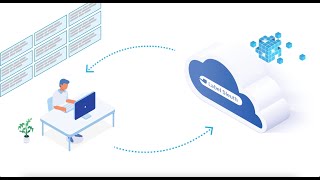
Label Sleuth is a free, open-source, no-code system designed for domain experts—such as physicians, lawyers, and psychologists—who need to build custom text classifiers without any machine learning background. Developed by IBM Research in collaboration with universities, it combines an intuitive labeling interface with automatic background model training and active learning to guide you to the most valuable examples to label next, reducing wasted effort. You can go from task definition to a working model in just a few hours. Key features include real-time model predictions during labeling, an extensible architecture for custom components, and local deployment for data privacy. It supports text classification tasks across legal document understanding, social violence detection, and customer care analytics. Unlike commercial annotation platforms, Label Sleuth is completely free and open source, but requires self-installation via pip and Anaconda—no managed cloud service is available. This tool is ideal for researchers, small teams, and professionals in legal, healthcare, and social sciences who need custom text models without coding.
Behind the Verdict
Label Sleuth stands out as a genuinely free and open-source tool that prioritizes domain experts over ML engineers. Its key strengths are the active learning loop, the real-time model predictions during labeling, and the local deployment for data privacy. The UI is intuitive, and the step-by-step tutorial (installation via Anaconda, then pip install) gets you from zero to a working model in a few hours. The extensible architecture means you can swap in custom model architectures or active learning techniques, which is a big plus for researchers. However, the tool is not for everyone: you must handle your own installation, maintenance, and scaling. There is no managed cloud option, no official support, and no SLAs. If you're a non-technical domain expert who doesn't want to touch a command line, the learning curve might be steeper than expected. For larger teams needing collaboration features, version control, or enterprise integrations, commercial platforms like Prodigy or Label Studio offer more polish, but come at a cost. For a privacy-sensitive academic or small team, Label Sleuth is an excellent choice—just budget for self-hosting and rely on community support.
Researching Label Sleuth? Get your full AI stack in 60 seconds.
Free, no signup — tell us your goal and get tools matched to your budget & existing stack.
Real-world workflow fit
Concrete scenarios for the personas Label Sleuth actually fits — and what changes day-one when you adopt it.
You need to find warranty clauses in dozens of contracts but have no coding experience. You install Label Sleuth, follow the tutorial, upload your contract text, and label a few examples as 'warranty' or 'not warranty.' Active learning suggests the next examples to label, and within hours you have a model that flags warranty clauses automatically.
Outcome: You reduce manual review time from days to hours, and the model can be reused on new contracts as they arrive.
You have thousands of social media messages and want to classify which ones contain bullying. Using Label Sleuth, you label a handful of examples, and the tool trains a text classifier in the background. The active learning loop guides you to the most informative examples, so you achieve high accuracy with minimal labeling.
Outcome: You build a reliable classifier for your research without needing an ML engineer, and you can document your process for publication.
You want to automatically categorize customer inquiries by type (billing, technical, feedback) to prioritize responses. You install Label Sleuth, load your customer support transcripts, label a sample, and the system trains a model that predicts the category for new messages in real time.
Outcome: You route inquiries to the right team faster and improve response times, with no ongoing software subscription costs.
Use Cases
- Identify contract clauses (e.g., warranties) in legal documents
- Detect bullying content in text messages to prevent social violence
- Classify customer interactions by request type and sentiment
- Build custom intent classifiers for chatbots
- Annotate domain-specific text datasets for research
- Rapidly prototype NLP models for internal business needs
Limitations
- Label Sleuth requires self-installation via Anaconda and Python environment setup.
- It is self-hosted, and there is no managed cloud version or official enterprise support.
- Documentation and community support are available, but you are responsible for maintenance and scaling.
as of 2026-09-02
Verification history
We have re-verified Label Sleuth 7 times since . Each pass re-reads the vendor's own pages and re-checks every listed field against that evidence; passes where nothing had changed are marked as such.
- — re-checked, vendor evidence unchanged
- — re-checked, vendor evidence unchanged
- — re-checked, vendor evidence unchanged
- — re-checked, vendor evidence unchanged
- — re-checked, vendor evidence unchanged
- — re-verified summary, description, our verdict, our analysis, pricing model, pricing tiers, features, integrations, who it suits, who should skip it
Showing the 6 most recent of 7 verification passes.
Free to cite with attribution — this page re-verifies continuously.
12-month cost
Project the real annual outlay, including the implied monthly cost when only an annual tier is published.
Vendor list price only. Add-on usage, seat overages, and contract minimums are surfaced under Hidden costs & gotchas.
Plans compared
For each published Label Sleuth tier: who it actually fits, and what it adds vs. the previous tier. Cross-reference the cost calculator above for projected annual outlay.
Open Source
$0
Ideal for
Researchers, students, and small teams on a strict budget who need a free, self-hosted text annotation and classification tool and are comfortable with command-line installation.
What this tier adds
This is the only tier—a free, open-source version with all features including active learning, REST API, and local deployment, but you manage installation yourself.
Where the pricing makes sense
The company stage and team size where Label Sleuth's pricing actually pencils out — and where peers do it cheaper.
Label Sleuth is $0 forever, making it ideal for individuals, researchers, and small teams with minimal budgets. It undercuts commercial annotation platforms like Label Studio (which offers free tiers but has paid cloud plans) and Prodigy (which requires a paid license). If you can self-host, you get comparable functionality at zero cost, but you trade off convenience and support.
Setup time & first value
How long it actually takes to get something useful out of Label Sleuth — broken out by persona, not the marketing-page minute.
For a domain expert: allow about 1–2 hours to install Anaconda, set up the Python environment, and complete the guided tutorial. After that, you can start labeling and see your first model predictions within minutes. For a developer: 15–30 minutes to have Label Sleuth running locally and accessible via the REST API.
Switching to or from Label Sleuth
How to bring data in from common predecessors and how to get it back out — written for the switcher, not the buyer.
- →From manual spreadsheet labeling: Export your labeled examples as CSV and import them into Label Sleuth's labeling interface, then continue labeling within the tool to train a model.
- →From other annotation tools: Check the Label Sleuth documentation for supported import formats; you may need to convert your data to a compatible format (e.g., text files) before uploading.
- ↗To Label Studio: Export your labeled datasets from Label Sleuth (if available) and import them into Label Studio's project, then replicate your model using their training pipelines.
- ↗To Prodigy: Convert your labeled examples to Prodigy's format (JSONL) and use their recipes to recreate your annotation project and train a model.
Resources & Guides
Tutorials & Learning

Official links
Tools that pair well with Label Sleuth
Common stack mates teams adopt alongside Label Sleuth, with the specific reason each pairing earns its keep.

Featured Head-to-Head Comparisons
Label Sleuth vs Praktika
Praktika and Label Sleuth serve entirely different needs. Praktika is a mobile language tutor for speaking fluency, ideal for intermediate learners wanting AI conversation practice. Label Sleuth is a desktop open-source tool for text annotation and classifier building, perfect for domain experts without coding skills. Choose based on your goal: improve spoken language or label text data.
Label Sleuth vs Screenplayiq
If you need a data-driven, financial forecast for your feature film script, ScreenplayIQ is your tool – but it's paid and limited to feature-length English screenplays. If you're a domain expert (e.g., legal, healthcare) who needs to build a custom text classifier without coding, Label Sleuth is free and open source, running locally for privacy. They serve entirely different needs and don't compete directly.
Alternatives to Label Sleuth
View allH2o Llmstudio
No-code fine-tuning studio for private LLMs and SLMs, deployable on-premise or air-gapped.

Teachable Machine
Train custom ML models in your browser, no coding required.
Frequently Asked Questions
Categories
Best-of guides
Used Label Sleuth? Help shape our editorial sentiment research.