
Locus Dispatcher
Agentic TMS for enterprise dispatch planning, running order-to-settlement across every mile.
If your delivery operation spans captive fleets and contracted carriers, Locus Dispatcher closes the loop most route optimizers leave open: contract-aware carrier selection and invoice reconciliation after the route is planned. The agent-override model is the right call for enterprise planners who won't hand the keys over on day one. Skip it if you're under roughly 50 deliveries a day — you'd be paying for orchestration depth you won't use.
Verified 1d ago · liveness 75/100 · cite: rightaichoice.com/tools/locus-dispatcher
- Enterprise retailers running omnichannel fulfillment across captive, contracted and outsourced fleets
- 3PLs and CEPs juggling per-client rates, SLAs and carrier contracts on one network
- Big & Bulky retailers needing OTIF performance on windowed, irregular-item deliveries
- FMCG/CPG manufacturers running multi-tier distribution from DC to store to shop
- Operations under roughly 50 deliveries a day, where orchestration depth outweighs the benefit
- Teams that only need point-to-point route optimization with no carrier or hub layer
- On-demand delivery startups hunting lightweight pay-as-you-go logistics tooling
We scan live Reddit threads, YouTube comments, X posts, G2 reviews and other communities — and hand you an honest verdict in under a minute.
- Honest verdict, not marketing
- Real pros & cons from real users
- Attributed quotes with receipts
3 free scans · no card needed
Skip Locus Dispatcher if you run fewer than 50 deliveries a day, only need simple point-to-point routing, or have no TMS/OMS/WMS/ERP for the API plugin to integrate with.
Deployment is an API-plugin integration project against your TMS, OMS, WMS, or ERP — budget internal engineering and data-mapping time, not just licence fees.
Locus prices by demo and scoped quote, which places it in the enterprise TMS bracket alongside the established transportation-management suites rather than alongside light route-optimization or last-mile SaaS tools that publish monthly seats. It suits retailers, CPG manufacturers, 3PLs, and CEPs moving thousands of orders a day. Teams under roughly 50 deliveries a day will find the scoped commercial model and integration effort hard to justify against lighter routing tools.
In short
Locus Dispatcher — Agentic TMS for enterprise dispatch planning, running order-to-settlement across every mile. Best for Enterprise retailers running omnichannel fulfillment across captive, contracted and outsourced fleets, 3PLs and CEPs juggling per-client rates, SLAs and carrier contracts on one network, Big & Bulky retailers needing OTIF performance on windowed, irregular-item deliveries. Contact Sales pricing.
No head-to-head comparison for Locus Dispatcher yet — the alternatives below are the closest matches we list.
What's new in Locus Dispatcher
Checked 4 days agoAcross the latest 1 update: 1 news mention.
What people actually say about Locus Dispatcher — is it worth it?
We ran a structured research pass across product reviews, community discussions, and post-purchase forum threads to surface the patterns vendors won't publish themselves. Below: the recurring strengths, the hidden costs people mention most, and the cohort that consistently regrets adopting this tool.
5 mentions across 1 source (YouTube) · researched Aug 4, 2026.
Average across the 1 source that answered — each source counts once, not each post.
- +AI-driven route optimization across 180+ variables, reducing logistics costs.
- +Covers first, mid, and last-mile in a unified platform.
- +API-first architecture integrates with existing TMS, OMS, WMS, ERP.
- +Real-time visibility through dashboard and driver companion app.
- +Proven enterprise deployments like TATA Croma showing OTIF gains.
- −Limited independent reviews; most content is vendor-created.
- −Steep learning curve for advanced route optimization features.
- −Custom pricing may exclude smaller players.
- −Little public data on support quality or uptime reliability.
- −Integration with legacy systems can be complex.
- • Implementation and integration consulting fees
- • Customization and training costs
- • Potential per-stop or per-delivery usage surcharges
Viability Score
How well maintained and how widely used is Locus Dispatcher? Built from what the vendor actually publishes (docs, changelog, tutorials, integrations, pricing), whether the site is live, and how much real users discuss it. How we calculate this
Last calculated: October 2026
How we score →Key Features
- Agentic TMS running order-to-settlement workflows with 8 configurable agents
- Agent override controls: every agent starts by recommending, humans can overrule
- AI dispatch planning and route optimization across captive and contracted fleets
- Real-time re-planning when a stop, order, or delivery window changes
- Delivery Orchestration with automated carrier selection on price and service level
- Transporter Management: contract-based invoice calculation and reconciliation
- ShipFlex third-party carrier network for outsourcing last-mile fulfillment
- Line haul FTL/PTL optimization across first, middle, and last mile
- Hub Operations automation: smart sorting, scanning, and picklisting
- Order Management, Delivery Promise Management, and Capacity Management modules
- Real-time track and trace with a Driver Companion App and customer tracking page
- Control Tower analytics, business insights, and location analytics
- Returns initiation by customers with collection routing by the fleet
- API reference and docs for integration with ERP, OMS, and WMS
- Deployment alongside existing ERP, OMS, and WMS rather than rip-and-replace
About Locus Dispatcher
Locus Dispatcher sits inside Locus, an agentic transportation management system for enterprise delivery operations. Eight agents handle the decisions your planners make today — accepting orders, planning routes, assigning carriers from contracts you already hold, tracking stops, and settling invoices — across first, middle, and last mile on one system. Each agent starts in recommend mode, and your team can override any of them. The dispatch core optimizes routes against your real constraints across captive fleets and contracted carriers, then re-plans in real time when a stop changes. Around it sit Dispatch Planning, Hub Operations (smart sorting, scanning, picklisting), Delivery Orchestration with automated carrier selection on price and service level, Transporter Management for contract-based invoice calculation and reconciliation, ShipFlex for outsourcing last-mile to a third-party carrier network, Line Haul FTL/PTL, plus a Driver Companion App and Control Tower analytics. Who it fits: retailers, FMCG/CPG manufacturers, 3PLs, CEPs and Big & Bulky specialists moving thousands of orders a day. Locus reports 360+ brands in 30+ countries, 1.5B+ deliveries optimized and $320M+ in logistics savings, with SOC 2 Type II, ISO 27001, ISO 27701, GDPR and HIPAA certifications and 99.97% uptime since 2015. It connects alongside the ERP, OMS and WMS you already run rather than replacing them, and Forward Deployed Engineers encode your operating rules before handover. Positioning: most competitors stop at route optimization or stop at planning. Locus carries the job through carrier selection to invoice settlement, which is where margin quietly leaks in multi-carrier networks. In October 2025 Ingka Group (IKEA Retail) acquired Locus while it stays independent — same team, same roadmap, more backing.
Behind the Verdict
Where this earns its place is the seam between planning and settlement. Plenty of tools will optimize a route. Far fewer will pick the carrier from the contracts you actually hold and then check the transporter's invoice against those same terms. If your finance team spends month-end arguing over carrier bills, that single link is the reason to look here. The agent design is pragmatic rather than theatrical. Eight agents each begin by recommending, and a human can override any of them. We'd treat that as the honest way to introduce autonomy into dispatch — planners keep authority while the system earns trust. Expect your mileage to vary by how much of your operating logic you can articulate up front. Pick Locus when you're running multi-leg, multi-carrier networks at national or regional scale, when OTIF on bulky or windowed deliveries is a contractual issue, or when 3PL and CEP work means every client arrives with its own rates and SLAs. The industry pages for retail, CPG and 3PL read like they were written by people who have stood in a DC. Pass when the operation is simple. A regional distributor with one carrier contract, fixed routes and no reconciliation pain gets nothing from Transporter Management and will find the setup disproportionate. On-demand startups wanting pay-as-you-go tooling should look elsewhere too — this is enterprise software with a Forward Deployed Engineer onboarding model, not a self-serve signup. One real caveat on the evidence: the 1.5B deliveries, $320M saved and 99.97% uptime figures are the vendor's own. Ask for reference customers in your vertical and your geography during evaluation, and pressure-test the time-to-value claim against your own integration surface. Compared with route-optimization-first tools, the differentiator is
Researching Locus Dispatcher? Get your full AI stack in 60 seconds.
Free, no signup — tell us your goal and get tools matched to your budget & existing stack.
Real-world workflow fit
Concrete scenarios for the personas Locus Dispatcher actually fits — and what changes day-one when you adopt it.
Orders land overnight from the OMS. Locus Dispatcher's agents plan the day's routes across 180+ variables, assign captive vehicles first, then route the overflow to contracted carriers through Delivery Orchestration and ShipFlex, and push routes to the driver companion app before the depot opens.
Outcome: Dispatch planning that used to consume the first three hours of the shift is done before load-out, and overflow capacity is priced and booked automatically instead of by phone.
High-value, irregular items need scheduled two-person delivery slots. Locus schedules the delivery promise at checkout, plans multi-hop last-mile routes, and surfaces live exception alerts through Track and Trace and the Control Tower when a run falls behind.
Outcome: Fewer reattempts and lower WISMO call volume because customers get an accurate promise and the control tower catches slippage before the customer does.
Multi-drop store replenishment runs are planned with Volume Utilization, then Transporter Management calculates contract-based invoices against the contracted rates for each carrier's completed runs and reconciles them in the same system.
Outcome: Replenishment routes and carrier invoices reconcile against the same planning record, closing the gap where invoice disputes usually hide.
Use Cases
- Optimize last-mile routes for a retail chain to reduce fuel and driver hours.
- Automate daily dispatch planning across captive and outsourced fleets.
- Replan routes in real time when a driver faces traffic or a new order drops in.
- Manage store replenishment for a CPG company with hundreds of SKUs and time windows.
- Orchestrate first-mile line haul to consolidate full truckloads and reduce partials.
- Track and trace high-value big & bulky deliveries with live alerts for exceptions.
- Outsource last-mile delivery through ShipFlex to third-party carriers at the right price and service level.
- Offer delivery-linked checkout, flexible scheduling, curbside pickup, and returns initiation to cut cart abandonment and WISMO calls.
Limitations
- Locus Dispatcher is built for large-scale retail logistics operations spanning multiple countries, and it deploys as an API plugin into an existing TMS with compatibility for OMS, WMS, and ERP systems — so companies without those systems in place are not a fit.
- Expect an integration project with real onboarding work rather than a fast self-serve start.
- The platform's depth (180+ routing variables, multi-leg, hub operations, transporter settlement) is more than teams running only simple point-to-point routes need.
- Locus does not publish a tier list or list prices, so budgeting goes through a scoped demo and quote rather than a self-serve checkout.
as of 2026-10-09
Verification history
We have re-verified Locus Dispatcher 20 times since . Each pass re-reads the vendor's own pages and re-checks every listed field against that evidence; passes where nothing had changed are marked as such.
- — re-verified summary, description, our verdict, our analysis, pricing model, pricing tiers, features, integrations, who it suits, who should skip it
- — re-verified summary, description, our verdict, our analysis, pricing model, pricing tiers, features, integrations, who it suits, who should skip it
- — re-verified summary, description, our verdict, our analysis, pricing model, pricing tiers, features, integrations, who it suits, who should skip it
- — re-verified summary, description, our verdict, our analysis, pricing model, pricing tiers, features, integrations, who it suits, who should skip it
- — re-verified summary, description, our verdict, our analysis, pricing model, pricing tiers, features, integrations, who it suits, who should skip it
- — re-verified summary, description, our verdict, our analysis, pricing model, pricing tiers, features, integrations, who it suits, who should skip it
Showing the 6 most recent of 20 verification passes.
Free to cite with attribution — this page re-verifies continuously.
Where the pricing makes sense
The company stage and team size where Locus Dispatcher's pricing actually pencils out — and where peers do it cheaper.
Locus prices by demo and scoped quote, which places it in the enterprise TMS bracket alongside the established transportation-management suites rather than alongside light route-optimization or last-mile SaaS tools that publish monthly seats. It suits retailers, CPG manufacturers, 3PLs, and CEPs moving thousands of orders a day. Teams under roughly 50 deliveries a day will find the scoped commercial model and integration effort hard to justify against lighter routing tools.
Setup time & first value
How long it actually takes to get something useful out of Locus Dispatcher — broken out by persona, not the marketing-page minute.
For an enterprise retail or CPG operation with an existing TMS/OMS/WMS/ERP: expect a multi-week integration project before first live dispatch — data mapping, business-rule configuration, driver app rollout, and a pilot lane. For a 3PL or CEP integrating multiple carrier contracts, add time for transporter onboarding and contract-rate loading. There is no self-serve path to first value; the demo
Switching to or from Locus Dispatcher
How to bring data in from common predecessors and how to get it back out — written for the switcher, not the buyer.
- →From a legacy or in-house TMS: Locus deploys as an API plugin into your existing TMS, so you can run dispatch planning and orchestration alongside the incumbent rather than replacing it in one cutover.
- →From spreadsheet-based dispatch planning: import order and vehicle data through the API plugin, configure your business rules in Locus, and phase lanes over as you validate route quality.
- →From a standalone route-optimization tool: Locus adds carrier selection, hub operations, transporter settlement, and analytics on top of routing, so migrate the optimization layer first and add modules as contracts
- →From manual carrier selection: load contracted rates into Transporter Management so Delivery Orchestration and ShipFlex can select on price and service level automatically.
- ↗To a standalone route-optimization tool: export order, vehicle, and route data via the API plugin and rebuild the optimization layer, accepting loss of transporter settlement and hub operations.
- ↗To a carrier marketplace or freight brokerage tool: move ShipFlex carrier selection and spot-buying out, retaining your own dispatch planning in Locus or replacing both.
- ↗To a lightweight last-mile SaaS: feasible only if you drop multi-leg, hub operations, and transporter invoice reconciliation, since lighter tools do not cover that scope.
- ↗To an in-house build: plan for the 180+ variable dispatch engine, contract-based invoice calculation, and control tower analytics to be rebuilt, which is the bulk of the value here.
Integrations
Resources & Guides
- Documentationlocus.sh
Redirecting...
Redirecting...
- Guidelocus.sh
Locus | End-to-End Logistics Solution for All-Mile Excellence
Turn all-mile logistics into a growth center with Locus’ end-to-end logistics solutions platform for Enterprises through automation and optimization software.
- Resourcelocus.sh
Download Whitepapers - Get Insights on Logistics & Tech | Locus
Locus Whitepapers delves into Supply Chain Demand Planning, Forecasting, Manufacturing, Transportation, Warehousing, Forward & Reverse Logistics. Download Now!
- Resourcelocus.sh
Enhance Supply Chain Visibility | Locus
Get updated with the latest trends, best practices & insights in the world of Supply Chain & Logistics optimization across the world.
- Resourcelocus.sh
Locus | End-to-End Logistics Solution for All-Mile Excellence
Turn all-mile logistics into a growth center with Locus’ end-to-end logistics solutions platform for Enterprises through automation and optimization software.
- Resourcelocus.sh
Locus | End-to-End Logistics Solution for All-Mile Excellence
Turn all-mile logistics into a growth center with Locus’ end-to-end logistics solutions platform for Enterprises through automation and optimization software.
- Quickstartlocus.sh
Locus | End-to-End Logistics Solution for All-Mile Excellence
Turn all-mile logistics into a growth center with Locus’ end-to-end logistics solutions platform for Enterprises through automation and optimization software.
- Resourcelocus.sh
Locus | End-to-End Logistics Solution for All-Mile Excellence
Turn all-mile logistics into a growth center with Locus’ end-to-end logistics solutions platform for Enterprises through automation and optimization software.
- Resourcelocus.sh
Locus | End-to-End Logistics Solution for All-Mile Excellence
Turn all-mile logistics into a growth center with Locus’ end-to-end logistics solutions platform for Enterprises through automation and optimization software.
Tutorials & Learning
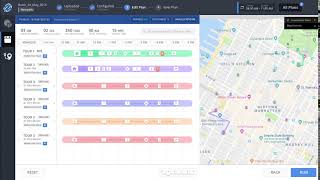
Locus Dispatcher
LABS - Logical Applications for Business Solutions
Locus Dispatcher | Best 23 Alternatives of Locus Dispatcher
Nixlemon - Best Apps & Games
YouTube returned 6 videos for “Locus Dispatcher”, and we withheld 4: 4 did not mention Locus Dispatcher. Showing the 2 we can prove are about Locus Dispatcher.
Official links
Tools that pair well with Locus Dispatcher
Common stack mates teams adopt alongside Locus Dispatcher, with the specific reason each pairing earns its keep.

Optimal Dynamics
Transportation Decision System that automates truckload dispatch, bid analysis, and agentic freight procurement for enterprise carriers

Maximal
Maximal deploys AI agents for truckload carriers to automate tender acceptance, order entry, dispatch planning, billing, and collections.

Spherecast
Agentic supply chain planning for CPG brands that turns forecasts into POs, TOs, and production orders.
Alternatives to Locus Dispatcher
View all
Optimal Dynamics
Transportation Decision System that automates truckload dispatch, bid analysis, and agentic freight procurement for enterprise carriers

Maximal
Maximal deploys AI agents for truckload carriers to automate tender acceptance, order entry, dispatch planning, billing, and collections.

Spherecast
Agentic supply chain planning for CPG brands that turns forecasts into POs, TOs, and production orders.
Frequently Asked Questions
Categories
Best-of guides
Used Locus Dispatcher? Help shape our editorial sentiment research.