
Meta Ray-Ban AI
Smart glasses with AI, camera, and open-ear audio for hands-free capture and voice assistance.
Meta Ray-Ban AI is a solid pick if you prioritize hands-free photo/video and voice assistance in a stylish design. The 12MP camera and open-ear speakers deliver good quality for quick capture, and Meta AI adds live info and translation. But battery life is about 4 hours, there's no AR display, and most features need a paired phone. For deeper AI, consider a smartphone app; for AR/VR, look at Meta Quest. Best for fashion-conscious users who value convenience over heavy productivity.
Verified 20h ago · liveness 79/100 · cite: rightaichoice.com/tools/meta-ray-ban-ai
- Fashion-conscious users wanting discreet wearable tech
- Hands-free content capture for social media
- Quick voice queries and reminders
- Listening to audio without headphones
- Immersive AR/VR experiences
- All-day continuous recording
- Privacy-sensitive environments
We scan live Reddit threads, YouTube comments, X posts, G2 reviews and other communities — and hand you an honest verdict in under a minute.
- Honest verdict, not marketing
- Real pros & cons from real users
- Attributed quotes with receipts
3 free scans · no card needed
Skip Meta Ray-Ban AI if you need all-day battery, AR overlays, or a standalone device that works without a paired smartphone.
Transition lenses cost $80 extra over the base price, and Polarized lenses cost $50 extra.
Starting at $299, Meta Ray-Ban AI sits in the premium wearable category, comparable to other smart glasses. For a similar price, you can get smartphone AI apps, but if you want hands-free capture and style, it's a reasonable buy. However, it costs more than basic Bluetooth glasses, which often lack the camera and AI features.
In short
Meta Ray-Ban AI — Smart glasses with AI, camera, and open-ear audio for hands-free capture and voice assistance. Best for Fashion-conscious users wanting discreet wearable tech, Hands-free content capture for social media, Quick voice queries and reminders. Plans from $299.
What people actually say about Meta Ray-Ban AI — is it worth it?
We ran a structured research pass across product reviews, community discussions, and post-purchase forum threads to surface the patterns vendors won't publish themselves. Below: the recurring strengths, the hidden costs people mention most, and the cohort that consistently regrets adopting this tool.
45 mentions across 3 sources (Hacker News, YouTube, Lemmy) · researched Aug 19, 2026.
Average across the 3 sources that answered — each source counts once, not each post.
- +Compact, stylish, and comfortable like regular Ray-Bans, so they feel natural.
- +Hands-free photo and video capture is liberating for content creating.
- +Open-ear audio is clear enough for music and calls, still lets you hear the world.
- +AI features like object recognition and translation work well and are genuinely useful.
- +Battery life (4h) plus case (8h) covers a full day of casual use.
- −Privacy nightmare: Meta sends footage to human reviewers, leading to lawsuits.
- −Public backlash: dubbed 'pervert glasses'—you'll be feared in public.
- −Facial recognition plans are scary for many and may be illegal.
- −AI sometimes fails at practical tasks like reading grocery labels—an accessibility miss.
- −Potential for accidental recording, people worry they'll forget and film something embarrassing.
- • Prescription lenses can add $100+
- • Required Meta View app and data usage
- • Potential future subscription for AI features (not yet confirmed)
- • Charging case is included, but extra cases are pricey
Viability Score
How well maintained and how widely used is Meta Ray-Ban AI? Built from what the vendor actually publishes (docs, changelog, tutorials, integrations, pricing), whether the site is live, and how much real users discuss it. How we calculate this
Last calculated: September 2026
How we score →Key Features
- 12MP ultra-wide camera
- 1080p video recording at 30fps
- Open-ear speakers
- Three-microphone array
- Capacitive touchpad gestures
- Voice-controlled Meta AI assistant
- Object recognition and translation
- Live streaming to Facebook and Instagram
- Webcam mode for video calls
- Hands-free calling and music playback
- Up to 4 hours battery life
- Charging case with 8 additional hours
- Interchangeable lenses with prescription options
- IPX4 water resistance
- Built-in LED capture indicator
About Meta Ray-Ban AI
Meta Ray-Ban AI combines classic Ray-Ban styling with a 12MP ultra-wide camera, open-ear speakers, and a microphone array. You can take photos, record 1080p video, listen to music, make calls, and use Meta AI for real-time information, object recognition, and translation—all hands-free. The glasses connect to the Meta View app for streaming to Facebook, Instagram, WhatsApp, and Messenger. Battery life is up to 4 hours, with a charging case providing 8 more hours. Lens options include Standard, Transition, and Polarized. Ideal for fashion-forward users who want discreet wearable tech for content capture, audio, and quick voice queries on the go.
Behind the Verdict
Meta Ray-Ban AI stands out for its blend of style and utility. The classic Ray-Ban design means you can wear them anywhere without looking like a tech gadget. The 12MP camera captures wide-angle photos and 1080p video up to 30fps, perfect for quick, hands-free moments. Open-ear speakers keep you aware of your surroundings, ideal for outdoor activities. The three-microphone array ensures clear voice commands and calls. Meta AI integration offers object recognition, real-time translation, and web queries, all via voice. The charging case extends battery to about 12 hours total. However, there are trade-offs. Battery life is limited to 4 hours of mixed use, which might not last a full day. The camera LED indicator is always on when recording, which you might find intrusive in some situations. Translation and AI queries rely on a stable internet connection via your paired phone, so offline use is limited. There's no display for AR overlays, so this is not an AR device. Setup and most features require a compatible smartphone, so it's not a standalone device. For fashion-conscious users who want convenient, hands-free social media capture and voice queries, this is a great choice. But if you need heavy productivity, all-day recording, or AR experiences, you'll want to look elsewhere.
Researching Meta Ray-Ban AI? Get your full AI stack in 60 seconds.
Free, no signup — tell us your goal and get tools matched to your budget & existing stack.
Real-world workflow fit
Concrete scenarios for the personas Meta Ray-Ban AI actually fits — and what changes day-one when you adopt it.
Exploring a new city and wanting to capture sights hands-free without pulling out a phone.
Outcome: With Meta Ray-Ban AI, you can take photos or record 1080p video using the touchpad or voice commands, and use Meta AI to translate signs or get local info, all while keeping your hands free for navigation.
Creating short-form videos for Instagram or Facebook and wanting a first-person perspective without holding a camera.
Outcome: The 12MP camera and open-ear audio allow you to record or live-stream directly to your social platforms via the Meta View app, capturing dynamic POV content that stands out.
Wanting to listen to music or podcasts while keeping ears open for safety during outdoor runs.
Outcome: Open-ear speakers let you enjoy audio from Spotify or Apple Music while staying aware of traffic, hands-free, and without the discomfort of earbuds.
Use Cases
- Taking hands-free photos and videos while hiking or traveling.
- Getting voice-activated directions or weather updates during a walk.
- Translating foreign menus or signs in real time.
- Live streaming a concert or event to social media.
- Making calls or sending WhatsApp messages without holding your phone.
- Listening to podcasts or music while staying aware of surroundings.
Models Under the Hood
as of 2026-08-31
Limitations
- Battery life is about 4 hours of mixed use.
- The camera LED indicator is always on when recording, which some may find intrusive.
- Translation and AI queries require a stable internet connection via a paired smartphone.
- There is no built-in display for AR overlays.
- The glasses are IPX4 water-resistant but not waterproof.
- Setup and most features require a compatible smartphone.
as of 2026-08-28
Verification history
We have re-verified Meta Ray-Ban AI 17 times since . Each pass re-reads the vendor's own pages and re-checks every listed field against that evidence; passes where nothing had changed are marked as such.
- — re-checked, vendor evidence unchanged
- — re-checked, vendor evidence unchanged
- — re-checked, vendor evidence unchanged
- — re-checked, vendor evidence unchanged
- — re-checked, vendor evidence unchanged
- — re-checked, vendor evidence unchanged
Showing the 6 most recent of 17 verification passes.
Free to cite with attribution — this page re-verifies continuously.
12-month cost
Project the real annual outlay, including the implied monthly cost when only an annual tier is published.
Vendor list price only. Add-on usage, seat overages, and contract minimums are surfaced under Hidden costs & gotchas.
Plans compared
For each published Meta Ray-Ban AI tier: who it actually fits, and what it adds vs. the previous tier. Cross-reference the cost calculator above for projected annual outlay.
Standard
$299
Ideal for
Early adopters and fashion-forward users who want the core smart glasses experience: AI, camera, and audio.
What this tier adds
Starting tier with standard clear lenses, includes full access to Meta AI and all hardware features.
Transition
$379
Ideal for
Outdoor enthusiasts who need lenses that adapt to sunlight and shade automatically.
What this tier adds
Adds photochromic lenses that darken in sunlight, plus UV protection and scratch-resistant coating, for $80 more.
Polarized
$349
Ideal for
Users who spend time near water or driving and need reduced glare.
What this tier adds
Adds polarized lenses to reduce glare, along with UV protection and scratch-resistant coating, for $50 more.
Where the pricing makes sense
The company stage and team size where Meta Ray-Ban AI's pricing actually pencils out — and where peers do it cheaper.
Starting at $299, Meta Ray-Ban AI sits in the premium wearable category, comparable to other smart glasses. For a similar price, you can get smartphone AI apps, but if you want hands-free capture and style, it's a reasonable buy. However, it costs more than basic Bluetooth glasses, which often lack the camera and AI features.
Setup time & first value
How long it actually takes to get something useful out of Meta Ray-Ban AI — broken out by persona, not the marketing-page minute.
For a first-time user, expect about 15 minute to pair the glasses with the Meta View app, update firmware, and learn basic gestures. From then on, capturing photos or music is instant, and you can start using AI features after a quick sign-in.
Switching to or from Meta Ray-Ban AI
How to bring data in from common predecessors and how to get it back out — written for the switcher, not the buyer.
- →From traditional sunglasses: Swap your regular shades for Meta Ray-Ban AI to gain hands-free photo and audio capabilities without changing your style.
- ↗To a smartphone: If you don't need hands-free capture, a smartphone offers better battery life and more AI features at a lower cost.
Integrations
Resources & Guides
Tutorials & Learning

Ray-Ban Metaメガネの使い方!(ステップバイステップガイド)
Simple Alpaca
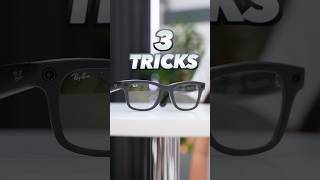
Ray-Ban Meta AI メガネ - 3 つのトリック!
Hayls World

Ray-Ban Meta Glasses Tips and Tricks You Need To Know!
Tom’s Guide、Phil Rodrigues
YouTube returned 6 videos for “Meta Ray-Ban AI”, and we withheld 2: 2 did not mention Meta Ray-Ban AI. Showing the 4 we can prove are about Meta Ray-Ban AI.
Official links
Tools that pair well with Meta Ray-Ban AI
Common stack mates teams adopt alongside Meta Ray-Ban AI, with the specific reason each pairing earns its keep.

Alternatives to Meta Ray-Ban AI
View all
Popular in Everyday Life


Frequently Asked Questions
Categories
Topics
Used Meta Ray-Ban AI? Help shape our editorial sentiment research.