
Mobilerun
Open-source mobile automation framework that drives real iOS and Android devices from plain-English goals, plus a managed cloud phone fleet.
For Python teams, the framework half is the most checkable open-source route to putting LLM agents on real phones — 98.34% iOSWorld across 133 tasks is published, and the one-line provider swap keeps you out of a single-vendor corner. The catch is the split: the hosted VA assistant is still beta, and iOS only arrives with a paid cloud plan. Start free on your own device, budget the learning curve, then decide whether cloud minutes are worth it.
Verified 4d ago · liveness 80/100 · cite: rightaichoice.com/tools/mobilerun
- Python developers who want to own the prompts, tools and trajectories of an LLM mobile agent
- QA teams replacing Appium/XPath suites with plain-English tests that run on real devices
- Data teams extracting typed records from apps that have no public API
- Cloud-phone buyers who need resident iOS devices, eSIM/OTP and per-region residential IPs
- Anyone without Python skills — the open-source core is a pip package, not a no-code builder
- Latency-sensitive control loops: planning happens before the first tap fires
- Teams whose plan depends on local iOS hardware — iPhones sit on the cloud side
We scan live Reddit threads, YouTube comments, X posts, G2 reviews and other communities — and hand you an honest verdict in under a minute.
- Honest verdict, not marketing
- Real pros & cons from real users
- Attributed quotes with receipts
3 free scans · no card needed
Skip Mobilerun if you don't write Python and need a no-code production agent today — the open-source core is a Python framework and the hosted VA assistant is still beta.
Past your plan's pooled device minutes, overage runs $0.03 per minute on the Developer, Startup and Scaleup tiers — a few always-on phones burn through 600 minutes fast.
The framework is free and MIT-licensed, so your real cost is engineering time. On the cloud side, $20/mo Developer fits solo builders and small QA teams, $99/mo Startup fits a team running several parallel workflows, and $299/mo Scaleup fits 20 seats and 100 concurrent phones. Below that, hosted browser/device clouds like BrowserStack and Sauce Labs cover testing but not LLM-driven agents on real phones; above it, you move to an Enterprise agreement. Dedicated hardware runs $64/mo billed annually (Android,
In short
Mobilerun — Open-source mobile automation framework that drives real iOS and Android devices from plain-English goals, plus a managed cloud phone fleet. Best for Python developers who want to own the prompts, tools and trajectories of an LLM mobile agent, QA teams replacing Appium/XPath suites with plain-English tests that run on real devices, Data teams extracting typed records from apps that have no public API. Free to start; paid plans from $4/mo.
What's new in Mobilerun
Checked 4 days agoAcross the latest 5 updates: 1 feature update, 1 pricing change and 3 news mentions.
New plans: Free, Developer, Startup and Scaleup
Four monthly plans with device minutes, credits and residential traffic included, plus add-ons for dedicated phones, phone numbers, dedicated residential IPs, mailboxes and credits. Free plan to start; paid plans from $20/month; dedicated Android from $64/month billed annually.
How to run TypeSafe's Jev on a real Android phone with mobilerun
A walkthrough for connecting TypeSafe's Jev agent to a real Android device via mobilerun.
How to Automate Mobile App QA Without Writing Scripts
Argues dynamic AI-driven apps outpace static test scripts and covers scriptless QA automation running on real devices.
Mobilerun vs DuoPlus: Which Cloud Phone Platform Fits Your Workflow?
A vendor-authored head-to-head of two cloud phone platforms for automating social accounts at scale.
Public status page with 90-day uptime history
Live uptime tracking for Tasks API, Devices API, mobilerun Cloud and mobilerun VA, with 90-day per-component history, so the uptime claim has a measurement behind it.
What people actually say about Mobilerun — is it worth it?
We ran a structured research pass across product reviews, community discussions, and post-purchase forum threads to surface the patterns vendors won't publish themselves. Below: the recurring strengths, the hidden costs people mention most, and the cohort that consistently regrets adopting this tool.
24 mentions across 3 sources (Hacker News, YouTube, GitHub) · researched Aug 27, 2026.
Average across the 3 sources that answered — each source counts once, not each post.
- +LLM-agnostic: swap between Gemini, OpenAI, Anthropic, etc. in one line
- +Vision mode with screenshot fallback helps when accessibility tree fails
- +Multi-agent architecture (Task, Testing, Research) splits work efficiently
- +Open-source MIT license with active GitHub (9,100+ stars)
- +Supports both local devices via USB/ADB and cloud fleets
- −In practice, only opens apps, struggles with taps and clicks
- −Task termination bug — agent restarts planning instead of stopping
- −Syntax errors (unterminated string) crash runs
- −Official sample scripts fail for some LLM models (e.g., qwq)
- −Setup is non-trivial; beginners ask for tutorials
- • Cloud usage may incur per-device or per-run costs
- • iOS support requires cloud, which adds fees
- • Potential extra costs for residential IPs and stealth features
Viability Score
How well maintained and how widely used is Mobilerun? Built from what the vendor actually publishes (docs, changelog, tutorials, integrations, pricing), whether the site is live, and how much real users discuss it. How we calculate this
Last calculated: October 2026
How we score →Key Features
- Natural-language goals drive real iOS and Android devices
- LLM-agnostic provider swapping in one line (Gemini, OpenAI, Anthropic, xAI, DeepSeek, MiniMax, Z.AI, Qwen, Ollama,
- Vision mode: screenshot-based fallback when the accessibility tree is insufficient
- Reasoning mode: multi-step chain-of-thought planning about UI state before acting
- Structured output: extract typed data with Pydantic models
- Custom tool registration to extend the agent beyond built-in actions
- App cards with pre-built interaction patterns for popular apps
- Task Agents, Testing Agents and Research Agents archetypes
- Local device control over USB/ADB: pip install, mobilerun setup, mobilerun run
- MIT-licensed Python framework, Python 3.11-3.13, Android 10+
- Managed cloud fleet with persistent device identity and residential IPs
- iOS cloud devices with eSIM and SMS; receive on every plan, send on Enterprise
- MCP server for Claude Code, Cursor and VS Code
- Public status page with 90-day uptime history for Tasks API, Devices API, cloud and VA
- iOSWorld benchmark: 98.34% mean official score across 133 tasks; 116 AndroidWorld task trajectories
About Mobilerun
Mobilerun is an open-source Python framework for AI agents that control real iOS and Android devices. You hand the agent a goal in plain English — the docs' example is "Open Twitter and post 'Hello from mobilerun!'" — and it works out the taps, swipes and typing on physical hardware instead of brittle XPath selectors or Appium scripts. It's MIT-licensed, runs on Python 3.11 to 3.13, and targets Android 10+. Three commands (`pip install mobilerun`, `mobilerun setup`, `mobilerun run`) put you at your first agent on a USB/ADB-connected device in about 60 seconds. The framework is LLM-agnostic: swap providers in one line across Gemini, OpenAI, Anthropic, xAI, DeepSeek, MiniMax, Z.AI, Qwen, Ollama and OpenRouter, plus any OpenAI-compatible endpoint. Six primitives cover the lifecycle — LLM swapping, vision mode (screenshot fallback when the accessibility tree is too thin, or both combined for accuracy), reasoning mode with chain-of-thought planning, structured output via Pydantic models, custom tool registration, and app cards with pre-built interaction patterns. Work splits across three archetypes: Task Agents for multi-app workflows, Testing Agents for plain-English mobile tests, and Research Agents for structured data extraction. The project publishes checkable results: an iOSWorld mean official score of 98.34% across 133 tasks (123 full credit, 10 partial), and 116 AndroidWorld task trajectories with recorded actions and screenshots. Community numbers run 9,617+ GitHub stars, 1,810+ Discord members and 30 contributors. The framework is the free, self-hosted half. The paid half is mobilerun cloud: hosted devices, persistent device identity, residential IPs, and iOS devices with eSIM and SMS. A hosted mobilerun VA assistant is in beta. Positioning: if your team writes Python and wants to own the prompts, tools and trajectories, this is the open-source route to LLM-driven mobile automation, and it plays alongside legacy tools rather than replacing your device lab on
Behind the Verdict
We reach for Mobilerun when the work is genuinely open-ended on a phone — a multi-app flow nobody wants to re-write every sprint, or a QA pass where the app's UI shifts faster than the selector files. Handing the agent a goal and reading the trajectory beats maintaining XPath. The published iOSWorld score and AndroidWorld trajectories matter here: most agent-on-phone demos show a highlight reel, and this one shows per-task credit. The six primitives are where the framework earns its keep. Reasoning mode plans before it taps, vision mode bails the agent out when the accessibility tree is thin, and structured output means research runs return Pydantic objects instead of a wall of scraped text. Custom tools and app cards cut the boilerplate for the handful of apps you automate every day. Pass on the framework if nobody on the team writes Python. This is a pip package with a config object, not a no-code builder, and the setup step expects a device you can see over ADB. Also pass if the flow needs sub-second reactions — planning happens before the first tap, and the docs' own quickstart lands around 3.8 seconds for two actions. Where the cloud half bites is iOS. Local device control is the open-source path; a real iPhone, eSIM numbers and OTP handling live on the cloud side and on the dedicated-phone add-ons. If iOS is the whole point, you are buying a plan, not installing a package. Compare it to DuoPlus or similar cloud-phone platforms and the split is different in kind: those rent you devices, Mobilerun gives you a framework you can self-host and an API-first cloud underneath the same agent. Against Appium and Maestro, you trade deterministic scripts for probabilistic planning — keep the scripted suite for release gating and point the agent at the exploratory and
Researching Mobilerun? Get your full AI stack in 60 seconds.
Free, no signup — tell us your goal and get tools matched to your budget & existing stack.
Real-world workflow fit
Concrete scenarios for the personas Mobilerun actually fits — and what changes day-one when you adopt it.
You pip install mobilerun, run mobilerun setup, plug an Android handset in over USB/ADB, and run mobilerun run "Open Settings and check battery level" to watch the agent plan and tap through two steps.
Outcome: A working agent on real hardware in about 60 seconds, with the config object ready to swap the LLM provider in one line and app cards available for the apps you plan to target next.
You write Test-agent scenarios in plain English instead of XPath, run them against a Startup plan org with 25 concurrent phones, and use reasoning mode to let the agent plan around shifting UI states.
Outcome: Scriptless regression runs on real devices, with the public status page giving 90-day uptime history for the Tasks and Devices APIs so failures can be separated from platform incidents.
You deploy a Research agent with Pydantic structured output against a hosted Android device carrying a dedicated residential IP, and monitor credit and traffic consumption against the plan allowance.
Outcome: Typed records land in your pipeline rather than raw strings; you track the $0.01-per-credit and $10-per-GB overage lines so a long scrape doesn't blow the budget.
Use Cases
- Open Twitter and post a message from code with a single natural-language goal
- Search, filter, and book hotels across travel apps
- Keep daily streaks alive across any mobile app
- Extract structured data from any mobile app that exposes no public API
- Write mobile tests in plain English instead of Appium/XPath suites
- Automate multi-app workflows for data pipelines
- Automate a Vinted shop: relist items and answer buyers
- Run a real WhatsApp account on a cloud number for automation
Models Under the Hood
as of 2026-10-17
Limitations
- The open-source framework is self-hosted and LLM-agnostic, so agent quality tracks whichever model you plug in.
- Cloud device access is billed separately from the free framework: the Free plan gives 1 concurrent phone, 1 seat, 60 device minutes, 500 credits ($5) and 1 GB residential traffic per month, while paid plans start at $20/month (Developer).
- Past your allowance, extra minutes cost $0.03 each, extra credits $0.01 each, and extra residential traffic $10 per GB; dedicated hardware is an add-on.
- The hosted mobilerun VA assistant is still in beta.
as of 2026-10-04
Verification history
We have re-verified Mobilerun 10 times since . Each pass re-reads the vendor's own pages and re-checks every listed field against that evidence; passes where nothing had changed are marked as such.
- — re-verified summary, description, our verdict, our analysis, pricing model, pricing tiers, features, integrations, who it suits, who should skip it
- — re-verified summary, description, our verdict, our analysis, pricing model, pricing tiers, features, integrations, who it suits, who should skip it
- — re-verified summary, description, our verdict, our analysis, pricing model, pricing tiers, features, integrations, who it suits, who should skip it
- — re-verified summary, description, our verdict, our analysis, pricing model, pricing tiers, features, integrations, who it suits, who should skip it
- — re-verified summary, description, our verdict, our analysis, pricing model, pricing tiers, features, integrations, who it suits, who should skip it
- — re-verified summary, description, our verdict, our analysis, pricing model, pricing tiers, features, integrations, who it suits, who should skip it
Showing the 6 most recent of 10 verification passes.
Free to cite with attribution — this page re-verifies continuously.
12-month cost
Project the real annual outlay, including the implied monthly cost when only an annual tier is published.
Vendor list price only. Add-on usage, seat overages, and contract minimums are surfaced under Hidden costs & gotchas.
Plans compared
For each published Mobilerun tier: who it actually fits, and what it adds vs. the previous tier. Cross-reference the cost calculator above for projected annual outlay.
Free
$0/mo
Ideal for
Individual developers exploring the platform before committing, or anyone validating a single automation idea on one phone.
What this tier adds
Starting tier: $0/mo with 1 concurrent phone, 1 seat, 60 device minutes, 500 credits ($5) and 1 GB residential traffic; stops at the limit rather than charging overage.
Developer
$20/mo
Ideal for
Solo builders and small QA teams running a handful of automations in parallel and testing before production.
What this tier adds
$20/mo billed monthly adds 5 concurrent phones, 3 seats, 600 device minutes (10 hours), 1,500 credits ($15) and 5 GB residential traffic, with overage at $0.03/min, $0.01/credit and $10/GB.
Startup
$99/mo
Ideal for
Small teams putting mobile workflows into production and needing more parallel capacity plus a support channel.
What this tier adds
$99/mo billed monthly raises capacity to 25 concurrent phones, 5 seats, 3,000 device minutes (50 hours), 4,000 credits ($40) and 10 GB traffic, and adds a support channel over the Free plan's Discord.
Scaleup
$299/mo
Ideal for
Larger teams scaling across multiple workloads and departments, needing many seats and high parallelism.
What this tier adds
$299/mo billed monthly lifts the ceiling to 100 concurrent phones, 20 seats, 9,000 device minutes (150 hours), 10,000 credits ($100) and 15 GB traffic, with dedicated support.
Enterprise
Custom
Ideal for
Organizations running large fleets with compliance, SMS-sending and SLA requirements.
What this tier adds
Custom: unlimited concurrent phones, outbound SMS, a custom SLA and individually agreed prices, booked via a call.
Dedicated phone — Android + dedicated IP
$64/mo billed annually ($768/yr), or $80/mo monthly
Dedicated phone — iPhone + dedicated IP
$160/mo billed annually ($1,920/yr), or $200/mo monthly
Bring your own — Connect your phone
$4/mo billed annually ($48/yr), or $5/mo monthly
Where the pricing makes sense
The company stage and team size where Mobilerun's pricing actually pencils out — and where peers do it cheaper.
The framework is free and MIT-licensed, so your real cost is engineering time. On the cloud side, $20/mo Developer fits solo builders and small QA teams, $99/mo Startup fits a team running several parallel workflows, and $299/mo Scaleup fits 20 seats and 100 concurrent phones. Below that, hosted browser/device clouds like BrowserStack and Sauce Labs cover testing but not LLM-driven agents on real phones; above it, you move to an Enterprise agreement. Dedicated hardware runs $64/mo billed annually (Android,
Setup time & first value
How long it actually takes to get something useful out of Mobilerun — broken out by persona, not the marketing-page minute.
Open-source path: roughly 60 seconds on your own Android device — pip install mobilerun, mobilerun setup, mobilerun run. Count an hour or two if you also want to wire custom tools and app cards. Cloud path: a Developer plan at $20/mo billed monthly gives you hosted phones immediately, but expect an onboarding session to configure residential IPs, device locations and MCP integration. iOS work
Switching to or from Mobilerun
How to bring data in from common predecessors and how to get it back out — written for the switcher, not the buyer.
- →From Appium/XPath suites: rewrite the selectors as plain-English Test-agent goals, since the agent derives taps and swipes from the UI state rather than a locator tree.
- →From hand-rolled LLM + ADB scripts: replace your glue layer with the six primitives, especially vision mode and reasoning mode, which the framework already ships.
- →From a browser-only device cloud: move the same agent definition from local USB/ADB devices onto mobilerun Cloud for persistent device identity and residential IPs.
- →From one-device tinkering to a fleet: keep the framework code and move execution to a paid plan with more concurrent phones rather than rewriting prompts.
- ↗To self-managed emulators: since the core is MIT-licensed and LLM-agnostic, you can self-host against your own device farm and drop the cloud subscription.
- ↗To a different agent orchestrator: structured Pydantic outputs and custom tool registration make it practical to lift agent logic into LangChain, CrewAI or the OpenAI Agents SDK.
- ↗To a browser/desktop automation stack: viable only if your targets expose web UIs, since Mobilerun's value is real-phone control.
Integrations
Resources & Guides
Tutorials & Learning
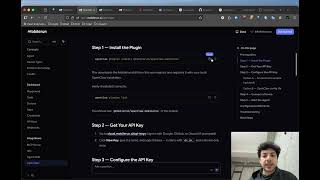
YouTube returned 6 videos for “Mobilerun”, and we withheld 5: 5 could not be judged, because “Mobilerun” is a single word that other videos use for other things. Showing the 1 we can prove is about Mobilerun.
Official links
Tools that pair well with Mobilerun
Common stack mates teams adopt alongside Mobilerun, with the specific reason each pairing earns its keep.

Featured Head-to-Head Comparisons
Mobilerun vs Spider Cloud
Choose Mobilerun if your primary need is AI-driven mobile automation on real iOS/Android devices, especially if you want open-source flexibility and LLM-agnostic control. Choose Spider Cloud if your focus is web data extraction for AI agents, offering a fast Rust-based API, 1,000+ scraper examples, and recent Browser AI commands for dynamic interaction. The tools serve different domains so the decision hinges on whether you need mobile or web automation.
Mobilerun vs Temporal Ai
Choose Mobilerun if your goal is to control mobile devices with natural language for testing or data extraction; choose Temporal AI if you need a robust, durable orchestration layer for AI agents that must survive failures. They are complementary: Temporal can orchestrate Mobilerun agents for reliability.
Mobilerun vs Presto Voice
Mobilerun and Presto Voice serve entirely different markets. Mobilerun is a developer-centric open-source framework for automating mobile devices using natural language and multiple LLMs. Presto Voice is a turnkey voice AI solution for QSR drive-thrus, proven to boost revenue and efficiency. Choose based on your domain: mobile automation vs. restaurant operations.
Alternatives to Mobilerun
View all
Popular in Browser & Computer-Use Agents

Spider Cloud
Spider Cloud is a web scraping, crawling, and search API that streams live pages as markdown or JSON for AI agents and RAG pipelines.

OpenAgents
OpenAgents is an open-source language agent platform for data analysis, 200+ plugins and autonomous web browsing.
Frequently Asked Questions
Used Mobilerun? Help shape our editorial sentiment research.