ModelsLab is live · pricing from $21/mo · last verified 19 Nov 2026 · viability healthy

ModelsLab
One API key for image, video, audio and LLM model generation across 10,000+ models
Pick ModelsLab if your product touches more than one modality and you'd rather ship one integration than four. The concurrency and call allowances at $21 and $47 are reasonable, and the MCP server is genuinely useful if your team lives in Cursor. Go elsewhere if your workload is 90% premium video — wallet-billed Google and Kling calls on top of a $149 subscription get expensive fast, and a single-vendor API is usually cheaper per call.
Verdict generatedVerified 3d ago · liveness 80/100 · cite: rightaichoice.com/tools/modelslab
- Engineering teams shipping image, video, audio and LLM generation behind a single API key
- Agent builders who want media generation inside Cursor, Claude Desktop or VS Code via the MCP server
- Product teams that swap between Veo, Kling, Seedance and Wan without rewriting client code
- Teams running mostly self-hosted open-source models who want unlimited generations at $149/mo
- Non-technical users who want a visual no-code builder — this is an API and playground, not a design app
- Premium-video-heavy workloads — Google, Kling, Seedance and ByteDance calls bill per call from a prepaid wallet on every plan
- Single-model shops that would pay less per call going direct to that vendor
We scan public community discussion about ModelsLab and hand you an honest verdict, or say plainly when we cannot tie the posts to this tool.
- Honest verdict, not marketing
- Real pros & cons from real users
- Attributed quotes with receipts
Free scans included · no card needed
Skip ModelsLab if you need a no-code visual builder or fixed per-clip video pricing — it is API-first and its premium video models bill per second from a prepaid wallet on top of any plan.
Premium models from Google, Kling, Seedance and Vidu bill per call from a prepaid wallet on every plan, so the $149/mo unlimited plan still needs separate wallet funding.
At $21/mo Basic Prototype, $47/mo Standard Production and $149/mo Open Source Unlimited, ModelsLab sits in the same band as fal.ai and Replicate: cheap entry, then per-call wallet spend for premium models. The $149/mo unlimited tier is the real differentiator for teams running mostly self-hosted open-source models, where a single-model shop going direct to ElevenLabs or Kling can still beat it per call.
In short
ModelsLab — One API key for image, video, audio and LLM model generation across 10,000+ models. Best for Engineering teams shipping image, video, audio and LLM generation behind a single API key, Agent builders who want media generation inside Cursor, Claude Desktop or VS Code via the MCP server, Product teams that swap between Veo, Kling, Seedance and Wan without rewriting client code. Plans from $21/mo.
What is ModelsLab?
ModelsLab — One API key for image, video, audio and LLM model generation across 10,000+ models. Best for Engineering teams shipping image, video, audio and LLM generation behind a single API key, Agent builders who want media generation inside Cursor, Claude Desktop or VS Code via the MCP server, Product teams that swap between Veo, Kling, Seedance and Wan without rewriting client code. Plans from $21/mo.
ModelsLab is an API-first generative media platform where text-to-image, text-to-video, voice, LLM and 3D endpoints sit behind a single key and one JSON request shape. The catalogue runs to 10,000+ models organized by task rather than vendor: Google's GPT Image 2.5 and Nano Banana 2.1 for image generation and conversational editing, Black Forest Labs' Flux 3 and the distilled Flux 3 Klein for fast text-to-image and inpainting, Alibaba's Qwen Image 2.0 Realtime and Wan 3.0 for realtime generation and reference-to-video, plus Veo 3.1, Kling 3.0, Seedance 2.5 and MiniMax's Hailuo 03 on the video side. Fibo 2.0 handles maskless in-context editing, Drama covers zero-shot emotional voice cloning, and Eleven V4 and Minimax H3 cover speech. It's built for engineers rather than designers. You compare models in a playground, then call any of them from Python, TypeScript, PHP, Dart and Go SDKs, a CLI, or an MCP server that drops straight into Cursor, Claude Desktop, VS Code or Windsurf. Tool-calling lets an LLM agent inspect schemas and invoke image, video and voice tools dynamically, and an agents control plane handles signup, Stripe checkout, subscription and key issuance without a browser. Production plumbing is the pitch: every request is logged with model, status and latency, webhooks fire when long video jobs finish, and shared GPUs scale into dedicated A100-class capacity with 99.9% uptime. Metered rates start at $0.0047 per image, $0.02 per video second, $0.001 per audio second and $0.20 per million LLM tokens. The trade-off versus fal.ai and Replicate is the money model, not the catalogue. Premium models from Google, Kling, Seedance and ByteDance bill per call from a prepaid wallet on every plan, so the $149 Open Source Unlimited tier only means unlimited on models ModelsLab hosts itself.
Key features
- Text-to-image via GPT Image 2.5, Nano Banana 2.1, Flux 3 and Flux 3 Klein
- Conversational image editing and maskless in-context edits via Fibo 2.0 and Nano Banana 2.1
- Inpainting, outpainting, upscaling, background removal and image extension APIs
- Realtime text-to-image generation via Qwen Image 2.0 Realtime
- Text-to-video via Veo 3.1, Kling 3.0, Seedance 2.5, Wan 3.0, LTX 2.5 and Hailuo 03
- Image-to-video and reference-to-video animation from high-resolution stills
- Text-to-speech, zero-shot voice cloning, dubbing and voice changer APIs
- Music generation and sound-effect generation from text prompts
- Text-to-3D and image-to-3D generation endpoints
- LLM chat and reasoning models through the same API key, or self-host on dedicated GPUs
- MCP server with one-click config for Cursor, Claude Desktop, VS Code and Windsurf
- Agent tool calling — LLM agents inspect schemas and invoke image, video and voice tools
- Python, TypeScript, PHP, Dart and Go SDKs plus a command-line interface
- Per-request logging with webhooks for long-running video and audio jobs
- Agents control plane with agent-driven signup, Stripe checkout and API key issuance
Behind the verdict
The decision here turns on breadth versus unit economics. If you're building a product where a user might generate an image, animate it, dub it and answer a question about it in the same session, ModelsLab collapses that into one key and one invoice. That's worth real money in engineering time — the alternative is stitching fal.ai for images, Replicate for odd models and a separate TTS vendor, then reconciling three billing dashboards.Where it bites is premium video. Open-source models that ModelsLab hosts (Flux, SDXL, SD 1.5, WAN) are unlimited on the $149 plan with 15 parallel requests. Google, Kling, Seedance, Vidu and ByteDance models bill per call from your wallet on every plan, including that one. Run a batch of Kling clips and the video line item can dwarf the subscription. Check the per-model rate before you launch anything at volume.We'd reach for this on agent infrastructure. The MCP endpoint means Claude Desktop, Cursor, VS Code or Windsurf can generate images and video without you writing a wrapper, and agent tool calling means an autonomous loop can pick a model, call it and stream assets back into context. There's also a real CLI and five SDKs, so the integration isn't a dead end if you outgrow it.The closest alternative is Replicate, which has a comparable model-bazaar feel but a narrower media story — less video, no equivalent MCP-first tooling we can see. fal.ai wins on inference speed for the models it hosts, though you're constrained to its catalogue. If you only ever call one model, going direct to that vendor will almost always undercut any aggregator. Budget a small wallet top-up on day one if you plan to test premium models, because
Models under the hood
as of 2026-11-22
Limitations
- Plans start at $21/month with no free tier and no anonymous sandbox key; each plan includes a monthly API call allowance, and usage beyond it is billed from a prepaid wallet that still needs funding even on the $149/month Open Source Unlimited plan.
- Unlimited generations apply only to open-source models on ModelsLab's own infrastructure; closed-source models run on provider infrastructure and are billed per call.
- Concurrency is capped by plan at 5, 10 or 15 parallel API requests.
as of 2026-10-31
Researching ModelsLab? Get your full AI stack in 60 seconds.
Free, no signup — tell us your goal and get tools matched to your budget & existing stack.
Is ModelsLab still active?
ModelsLab is live · pricing from $21/mo · last verified 19 Nov 2026 · viability healthy.
Viability score
How well maintained and how widely used is ModelsLab? Built from what the vendor actually publishes (docs, changelog, tutorials, integrations, pricing), whether the site is live, and how much real users discuss it. How we calculate this
Last calculated: November 2026
How we score →What do users say about ModelsLab?
What people actually say about ModelsLab — is it worth it?
We scanned public community sources for ModelsLab on Nov 15, 2026 and could not establish that the discussion we found is about this tool rather than something else sharing its name. Only 1 of the posts we fetched could be positively tied to ModelsLab. Rather than publish a sentiment score built on the wrong subject, we publish nothing here and re-run the scan.
How we verified this
Every listed fact about ModelsLab — pricing, features, links, status — is re-read from the vendor's own pages by our verification pipeline and each change is logged with a date; the last pass ran on 19 Nov 2026. Analysis is drafted with AI models and checked against our editorial standards before publishing; see how we verify.
Verification history
We have re-verified ModelsLab 15 times since . Each pass re-reads the vendor's own pages and re-checks every listed field against that evidence; passes where nothing had changed are marked as such.
- — changed models, pricing page
- — changed features, our verdict, summary, who it suits, description, who should skip it, pricing tiers, integrations
- — changed models, pricing page
- — changed our verdict, summary, pricing tiers, description, features
- — changed limitations, models, pricing page
- — changed integrations, setup time, pricing fit, features, pricing tiers, description, models, hidden costs, switching out, switching in, limitations, our verdict, use cases, summary, who should skip it
Showing the 6 most recent of 15 verification passes.
Free to cite with attribution — this page re-verifies continuously.
How much does ModelsLab cost in 2026?
ModelsLab: Plans from $21/mo. Pricing last verified 19 Nov 2026.
We read ModelsLab’s pricing page every week; last read . No proven price change since we began watching it on 14 Nov 2026. How this is checked
12-month cost
Project the real annual outlay, including the implied monthly cost when only an annual tier is published.
Prices as the vendor publishes them, including any current offer. Add-on usage, seat overages, and contract minimums are surfaced under Hidden costs & gotchas.
Where the pricing makes sense
The company stage and team size where ModelsLab's pricing actually pencils out — and where peers do it cheaper.
At $21/mo Basic Prototype, $47/mo Standard Production and $149/mo Open Source Unlimited, ModelsLab sits in the same band as fal.ai and Replicate: cheap entry, then per-call wallet spend for premium models. The $149/mo unlimited tier is the real differentiator for teams running mostly self-hosted open-source models, where a single-model shop going direct to ElevenLabs or Kling can still beat it per call.
Has ModelsLab's pricing changed?
No plan price for ModelsLab has moved since we began tracking it in Aug 2026; the pricing page is re-read on every verification pass.
Who should pick ModelsLab?
Pick ModelsLab if you are Engineering teams shipping image, video, audio and LLM generation behind a single API key, Agent builders who want media generation inside Cursor, Claude Desktop or VS Code via the MCP server, Product teams that swap between Veo, Kling, Seedance and Wan without rewriting client code, Teams running mostly self-hosted open-source models who want unlimited generations at $149/mo.
Look elsewhere if you are Non-technical users who want a visual no-code builder — this is an API and playground, not a design app, Premium-video-heavy workloads — Google, Kling, Seedance and ByteDance calls bill per call from a prepaid wallet on every plan, Single-model shops that would pay less per call going direct to that vendor, Buyers who need fixed, forecastable per-clip video pricing rather than per-second rates.
Skip it if Skip ModelsLab if you need a no-code visual builder or fixed per-clip video pricing — it is API-first and its premium video models bill per second from a prepaid wallet on top of any plan.
GeneratedReal-world workflow fit
Concrete scenarios for the personas ModelsLab actually fits — and what changes day-one when you adopt it.
You install the Python SDK, generate product shots with Flux 3 at 4K, animate one with SkyReels V4, and add a voiceover through Eleven V4 — all under one key.
Outcome: One client library and one invoice instead of three vendor integrations, with provider swaps handled by changing the model string.
You point the MCP server at ModelsLab so your coding agent can call image and video generation directly, then issue an API key through the agents control plane.
Outcome: Media generation becomes a tool your agent calls, without you writing an integration layer or a signup flow.
You move Flux, SDXL and WAN workloads onto the $149/mo Open Source Unlimited plan with 15 parallel generations and priority GPU clusters.
Outcome: Predictable monthly spend with no credit deduction on open-source generations, so prototyping doesn't burn wallet balance.
Use cases
- Generate product images and marketing visuals with text-to-image APIs like Flux 3 and Nano Banana 2.1.
- Create short-form videos for social media using Wan 2.7 text-to-video or SkyReels V4 image-to-video.
- Build voice-enabled applications with text-to-speech, voice cloning and dubbing APIs.
- Automate content workflows by chaining image, video and audio calls under one key.
- Develop AI agents that generate media assets on the fly via the MCP server.
- Generate 3D assets for games or AR from text or images.
- Produce background music for videos using the Lyria 3 API.
- Edit or reframe existing footage with video-to-video transformation.
Setup time & first value
How long it actually takes to get something useful out of ModelsLab — broken out by persona, not the marketing-page minute.
Signup to first API call is minutes: create an account, pick a plan, copy the key and run the quickstart. The docs walk through authentication, rate limits, error codes, webhooks and SDK installs. Wiring the MCP server into Claude Code or Cursor is a short configuration step rather than a build.
Switching to or from ModelsLab
How to bring data in from common predecessors and how to get it back out — written for the switcher, not the buyer.
- →From fal.ai: ModelsLab publishes a direct comparison and keeps the same request shape across modalities, so you swap base URLs and model IDs.
- →From Replicate: ModelsLab names Replicate as an alternative and offers Python, TypeScript, PHP, Dart and Go SDKs to re-implement the calls.
- →From direct provider APIs (ElevenLabs, Kling, Runway): consolidate onto one key and pay premium models per call from the wallet.
- →From self-managed Stable Diffusion infrastructure: move Flux, SDXL and WAN onto the $149/mo Open Source Unlimited plan for unlimited hosted generations.
- ↗To fal.ai: if you only ever call one model, going direct typically beats per-call wallet pricing on premium models.
- ↗To Replicate: a comparable model-host marketplace if you prefer its catalogue and billing model.
- ↗To ElevenLabs direct: for a TTS-only product, per-call pricing straight from the provider can be cheaper than a subscription plus wallet.
- ↗To Kling or Runway direct: for fixed per-clip video budgeting rather than per-second metering.
Integrations
Resources & guides
- Documentationmodelslab.com
Docs · ModelsLab
Full product docs from modelslab.com
- Quickstartmodelslab.com
Quickstart · ModelsLab
Get up and running fast from modelslab.com
- Documentationmodelslab.com
Api Reference · ModelsLab
Full product docs from modelslab.com
- API Referencemodelslab.com
Python · ModelsLab
Methods, params, types from modelslab.com
- Guidemodelslab.com
Model Selection Guide · ModelsLab
In-depth how-to from modelslab.com
- Guidemodelslab.com
Song Generation Guide · ModelsLab
In-depth how-to from modelslab.com
- Resourcemodelslab.com
Support · ModelsLab
Helpful link from modelslab.com
- Resourcemodelslab.com
Enterprise · ModelsLab
Helpful link from modelslab.com
Tutorials & Learning
All AI tools in one place 🤯 Build anything with Modelslab’s free & paid AIs!
Aru Code

Generate Text to Image in seconds | Modelslab Playground
ModelsLab
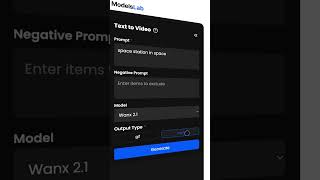
Create Image to Video | MODELSLAB AI Playground Tool
ModelsLab
YouTube returned 6 videos for “ModelsLab”, and we withheld 3: 3 could not be judged, because “ModelsLab” is a single word that other videos use for other things. Showing the 3 we can prove are about ModelsLab.
What are the best ModelsLab alternatives?
The closest alternatives to ModelsLab we list are PoYo.AI, APIDot and Kling AI. Ranked by direct product-type match, not category overlap.
| Alternative | Pricing | Starts at | Last verified |
|---|---|---|---|
| PoYo.AI | Freemium | $0.005/credit | 20 Nov 2026 |
| APIDot | Paid | Usage-based | 20 Nov 2026 |
| Kling AI | Freemium | $20/mo | 22 Nov 2026 |


ModelsLab vs its closest rival
ModelsLab's closest head-to-head is with Spider Cloud — You shouldn't be choosing between these — ModelsLab makes media, Spider Cloud reads the web. If your task is generating images, video, audio or 3D behind one key, ModelsLab is the relevant buy; its per-call premium-model billing is the thing to model before committing. If your task is feeding pages into a RAG pipeline or an agent as clean markdown or JSON, Spider Cloud is the relevant buy; watch that residential proxying, AI extraction and zero retention sit outside the $1/GB rate. Plenty of teams end up paying both, with Spider fetching and ModelsLab generating. Verdict generated
Head-to-head comparisons
Modelslab vs Spider Cloud
You shouldn't be choosing between these — ModelsLab makes media, Spider Cloud reads the web. If your task is generating images, video, audio or 3D behind one key, ModelsLab is the relevant buy; its per-call premium-model billing is the thing to model before committing. If your task is feeding pages into a RAG pipeline or an agent as clean markdown or JSON, Spider Cloud is the relevant buy; watch that residential proxying, AI extraction and zero retention sit outside the $1/GB rate. Plenty of teams end up paying both, with Spider fetching and ModelsLab generating.
GeneratedModelslab vs Voyage Ai
These are not competitors — do not treat this as a pick-one decision. If your problem is generating images, video, audio or 3D behind a single API key, ModelsLab is the relevant product; if your problem is retrieval quality inside a RAG pipeline, Voyage AI's embedders and rerankers are. Most teams building a RAG app that also needs media generation would plausibly use both, not choose between them.
GeneratedModelslab vs Temporal Ai
These aren't competitors — you would not choose one over the other. ModelsLab is a media-generation API catalogue; Temporal is the runtime underneath long-running agent and workflow code. If you're picking a generation vendor, Temporal is irrelevant to that decision; if you're picking a workflow engine, ModelsLab is irrelevant. Some teams building durable AI agents could conceivably consume both — ModelsLab as the media provider, Temporal as the execution layer — but that's a stack, not a head-to-head.
GeneratedFrequently asked questions
Categories
Best-of guides
For makers of ModelsLab
- Get a Verified Listing for ModelsLab ($39): a written decision within 1 working day.
- Free listing for another tool: Free reviews are decided in order, within 3 weeks of the review starting.
Used ModelsLab? Help shape our editorial sentiment research.