Pavoot is live · custom pricing · last verified 21 Oct 2026 · viability monitor

Pavoot
Pavoot runs in-person B2B events end to end and turns the room into attributed pipeline.
If you run in-person B2B events and can't draw a straight line from the room to revenue, Pavoot is the most complete chain we've seen at this company stage: guest sourcing, invitations, floor notetaking with live teammate notes, follow-up drafting, and a recap that ends in pipeline dollars. The four-product structure (Attendee Intelligence, Notetaker, Post Event, Media Management) is a real workflow, not a landing-page bundle. The honest catches: in-person B2B only — no virtual or hybrid — and no registration, ticketing or venue management in the software layer. If your evaluation needs a named native CRM connector documented up front, get specifics in writing before you commit. Compare
Verdict generatedVerified 8d ago · liveness 43/100 · cite: rightaichoice.com/tools/pavoot
- Field marketing teams running customer dinners and roundtables to generate pipeline
- CMOs and VPs of Marketing who need event ROI attribution in one exec-ready view
- Sales and GTM teams capturing floor conversations for warm, context-rich follow-ups
- Founders running their own events without a dedicated event team
- Consumer or social events that aren't focused on B2B pipeline generation
- Virtual or hybrid event formats — there's no coverage on the site
- Teams needing registration, ticketing or venue management inside one platform
We scan live Reddit threads, YouTube comments, X posts, G2 reviews and other communities — and hand you an honest verdict in under a minute.
- Honest verdict, not marketing
- Real pros & cons from real users
- Attributed quotes with receipts
3 free scans · no card needed
Skip Pavoot if your events are consumer, social, virtual or hybrid, or if you need registration, ticketing and venue logistics inside the same platform you use for follow-up.
Media Management and face-recognition photo tagging sit in a separate product from Notetaker and Post Event, so budget for that layer explicitly if personalized galleries are part of the promise.
Pavoot doesn't publish a public tier list in the material we captured, so it's hard to place on a price-per-seat axis against Splash, Bizzabo or Cvent. The four separate products — Attendee Intelligence, Notetaker, Post Event, Media Management — mean scope, not seat count, is likely to drive what you pay. If your budget cycle needs a number before a call, ask explicitly which products are bundled and whether the done-for-you event service is priced separately from the software.
In short
Pavoot — Pavoot runs in-person B2B events end to end and turns the room into attributed pipeline. Best for Field marketing teams running customer dinners and roundtables to generate pipeline, CMOs and VPs of Marketing who need event ROI attribution in one exec-ready view, Sales and GTM teams capturing floor conversations for warm, context-rich follow-ups. Pricing is on request (custom quotes).
What is Pavoot?
Pavoot — Pavoot runs in-person B2B events end to end and turns the room into attributed pipeline. Best for Field marketing teams running customer dinners and roundtables to generate pipeline, CMOs and VPs of Marketing who need event ROI attribution in one exec-ready view, Sales and GTM teams capturing floor conversations for warm, context-rich follow-ups. Pricing is on request (custom quotes).
Pavoot is an AI event agent built for B2B teams whose in-person events need to end in revenue, not in a stack of collected business cards. The company positions the product two ways: as a done-for-you service where you tell them who you want in the room and Pavoot finds and invites the guests, books the venue and runs the night, and as a software layer you can run yourself. That software splits into four products wrapped around one workflow. Attendee Intelligence finds, invites and tracks high-fit guests. Notetaker captures conversations on the floor with AI transcription and contextual notes, with teammates able to add notes live during the conversation. Post Event drafts follow-ups from what was actually said, builds a shareable recap and shows pipeline. Media Management finds every guest inside the event photos. The homepage carries the tagline 'Rooms people want to be in' and all product previews use demo data — match scores, a transcript flagging that an attendee is picking an event CRM, and a recap reading 24 meetings, 142 notes, $48K pipeline and 11 hot leads. It's aimed at field marketing teams running dinners, roundtables and summits, CMOs and VPs of Marketing who need one exec-ready view of event return, sales teams who want warm follow-ups grounded in the actual conversation, and founders running their own events without a dedicated event team.
Key features
- AI attendee sourcing from a professional database with match scores
- Personalized invitation generation and sending
- RSVP tracking and management in one place
- AI Notetaker that captures conversations on the event floor
- AI transcription with contextual notes
- Live teammate note-adding during a conversation
- Automated follow-up email drafting from conversation context
- Hot lead identification and scoring
- Post-event analytics covering attendees met, meetings booked and pipeline dollars
- Shareable event recap report
- Attendee Intelligence dashboard for finding and tracking guests
- CRM pipeline attribution surfaced in the post-event recap
- Media Management using face recognition to tag event photos
- AI tagging of guests, logos and moments in photos
- Personalized photo galleries delivered to individual attendees
Behind the verdict
Most event software solves the front of the lifecycle and walks away. Registration, badge printing, check-in, a photo folder. Pavoot's bet is that the money is in the back half: who you invited, what was said, who to follow up with, and whether any of it closed. That framing is coherent, and the four named products map onto it cleanly. Strengths. Attendee Intelligence combines guest sourcing, invitation sending and RSVP tracking in one place, so you aren't stitching a prospecting tool to an email tool to a spreadsheet. Notetaker does AI transcription plus contextual notes, and product copy says teammates can add notes live during a conversation — useful when the AE remembers something the mic missed. Post Event turns conversation context into drafted follow-ups and a shareable recap with attendee and meeting counts, notes, pipeline dollars and hot leads. Media Management applies face recognition to event photos and delivers personalized galleries, which is a genuine differentiator at sponsor activations where 'here's a shared Drive link' is the usual outcome. Weaknesses and edges. The site is explicit that you're either handing Pavoot the whole event — guests, venue, hosting — or you're running the software yourself; both paths exist and they're pitched differently, so be clear which one you're buying. Virtual and hybrid formats aren't covered. Registration, ticketing and venue logistics-in-software aren't either, so most teams will keep a second tool for the front door. The recap screen shows a CRM step but the scrape names no specific CRM vendor and no integrations directory is visible, so 'CRM integration' should be treated as a question to ask, not a confirmed connector. Everything shown on the homepage is demo data — match scores, the transcript, the $48K recap — which is normal for early-stage products, but it means you should push for a live walkthrough on your own event data. Where it fits. Field marketing teams running customer dinners, roundtables and mini-conferences where pipeline is the point. CMOs and VPs of Marketing who need a single exec-ready screenshot for a board deck. Sales teams who want follow-up email drafts written from the actual conversation rather than a form field. Founders running their own events with no event team. Where it doesn't. Consumer and social events. Virtual or hybrid. Anyone whose primary need is registration, ticketing or venue management. Teams that require a documented list of deep native CRM connectors before purchase. Large multi-track conferences with complex logistics.
Limitations
- Pavoot is in-person B2B only — there's no coverage of virtual or hybrid events on the site.
- It is not a registration, ticketing or venue-management platform, so if you need those layers you'll keep a second tool.
- The homepage references CRM and pipeline attribution and shows a 'CRM' step in the recap, but names no specific CRM vendor and exposes no integrations directory, so you can't confirm a named connector from the public site before a call.
- Public documentation visible in this scrape is minimal — no help center, changelog or developer portal surfaced.
- All product previews on the homepage use demo data (a 96 match score, a transcript, a recap reading 24 meetings / 142 notes / $48K pipeline), so treat published screenshots as illustrative rather than as your own event's numbers.
- The company is early-stage, founded by Gohar Tamrazyan and Ana Yoon Faria de Lima, so track record and ecosystem depth are limited.
as of 2026-10-10
Researching Pavoot? Get your full AI stack in 60 seconds.
Free, no signup — tell us your goal and get tools matched to your budget & existing stack.
Is Pavoot still active?
Pavoot is live · custom pricing · last verified 21 Oct 2026 · viability monitor.
Viability score
How well maintained and how widely used is Pavoot? Built from what the vendor actually publishes (docs, changelog, tutorials, integrations, pricing), whether the site is live, and how much real users discuss it. How we calculate this
Last calculated: October 2026
How we score →What do users say about Pavoot?
How we verified this
Every listed fact about Pavoot— pricing, features, links, status — is re-read from the vendor's own pages by our verification pipeline and each change is logged with a date; the last pass ran on 21 Oct 2026. Pages mix model-assisted synthesis with human review; see how we verify.
Verification history
We have re-verified Pavoot 9 times since . Each pass re-reads the vendor's own pages and re-checks every listed field against that evidence; passes where nothing had changed are marked as such.
- — changed pricing page, pricing fit, description, who should skip it, features, setup time, hidden costs, use cases, limitations, switching in, switching out, summary, our verdict
- — changed features, who should skip it, our verdict, summary, who it suits, description
- — changed SSL certificate
- — changed setup time, who it suits, description, our verdict, features, hidden costs, limitations, who should skip it, pricing fit, summary, use cases
- — changed limitations
- — changed domain expiry
Showing the 6 most recent of 9 verification passes.
Free to cite with attribution — this page re-verifies continuously.
How much does Pavoot cost in 2026?
Pavoot: Pricing is on request (custom quotes). Pricing last verified 21 Oct 2026.
Where the pricing makes sense
The company stage and team size where Pavoot's pricing actually pencils out — and where peers do it cheaper.
Pavoot doesn't publish a public tier list in the material we captured, so it's hard to place on a price-per-seat axis against Splash, Bizzabo or Cvent. The four separate products — Attendee Intelligence, Notetaker, Post Event, Media Management — mean scope, not seat count, is likely to drive what you pay. If your budget cycle needs a number before a call, ask explicitly which products are bundled and whether the done-for-you event service is priced separately from the software.
Has Pavoot's pricing changed?
No plan price for Pavoot has moved since we began logging in Aug 2026; the pricing page is re-read on every verification pass.
Who should pick Pavoot?
Pick Pavoot if you are Field marketing teams running customer dinners and roundtables to generate pipeline, CMOs and VPs of Marketing who need event ROI attribution in one exec-ready view, Sales and GTM teams capturing floor conversations for warm, context-rich follow-ups, Founders running their own events without a dedicated event team.
Look elsewhere if you are Consumer or social events that aren't focused on B2B pipeline generation, Virtual or hybrid event formats — there's no coverage on the site, Teams needing registration, ticketing or venue management inside one platform, Event teams that require a documented list of deep native CRM connectors before buying.
Skip it if Skip Pavoot if your events are consumer, social, virtual or hybrid, or if you need registration, ticketing and venue logistics inside the same platform you use for follow-up.
GeneratedReal-world workflow fit
Concrete scenarios for the personas Pavoot actually fits — and what changes day-one when you adopt it.
You're running a 30-person customer dinner in three weeks. You give Pavoot the profile of who you want in the room, and Attendee Intelligence surfaces matched prospects with scores, sends personalized invitations and tracks RSVPs in one dashboard.
Outcome: You arrive with a confirmed guest list instead of chasing replies, and Post Event hands you a recap showing meetings held, notes captured and pipeline dollars created.
You ran four events this quarter and need to show return. Post Event aggregates attendees met, meetings booked and pipeline dollars into a shareable recap, with hot leads flagged separately.
Outcome: You walk into the board meeting with an attributed pipeline number for events rather than an attendance count, and the hot-lead list routes straight to sales.
You turn on the AI Notetaker during a conversation with a prospect, and when they mention their timeline and buying criteria, a teammate adds a note live. Post Event drafts your follow-up from that transcript.
Outcome: Your follow-up email references what they actually said — timeline, criteria, objections — instead of a generic 'great to meet you', and Media Management later delivers a personalized photo gallery to that same prospect.
Use cases
- Source and invite high-fit attendees from a database of marketing leaders for a mini-conference.
- Capture floor conversations with the AI Notetaker and get automated follow-up drafts the same day.
- Track RSVPs, check-ins and on-site interactions live during a customer summit.
- Produce a post-event recap with pipeline attribution and a hot lead list for a board meeting.
- Deliver personalized photo galleries to attendees using face-recognition tagging at a sponsor activation.
- Hand an entire customer dinner to Pavoot — guests, venue and hosting — and just show up to talk.
Setup time & first value
How long it actually takes to get something useful out of Pavoot — broken out by persona, not the marketing-page minute.
For a field marketing team running a self-serve event: expect to spend an hour or two defining your ideal guest profile in Attendee Intelligence and importing your target list before invitations go out. The Notetaker takes minutes to start — it's a per-conversation capture, not a platform rollout. Teams choosing the fully managed path where Pavoot sources guests, books the venue and hosts are on
Switching to or from Pavoot
How to bring data in from common predecessors and how to get it back out — written for the switcher, not the buyer.
- →From a spreadsheet plus Mailchimp: Move your guest list into Attendee Intelligence to get match scores and unified RSVP tracking instead of manual reply-chasing.
- →From Splash or a registration tool: Keep the tool for tickets and check-in, and layer Pavoot behind it for follow-up drafting, hot-lead scoring and pipeline attribution.
- →From a standalone transcription app: Replace per-conversation transcription with Notetaker plus Post Event so the transcript feeds directly into follow-up drafts and the recap.
- ↗To Splash or Bizzabo: If registration, badge printing and multi-track logistics become your priority, those platforms own the front of the lifecycle that Pavoot doesn't cover.
- ↗To a standalone CRM with manual event logging: Export guest and pipeline data and log event touchpoints by hand if you decide the recap layer isn't worth a separate tool.
Resources & guides
Tutorials & Learning
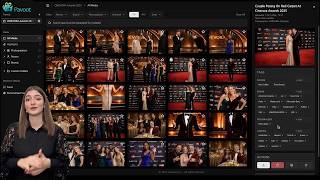
YouTube returned 6 videos for “Pavoot”, and we withheld 4: 4 could not be judged, because “Pavoot” is a single word that other videos use for other things. Showing the 2 we can prove are about Pavoot.
Official links
What are the best Pavoot alternatives?
The closest alternatives to Pavoot we list are Gong, Sybill and Otter Sales Agent. Ranked by direct product-type match, not category overlap.
| Alternative | Pricing | Starts at | Last verified |
|---|---|---|---|
| Gong | Contact Sales | Custom pricing | — |
| Sybill | Freemium | Pricing not published | — |
| Otter Sales Agent | Freemium | Pricing not published | — |
Alternatives to Pavoot
View allGong
Gong is a revenue AI platform that records customer interactions and turns them into forecasts, coaching and governed agent workflows.

Sybill
Sybill is an AI sales assistant that auto-updates CRM fields and turns sales calls into executed follow-ups.

Otter Sales Agent
Otter Sales Agent is an AI sales notetaker that transcribes calls live, drafts follow-ups, and pushes notes into Salesforce or HubSpot.
Tools that pair well with Pavoot
Common stack mates teams adopt alongside Pavoot, with the specific reason each pairing earns its keep.
Gong
Gong is a revenue AI platform that records customer interactions and turns them into forecasts, coaching and governed agent workflows.

Sybill
Sybill is an AI sales assistant that auto-updates CRM fields and turns sales calls into executed follow-ups.

Otter Sales Agent
Otter Sales Agent is an AI sales notetaker that transcribes calls live, drafts follow-ups, and pushes notes into Salesforce or HubSpot.
Pavoot vs its closest rival
Pavoot's closest head-to-head is with Weglot — Weglot is the right choice if you need to translate your website into multiple languages quickly with AI that learns your brand voice, especially for ecommerce or marketing sites. Pavoot is purpose-built for B2B teams running in-person events to generate pipeline, with AI handling attendee sourcing, conversation capture, and attribution. They serve completely different needs, so your choice depends on whether you are optimizing for multilingual reach or event-driven lead generation. Verdict generated
Head-to-head comparisons
Pavoot vs Weglot
Weglot is the right choice if you need to translate your website into multiple languages quickly with AI that learns your brand voice, especially for ecommerce or marketing sites. Pavoot is purpose-built for B2B teams running in-person events to generate pipeline, with AI handling attendee sourcing, conversation capture, and attribution. They serve completely different needs, so your choice depends on whether you are optimizing for multilingual reach or event-driven lead generation.
GeneratedPavoot vs Presto Voice
Presto Voice and Pavoot serve entirely different purposes, so your choice depends on your business: if you operate QSR drive-thrus, Presto Voice will boost revenue via automation and upselling; if you run B2B events to generate pipeline, Pavoot streamlines attendee sourcing, conversation capture, and attribution. Evaluate your primary need — order taking or event management — before deciding.
GeneratedPavoot vs Chili Piper
Chili Piper is the clear winner for teams focused on converting inbound web traffic into booked meetings immediately, especially if you're embedded in Salesforce or HubSpot. Pavoot is purpose-built for field marketing teams running in-person events, but its limited integrations and lack of recent news make it a niche tool. Choose Chili Piper if your priority is lead conversion speed; pick Pavoot only if events are your primary pipeline channel.
GeneratedFrequently asked questions
Used Pavoot? Help shape our editorial sentiment research.