
Physical Intelligence
Physical Intelligence (π) builds vision-language-action foundation models that let one policy steer any robot through any manipulation task.
If your team can fine-tune a large VLA policy and tolerates research-grade tooling, π0.7 plus MEM and the RL Token is the most interesting generalist robot stack you can actually get your hands on — the February 2025 open-source release of π0 and π0-FAST weights is what makes it usable today rather than aspirational. If you need a robot arm doing the same pick all day with a documented SLA, buy turnkey automation or a fixed controller instead; π publishes no price list, no support contract, and no self-serve signup.
Verified 10h ago · liveness 38/100 · cite: rightaichoice.com/tools/physical-intelligence
- Robotics researchers who need a generalist VLA foundation model for novel manipulation tasks
- Industrial partners automating varied manipulation with one adaptable policy instead of bespoke code
- Startups building on open-source π0 or π0-FAST weights for custom robot applications
- Long-horizon tasks (10+ minutes) where Multi-Scale Embodied Memory is the deciding capability
- Production deployments needing hardened reliability, SLAs, or vendor support today
- Simple, repetitive pick-and-place where a fixed controller is cheaper and sufficient
- Teams without ML engineering capacity to fine-tune and debug large VLA policies
We scan live Reddit threads, YouTube comments, X posts, G2 reviews and other communities — and hand you an honest verdict in under a minute.
- Honest verdict, not marketing
- Real pros & cons from real users
- Attributed quotes with receipts
3 free scans · no card needed
Skip Physical Intelligence if you need a shipped production system with a documented SLA, published pricing, and a self-serve signup rather than a research-grade VLA policy your own ML team has to fine-tune and debug.
There is no published price list, so every commercial conversation starts from scratch — budget engineering time for scoping and legal review before you know what access costs.
No published pricing at all — π runs a contact-based collaboration and early-adopter partnership model rather than a self-serve tier ladder. That makes it effectively free for research teams who can adopt the open-source π0 and π0-FAST weights (released February 4, 2025), and a bespoke commercial negotiation for industrial partners. It sits outside the price-comparison map that turnkey automation vendors and fixed-controller suppliers compete on.
In short
Physical Intelligence — Physical Intelligence (π) builds vision-language-action foundation models that let one policy steer any robot through any manipulation task. Best for Robotics researchers who need a generalist VLA foundation model for novel manipulation tasks, Industrial partners automating varied manipulation with one adaptable policy instead of bespoke code, Startups building on open-source π0 or π0-FAST weights for custom robot applications. Contact Sales pricing.
Viability Score
How well maintained and how widely used is Physical Intelligence? Built from what the vendor actually publishes (docs, changelog, tutorials, integrations, pricing), whether the site is live, and how much real users discuss it. How we calculate this
Last calculated: September 2026
How we score →Key Features
- π0.7 steerable robotic foundation model with emergent capabilities (April 16, 2026)
- Vision-language-action (VLA) architecture combining internet-scale knowledge with robot data
- Open-world generalization demonstrated by π0.5 on mobile manipulator cleanup tasks
- Multi-Scale Embodied Memory (MEM) for tasks running longer than ten minutes (March 3, 2026)
- RL Token extracted from VLA models for fast online reinforcement learning (March 19, 2026)
- Precise manipulation improvement with only a few hours of online RL data
- FAST action tokenization enabling 5x faster generalist policy training (January 16, 2025)
- Real-time action chunking for large models under high latency (June 9, 2025)
- Step-by-step task reasoning with human-in-the-loop feedback (February 26, 2025)
- Human-to-robot transfer emerging in VLAs at scale (December 16, 2025)
- π*0.6 training generalist policies with RL to raise success rate and throughput (November 17, 2025)
- Open-source weights and code for π0 and π0-FAST autoregressive model (February 4, 2025)
- Fine-tuning support for solving difficult manipulation challenge tasks
- Generalist policy intended to control any robot across any task
About Physical Intelligence
Physical Intelligence (π) is a robotics research company building vision-language-action (VLA) foundation models — generalist robot policies trained on internet-scale pretraining plus real-world multi-robot data so a single policy transfers across tasks, environments, and hardware. The research arc runs from π0, the first generalist policy (October 31, 2024), through π0.5's open-world generalization (April 22, 2025), to π0.7 — a steerable model with emergent capabilities released April 16, 2026. Named techniques include Multi-Scale Embodied Memory (MEM) for tasks running longer than ten minutes, an RL Token that extracts fast online reinforcement learning from VLA models for precise tasks with a few hours of data, FAST action tokenization for 5x faster training, real-time action chunking under high latency, and step-by-step task reasoning with human-in-the-loop feedback. Weights and code for π0 and the π0-FAST autoregressive model were open-sourced February 4, 2025, which is the main reason researchers can experiment without a commercial contract. The audience is narrow and technical: robotics researchers, industrial partners prototyping manipulation, and startups building on open-source VLA policies. Backed by OpenAI, Jeff Bezos, Sequoia Capital, Bond, Khosla Ventures, Lux Capital, Redpoint Ventures, CapitalG, and Thrive Capital. Against turnkey automation vendors selling fixed robotic cells, π is the opposite trade — a research substrate you adapt yourself, with no published price list and contact-based access for collaboration and early-adopter partnerships.
Behind the Verdict
Physical Intelligence sits in a category almost nobody else occupies properly: generalist robot foundation models you can genuinely download and adapt. The strongest argument for it is the research arc — π0 (October 2024), π0.5 with open-world generalization (April 2025), π*0.6 learning from experience via RL (November 2025), and π0.7 steerable with emergent capabilities (April 2026) — plus supporting work like Multi-Scale Embodied Memory for tasks exceeding ten minutes, RL Token for fast online RL on precise manipulation, FAST tokenization for 5x faster training, and real-time action chunking under high latency. Because the π0 and π0-FAST weights and code shipped on February 4, 2025, a research team can start fine-tuning without signing anything. Partner showcases — fine-tuned variants solving difficult manipulation challenge tasks — are the evidence that this transfers to real hardware rather than staying in simulation. The honest weaknesses: there is no published price list, no support SLA, and access is contact-based, so procurement-driven buyers will find nothing to buy. Integration surface is minimal by design — policies are steered through the codebase, not a plugin marketplace — so you need ML engineering capacity to debug a large VLA. Where it fits: academic labs exploring novel manipulation, industrial partners prototyping varied tasks where per-robot programming is too expensive, and startups building custom robot applications on open-source VLA weights. Where it doesn't: production deployments needing hardened reliability or a vendor on the hook, simple repetitive pick-and-place better served by a fixed controller, and hardware teams who need a deterministic low-latency control loop with zero research risk.
Researching Physical Intelligence? Get your full AI stack in 60 seconds.
Free, no signup — tell us your goal and get tools matched to your budget & existing stack.
Real-world workflow fit
Concrete scenarios for the personas Physical Intelligence actually fits — and what changes day-one when you adopt it.
Pull the open-source π0 and π0-FAST weights, fine-tune on a manipulation challenge task, and evaluate whether open-world generalization transfers to your hardware.
Outcome: A working fine-tuned policy on your own robot without a commercial contract, benchmarked against the published π0.5 and π0.7 results.
Start an early-adopter collaboration to deploy a generalist policy across multiple workcells, using Multi-Scale Embodied Memory for assembly tasks that run past ten minutes.
Outcome: One adaptable policy replacing per-robot programming across the pilot line, validated against partner-shown manipulation challenge tasks.
Build on π0.7's steerable control and the RL Token pipeline to hit precise-manipulation throughput with only a few hours of online RL data.
Outcome: A product prototype that improves on precise tasks without collecting months of teleoperation data first.
Use Cases
- Control a mobile manipulator to clean an unfamiliar kitchen or bedroom using open-world generalization.
- Fine-tune a VLA model to solve difficult manipulation challenge tasks with high success rate.
- Deploy a generalist policy across multiple robot platforms without per-robot programming.
- Leverage Multi-Scale Embodied Memory to autonomously perform complex assembly tasks exceeding ten minutes.
- Use the RL Token to improve throughput on precise tasks with just a few hours of online training data.
- Steer a robot to adapt to unexpected scenarios using π0.7's emergent capabilities.
Models Under the Hood
as of 2026-09-14
Limitations
- The models are research-focused, with emphasis on academic research and partner collaborations.
- The π0 open-source release is described as a first generalist policy prototype, so production robustness is not guaranteed.
- The evidence surface is limited to research blog posts and company pages — no pricing, commercial API, or enterprise support information is present.
- Steering and deployment happen through the models and code rather than any plugin or marketplace ecosystem, requiring in-house ML engineering capacity.
as of 2026-09-14
Verification history
We have re-verified Physical Intelligence 18 times since . Each pass re-reads the vendor's own pages and re-checks every listed field against that evidence; passes where nothing had changed are marked as such.
- — re-verified summary, description, our verdict, our analysis, pricing model, pricing tiers, features, integrations, who it suits, who should skip it
- — re-verified summary, description, our verdict, our analysis, pricing model, pricing tiers, features, integrations, who it suits, who should skip it
- — re-verified summary, description, our verdict, our analysis, pricing model, pricing tiers, features, integrations, who it suits, who should skip it
- — re-checked, vendor evidence unchanged
- — re-verified summary, description, our verdict, our analysis, pricing model, pricing tiers, features, integrations, who it suits, who should skip it
- — re-verified summary, description, our verdict, our analysis, pricing model, pricing tiers, features, integrations, who it suits, who should skip it
Showing the 6 most recent of 18 verification passes.
Free to cite with attribution — this page re-verifies continuously.
Where the pricing makes sense
The company stage and team size where Physical Intelligence's pricing actually pencils out — and where peers do it cheaper.
No published pricing at all — π runs a contact-based collaboration and early-adopter partnership model rather than a self-serve tier ladder. That makes it effectively free for research teams who can adopt the open-source π0 and π0-FAST weights (released February 4, 2025), and a bespoke commercial negotiation for industrial partners. It sits outside the price-comparison map that turnkey automation vendors and fixed-controller suppliers compete on.
Setup time & first value
How long it actually takes to get something useful out of Physical Intelligence — broken out by persona, not the marketing-page minute.
Researchers with existing VLA experience: hours to fine-tune from the open-source π0 and π0-FAST weights released February 4, 2025. Industrial partners without a commercial agreement: weeks of scoping before any policy touches your hardware, since access runs through contact-based collaboration. Teams new to large VLA policies should budget weeks just to reproduce published results before
Switching to or from Physical Intelligence
How to bring data in from common predecessors and how to get it back out — written for the switcher, not the buyer.
- →From a bespoke per-robot control stack: adopt the open-source π0 or π0-FAST weights, fine-tune on your task, and consolidate multiple robots under one generalist policy.
- →From a fixed robotic cell for repetitive pick-and-place: stay put unless your tasks vary — π only pays off when generalization is the point.
- →From an academic imitation-learning pipeline: swap in a VLA foundation model and use FAST tokenization to cut training time roughly 5x versus previous generalist policies.
- ↗To a turnkey automation vendor: if you need a hardened deployment with an SLA and published pricing, you leave π for a fixed-cell supplier.
- ↗To a fixed controller: for simple repetitive pick-and-place, a deterministic controller is cheaper and removes research risk entirely.
Resources & Guides
Tutorials & Learning
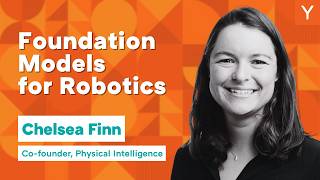
YouTube returned 6 videos for “Physical Intelligence”, and we withheld 5: 5 did not mention Physical Intelligence. Showing the 1 we can prove is about Physical Intelligence.
Official links
Tools that pair well with Physical Intelligence
Common stack mates teams adopt alongside Physical Intelligence, with the specific reason each pairing earns its keep.

Skild AI
Omni-bodied robotic intelligence: one AI brain to control any robot for any physical task

Rhoda AI
Rhoda AI builds general-purpose robot foundation models with FutureVision video-predictive control for factory and warehouse work.

General Trajectory
A foundation model for physical intelligence, controlling robots and industrial machinery.
Alternatives to Physical Intelligence
View all
Skild AI
Omni-bodied robotic intelligence: one AI brain to control any robot for any physical task
Rhoda AI
Rhoda AI builds general-purpose robot foundation models with FutureVision video-predictive control for factory and warehouse work.

General Trajectory
A foundation model for physical intelligence, controlling robots and industrial machinery.
Categories
Best-of guides
Used Physical Intelligence? Help shape our editorial sentiment research.