
Plena Health
AI workflow layer that reads inbound faxes, classifies referrals, matches charts, and books the appointment inside your existing EMR.
If your intake team is losing referrals and your coordinators are spending whole shifts sorting faxes, Plena Health is one of the few AI products built around that exact workflow rather than around note-taking. The 25-second fax-to-scheduled-patient pipeline, the automatic next-day procedure confirmation calls, and the waitlist texts are all documented workflows with named customer outcomes behind them — the 4,800-referral Epic Care Link backlog clearance at Hamzavi Dermatology and the $5,500/month recovery at a Green Bay orthopedic group. Compare it to generic multi-modal AI assistants, which sell you an agent and let you figure out the workflow; Plena sells the workflow. The trade-off is
Verified 6d ago · liveness 61/100 · cite: rightaichoice.com/tools/plena-health
- Mid-to-large specialty practices (orthopedics, dermatology, GI)
- Multi-site specialty groups needing deep EMR integration
- Clinics with a persistent fax referral backlog
- Practices trying to cut inbound call volume
- Solo practitioners and very small clinics
- Primary care or general practice
- Practices with low fax referral volume
We scan live Reddit threads, YouTube comments, X posts, G2 reviews and other communities — and hand you an honest verdict in under a minute.
- Honest verdict, not marketing
- Real pros & cons from real users
- Attributed quotes with receipts
3 free scans · no card needed
Skip Plena Health if you're a primary care or solo practice without a meaningful fax referral queue, or if you want to evaluate a tool on your own before ever speaking to a sales team.
Plena Health's pricing fits teams whose volume aligns with the published tiers. Compare against the alternatives listed below for stage-specific value.
In short
Plena Health — AI workflow layer that reads inbound faxes, classifies referrals, matches charts, and books the appointment inside your existing EMR. Best for Mid-to-large specialty practices (orthopedics, dermatology, GI), Multi-site specialty groups needing deep EMR integration, Clinics with a persistent fax referral backlog. Contact Sales pricing.
What people actually say about Plena Health — is it worth it?
We scanned public community sources for Plena Health on Jul 3, 2026 and could not establish that the discussion we found is about this tool rather than something else sharing its name. Our own analysis of that scan says the posts were off-subject. Rather than publish a sentiment score built on the wrong subject, we publish nothing here and re-run the scan.
Viability Score
How well maintained and how widely used is Plena Health? Built from what the vendor actually publishes (docs, changelog, tutorials, integrations, pricing), whether the site is live, and how much real users discuss it. How we calculate this
Last calculated: October 2026
How we score →Key Features
- AI fax intake: reads, classifies, extracts patient data, matches to chart, and pushes the appointment to the EMR
- Referral processing at ~25 seconds fax-to-scheduled-patient, versus 3–8 minutes manually
- Referral backlog clearing — Hamzavi Dermatology cleared a 4,800-referral Epic Care Link backlog
- Automated procedure confirmation calls placed to patients the night before
- SMS waitlist outreach that texts the waitlist and books the first patient who accepts
- Automated patient voice calls (25,000 calls per month reported across customers)
- Down-coded claim detection with automated appeal filing
- Prior authorization and eligibility verification workflows
- Revenue cycle management automation
- Native EMR read/write integration across 40+ systems, no data migration or parallel system
- Per-tenant encryption keys with AES-256 in transit and at rest
- HIPAA compliance with a BAA included in every contract
- SOC 2 independently audited (reports available under NDA)
- PHI never used to train models — your data trains your workflows only
- AI Deployment Group that maps and learns each practice's specific workflows
About Plena Health
Plena Health is an AI workflow platform built for specialty practices — orthopedics, gastroenterology, dermatology and similar — where the bottleneck is administrative work rather than clinical work. Its flagship workflow is referral intake: Plena reads the incoming fax, classifies it by specialty and referral type, extracts the patient's name and date of birth, matches that patient to an existing chart, and pushes the appointment back into the EMR. The vendor's own diagram clocks that fax-to-scheduled-patient sequence at 25 seconds, against 3 to 8 minutes per fax for a human coordinator. Beyond referrals, Plena covers the surrounding operational loops: outbound procedure confirmation calls the night before, SMS waitlist outreach to fill cancellation slots, prior authorization and eligibility checks, and revenue cycle work including detection of down-coded claims and automated appeal filing. Plena reads and writes in the formats your EMR already understands rather than asking you to migrate data or run a second system in parallel. Hamzavi Dermatology is cited on the homepage as clearing a 4,800-referral backlog on Epic Care Link; an orthopedic group in Green Bay is cited as recovering $5,500 per month after replacing a prior vendor. Plena reports 25,000 automated patient calls per month across its customers and a typical time to go live under four weeks. It is HIPAA compliant with a BAA in every contract, SOC 2 audited, and AES-256 encrypted with per-tenant keys. The company is Y Combinator-backed. This is not an AI scribe — Plena's value sits in multi-step operational workflows that touch the fax queue, the phone lines, the waitlist, and the claim.
Behind the Verdict
Plena Health's positioning is unusually explicit about what it is not. The homepage runs a side-by-side table contrasting what other vendors say — "our agent handles intake," "plug in our LLM," "multi-modal AI assistant," "drop-in automation" — with what staff actually need (sort the fax queue, confirm tomorrow's procedures, fill the 9:40 cancellation, recover down-coded claims) and what Plena does about each. That framing is the honest version of the specialty-practice AI pitch: the unit of value is a completed workflow, not a model capability. Strengths. The referral workflow is fully specified rather than hand-waved: fax received, classified (the demo shows a GI referral at 94% confidence), patient extracted, matched to a chart, pushed to gGastro, scheduled and written back. That last step matters — Plena writes into the EMR, so the appointment exists in the system your front desk already uses instead of in a separate tool. It also reads and writes in native EMR formats, which is why the vendor claims no data migration and no parallel system; a Green Bay orthopedic group is cited as going live on EMR integration on day one. Beyond referrals, the covered surface is broad for a company this size: procedure confirmation calls, waitlist and capacity fill, prior authorizations and eligibility, revenue cycle including down-coded claim appeals, plus a stated Voice & SMS stack and an "AI Deployment Group" that learns each practice's workflows (an orthopedic revenue cycle VP is quoted saying the engineer learned their workflow in two days). Security posture is stated in specifics — HIPAA with a BAA in every contract, SOC 2 independently audited, AES-256 in transit and at rest, per-tenant keys, and an explicit commitment that PHI never trains models. Reported operating metrics are concrete: 25,000 automated patient calls per month, 10× faster referral processing, under four weeks to go live. Weaknesses. The product is narrow by design. It is built for specialty practices with meaningful fax referral volume; a primary care clinic or a solo practitioner will not get the leverage that an orthopedic or GI group gets, because the whole system is tuned around the referral queue, the procedure lifecycle, and the multi-site coordination problems those specialties have. The homepage quotes 40+ EMR integrations and names a handful (Allscripts, Practice Fusion, Office Practicum, Intergy, gGastro) — useful, but you should confirm your specific system and version during the demo rather than assuming coverage. Onboarding runs through a scoping call, and while the vendor's own number is under four weeks to go live, that clock starts after scoping, sales, and workflow mapping, so budget real internal time from your practice administrator and revenue cycle lead. Finally, this is an operational system, not a clinical one — nothing here documents clinical decision support, coding, or documentation for providers, so it complements rather than replaces a scribe or coding
Researching Plena Health? Get your full AI stack in 60 seconds.
Free, no signup — tell us your goal and get tools matched to your budget & existing stack.
Real-world workflow fit
Concrete scenarios for the personas Plena Health actually fits — and what changes day-one when you adopt it.
Fax referrals arrive all morning and each one takes 3–8 minutes to sort, classify, and book. You work from the top of the pile down while the pile grows.
Outcome: Plena reads each fax, classifies it as a GI referral, extracts the patient and referring provider, matches the chart in gGastro, and pushes the scheduled appointment back — the vendor's diagram puts that at 25 seconds end to end, roughly 2× throughput on the same staff.
You inherited a multi-thousand-referral backlog on Epic Care Link and coordinators are processing two days of intake per shift while patients wait for outreach.
Outcome: The backlog gets read, matched, and scheduled in the same pipeline, and same-day patient outreach runs automatically — the Hamzavi Dermatology case on Plena's homepage describes a 4,800-referral backlog fully cleared this way.
Claims are being reimbursed below what was billed and nobody has time to audit and appeal each one, so the shortfall is written off.
Outcome: Plena spots the down-coded claims and files the appeals automatically. One orthopedic group on the homepage is cited recovering $5,500 per month after replacing their prior vendor, with EMR integration live on day one.
Use Cases
- Automating high-volume fax referral intake so coordinators stop spending 3–8 minutes per fax
- Clearing a multi-thousand referral backlog without adding headcount
- Running next-day procedure confirmation calls automatically across multiple locations
- Filling cancellation slots by texting the waitlist and booking the first acceptance
- Recovering revenue by spotting down-coded claims and filing appeals automatically
- Reducing inbound call volume by moving patient outreach to automated calls and SMS
- Coordinating referrals, scheduling, and patient outreach across a multi-site specialty group
- Verifying eligibility and handling prior authorizations to cut denials and patient wait times
Limitations
- Plena is purpose-built for specialty practices with heavy fax referral volume, so a primary care clinic or solo practitioner won't get the same leverage — the workflows assume a referral queue, a procedure lifecycle, and multi-site coordination.
- Onboarding runs through a demo and a scoping call, and while the vendor cites under four weeks to go live, that clock starts after workflow mapping, so budget internal time from your practice administrator and revenue cycle lead.
- The homepage states 40+ EMR integrations but names only a handful, so confirm your specific system and version during the call.
- This is an operational platform rather than a clinical one: nothing documented covers clinical decision support or provider documentation, so it complements rather than replaces a scribe or coding tool.
as of 2026-10-02
Verification history
We have re-verified Plena Health 6 times since . Each pass re-reads the vendor's own pages and re-checks every listed field against that evidence; passes where nothing had changed are marked as such.
- — re-checked, vendor evidence unchanged
- — re-checked, vendor evidence unchanged
- — re-checked, vendor evidence unchanged
- — re-checked, vendor evidence unchanged
- — re-verified summary, description, our verdict, our analysis, pricing model, pricing tiers, features, integrations, who it suits, who should skip it
- — re-checked, vendor evidence unchanged
Free to cite with attribution — this page re-verifies continuously.
Where the pricing makes sense
The company stage and team size where Plena Health's pricing actually pencils out — and where peers do it cheaper.
Plena Health's pricing fits teams whose volume aligns with the published tiers. Compare against the alternatives listed below for stage-specific value.
Setup time & first value
How long it actually takes to get something useful out of Plena Health — broken out by persona, not the marketing-page minute.
The vendor cites under four weeks from kickoff to go live, and a Green Bay orthopedic group is described as having EMR integration live on day one after switching from a prior vendor. In practice, plan for a demo, a scoping conversation about your workflows and EMR, then a mapping period during which an assigned deployment engineer learns your process — an orthopedic revenue cycle VP is quoted
Switching to or from Plena Health
How to bring data in from common predecessors and how to get it back out — written for the switcher, not the buyer.
- →From manual fax sorting: Plena takes over the intake queue and writes scheduled appointments back into your existing EMR, so coordinators keep working in the same chart.
- →From a prior automation vendor: an orthopedic group in Green Bay replaced their previous vendor with Plena and had EMR integration live on day one.
- →From phone-based outreach: next-day procedure confirmations and waitlist fills move to automated voice calls and SMS instead of staff dialing.
- ↗To manual processing: workflows are scoped to your practice, so reverting means coordinators resume reading, classifying, and booking faxes by hand.
- ↗To an AI scribe or documentation tool: those address provider notes and coding rather than fax intake, scheduling, and outreach, so they are a different layer rather than a replacement.
Integrations
Resources & Guides
- Resourceplena.health
Workflows · Plena Health
Helpful link from plena.health
- Resourceplena.health
Platform · Plena Health
Helpful link from plena.health
- Resourceplena.health
Trust Center · Plena Health
Helpful link from plena.health
- Resourceplena.health
Testimonials · Plena Health
Helpful link from plena.health
- Resourceplena.health
Contact · Plena Health
Helpful link from plena.health
Tutorials & Learning
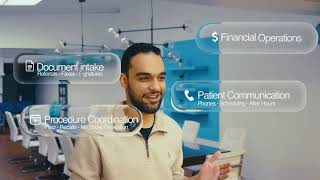
Plena Health: The AI operating system for specialty medical practices
Eyad Abdalla

Plena Health Welcome
Glen Knight
YouTube returned 6 videos for “Plena Health”, and we withheld 4: 4 did not mention Plena Health. Showing the 2 we can prove are about Plena Health.
Official links
Tools that pair well with Plena Health
Common stack mates teams adopt alongside Plena Health, with the specific reason each pairing earns its keep.

ScribbleVet
Veterinary AI scribe that turns recorded appointments into SOAP notes, dental charts, and client emails.

Tortus
Tortus is ambient voice AI for NHS clinical documentation, capturing consultations and drafting clinician-approved notes, letters and referrals.
Suki AI
Ambient clinical intelligence that turns full patient conversations into notes, coding, and revenue tasks inside the EHR.
Featured Head-to-Head Comparisons
Plena Health vs Isomorphic Labs
Plena Health and Isomorphic Labs serve entirely different healthcare domains — clinical practice management vs. drug discovery. Your choice depends on whether you need to streamline specialty practice operations (Plena) or accelerate pharmaceutical R&D at scale (Isomorphic). There is no direct overlap; compare based on your organization's core function.
Plena Health vs Rapidsos
These two products do not compete and no buyer realistically shortlists both. Plena Health is a revenue-cycle and referral-automation platform for specialty medical practices — if you run an orthopedics, dermatology, or GI group drowning in fax referrals, it is the relevant choice. RapidSOS is emergency-response infrastructure for 911 centers, agencies, and enterprises whose incidents escalate to 911. The only overlap is that both touch healthcare data at the edges; that is not a comparison, it is a category error. Buy Plena Health to fix practice operations, buy RapidSOS to improve emergency outcomes — never to solve the same problem.
Plena Health vs Codametrix
For large health systems drowning in coding backlogs, CodaMetrix's proven 5:1 ROI, 70% manual coding reduction, and #1 Best in KLAS ranking make it the clear winner. For specialty practices needing an all-in-one AI operating system—scribing, scheduling, prior auth, RCM—Plena Health fits better, but lacks CodaMetrix's scale and validated cost savings. Choose based on your organization size and primary pain point: coding automation vs. practice-wide admin relief.
Alternatives to Plena Health
View all
ScribbleVet
Veterinary AI scribe that turns recorded appointments into SOAP notes, dental charts, and client emails.
Frequently Asked Questions
Categories
Best-of guides
Used Plena Health? Help shape our editorial sentiment research.