Precip
Hyper-local rainfall totals and historical weather API at 1km precision.
Precip is a smart pick for anyone whose bottom line depends on exact rainfall—think agriculture, construction, or event logistics. Its pinpoint 1km accuracy beats NOAA forecasts by a reported 60%, but it's not a general weather tool; you'll still need a separate source for temperature and wind. The API and embed UI make integration straightforward, but pricing isn't public, so you'll need to schedule a demo to see if it fits your budget.
Verified 8d ago · liveness 63/100 · cite: rightaichoice.com/tools/precip
- Farmers needing precise field-level rainfall data for irrigation decisions
- Construction managers scheduling work around actual precipitation
- Event planners requiring hyper-local weather history and forecasts
- Developers building weather-aware applications with a simple API
- Users seeking traditional weather forecasts (temperature, wind, pressure) beyond precipitation
- Those who need global coverage outside of precipitation focus
- Organizations wanting a free or self-hosted weather data solution
We scan live Reddit threads, YouTube comments, X posts, G2 reviews and other communities — and hand you an honest verdict in under a minute.
- Honest verdict, not marketing
- Real pros & cons from real users
- Attributed quotes with receipts
3 free scans · no card needed
Skip Precip if you need a general-purpose weather API with temperature, wind, and global coverage, or if you're unwilling to contact sales for pricing.
Pricing is not public—you must schedule a demo to get a quote, which may involve annual commitments or minimum contracts.
Precip's pricing is opaque and tailored to enterprise needs, so it's best for mid-to-large organizations that can negotiate. If you're a small team or individual, free alternatives like OpenWeatherMap or NOAA APIs may offer sufficient precipitation data at lower cost.
In short
Precip — Hyper-local rainfall totals and historical weather API at 1km precision. Best for Farmers needing precise field-level rainfall data for irrigation decisions, Construction managers scheduling work around actual precipitation, Event planners requiring hyper-local weather history and forecasts. Contact Sales pricing.
What's new in Precip
Checked 6 days agoAcross the latest 4 updates: 3 feature updates and 1 launch.
Precipitation charts in Precip
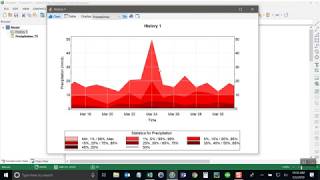
Added precipitation charts for comparing patterns across time or locations.
How Verdi shipped hyperlocal weather fast with Precip’s embed UI
Case study on using Precip's embed UI to deliver weather data with minimal effort.
The Forecast Tab
Introduced a new forecast tab, its take on a great forecast app.
New premium layers and rain alerts
Added premium layers and rain alerts for better weather understanding.
What people actually say about Precip — is it worth it?
We ran a structured research pass across product reviews, community discussions, and post-purchase forum threads to surface the patterns vendors won't publish themselves. Below: the recurring strengths, the hidden costs people mention most, and the cohort that consistently regrets adopting this tool.
50 mentions across 3 sources (Hacker News, App Store, Lemmy) · researched Jul 3, 2026.
- +Hyper-local rainfall data at 1km resolution using AI models.
- +60% more accurate than NOAA forecasts, per the company.
- +Rich historical precipitation data with hourly granularity.
- +Simple, intuitive interface inspired by Dark Sky's design.
- +Enables comparison of rainfall totals across multiple locations.
- −Free tier is very limited, pushing users to pay.
- −No temperature, humidity, or general weather data.
- −Pricing is not transparent — 'contact us' only.
- −Some users report occasional inaccuracies in drought monitoring.
- −No integrations like Zapier or Slack mentioned.
- • Heavy paywalling — free tier severely restricted, as per user complaints
Viability Score
How well maintained and how widely used is Precip? Built from what the vendor actually publishes (docs, changelog, tutorials, integrations, pricing), whether the site is live, and how much real users discuss it. How we calculate this
Last calculated: August 2026
How we score →Key Features
- Hyper-local rainfall totals at 1km resolution
- Historical weather data API with hourly granularity
- REST API endpoint at api.precip.ai/v1/hourly
- Rainfall totals by zip code or coordinates
- Snowfall totals by zip code
- Soil temperature maps
- Customizable rain alerts and notifications
- Multi-location dashboard with inline 7-day forecasts
- Precipitation charts for comparing patterns
- Embed UI for integrating weather into apps
- Mobile app for iOS and Android
- 60% more accurate than NOAA forecasts
- 275% better rainfall detection than broad-area estimates
- Automatic accuracy improvement over time
- Forecast tab for hyper-local forecasts
About Precip
Precip is a specialized weather intelligence platform designed for professionals who need exact precipitation data at a specific point, not just a broad regional forecast. It uses AI to combine radar, satellite, and other data sources, delivering rainfall and snowfall estimates at 1km resolution without requiring you to deploy physical weather stations or gauges. The service reports up to 60% more accurate rainfall detection than a NOAA forecast and 275% better detection than broad-area estimates, with accuracy that improves automatically as more data is gathered. Precip serves a range of use cases: farmers tracking field-level irrigation, construction managers scheduling around actual site conditions, event planners needing hyper-local history, and developers building weather-aware applications. The web app lets you view rainfall totals by zip code or coordinates, monitor multi-location dashboards with inline 7-day forecasts, and set up customizable rain alerts to eliminate wasted trips when precipitation is approaching or exceeds your thresholds. A mobile app extends this to on-the-go monitoring. For developers, Precip offers a REST API that returns hourly rainfall history and forecasts with 1km precision, with a simple endpoint call: `https://api.precip.ai/v1/hourly?lon=&lat=`. There's also an embed UI to integrate weather data directly into your own applications, making it easy to add accurate precipitation insights to your product. The platform is designed for efficiency, with a focus on point-specific accuracy rather than general-purpose weather. Precip's focus on precipitation sets it apart from general weather APIs that prioritize temperature and wind. While competitors like Weather Underground and ClimaCell serve broader weather needs, Precip's hyper-local, rainfall-centric approach gives it a clear edge for anyone whose decisions hinge on accurate precipitation at a precise location.
Behind the Verdict
Precip isn't a general weather app, and it doesn't pretend to be. It's a precipitation-obsessed data source that gives you rainfall and snowfall totals at 1km resolution—down to your exact field, job site, or venue. If your decisions hinge on how much rain fell or is about to fall, this focus pays off. The reported 60% accuracy edge over NOAA forecasts and 275% better detection than area-wide estimates are the headline numbers, and the accuracy keeps improving as more data flows in. We'd reach for Precip when you need point-specific rainfall history for irrigation scheduling, construction planning, event risk assessment, or building a weather-aware app. The REST API is straightforward—one endpoint for hourly data—and the embed UI gets you a working map fast, as Verdi's case study shows. Where it bites: Precip only cares about precipitation. No temperature, no wind, no pressure. If you need a full weather stack, you'll be integrating a second provider. Also, pricing is behind a demo call, which some buyers find annoying, and the feature set is narrower than general-purpose weather APIs. Compared to ClimaCell or Weather Underground, Precip is the specialist. Those tools cover everything; Precip does one thing deeply. For rain-dependent workflows, that depth is worth more than breadth. But if you need a multi-weather-element overview, look elsewhere. Expect to manage alerts and dashboards from the web or mobile app—recent updates added precipitation charts, a forecast tab, and premium rain alert layers, so the product is actively evolving. Just be ready to talk to sales before you see a price.
Researching Precip? Get your full AI stack in 60 seconds.
Free, no signup — tell us your goal and get tools matched to your budget & existing stack.
Real-world workflow fit
Concrete scenarios for the personas Precip actually fits — and what changes day-one when you adopt it.
A farmer monitors rainfall across multiple fields to decide when to irrigate.
Outcome: They use Precip's multi-location dashboard to view 7-day forecasts and current conditions, set rain alerts for each field, and optimize irrigation schedules, reducing water waste and improving crop health.
A construction manager needs to know if a site is too wet to pour concrete.
Outcome: They check the hyper-local rainfall history via the API to see recent precipitation and use the forecast tab to plan workdays, avoiding downtime from unexpected rain.
A developer wants to embed weather data into a gardening app.
Outcome: They use Precip's embed UI to add a hyper-local rainfall widget, showing users exactly how much rain fell at their address, enhancing the app's value with minimal integration effort.
Use Cases
- Monitor rainfall accumulation at multiple farm fields to optimize irrigation scheduling without physical gauges.
- Retrieve hourly historical precipitation data via API to correlate with crop yield or construction delays.
- Set up rain alerts for specific locations so you never waste a trip to a site that's been rained out.
- Embed a hyper-local weather widget in your application to show users actual rain conditions at their address.
- Compare precipitation patterns across different locations and time periods using the built-in charts.
- Plan outdoor events by checking 7-day forecasts with hyper-local rainfall probabilities for the exact venue.
Models Under the Hood
as of 2026-08-21
Limitations
- Precip is primarily focused on precipitation data, not full weather forecasts.
- The API and app require an API key and likely have rate limits or pricing tiers, though exact limits are not publicly documented on the scraped pages.
- The platform's accuracy claims are specific to rainfall detection and may not apply to other weather variables like temperature or wind.
as of 2026-08-07
Verification history
We have re-verified Precip 5 times since . Each pass re-reads the vendor's own pages and re-checks every listed field against that evidence; passes where nothing had changed are marked as such.
- — re-verified summary, description, our verdict, our analysis, pricing model, pricing tiers, features, integrations, who it suits, who should skip it
- — re-verified summary, description, our verdict, our analysis, pricing model, pricing tiers, features, integrations, who it suits, who should skip it
- — re-verified summary, description, our verdict, our analysis, pricing model, pricing tiers, features, integrations, who it suits, who should skip it
- — re-verified summary, description, our verdict, our analysis, pricing model, pricing tiers, features, integrations, who it suits, who should skip it
- — re-verified summary, description, our verdict, our analysis, pricing model, pricing tiers, features, integrations, who it suits, who should skip it
Free to cite with attribution — this page re-verifies continuously.
Where the pricing makes sense
The company stage and team size where Precip's pricing actually pencils out — and where peers do it cheaper.
Precip's pricing is opaque and tailored to enterprise needs, so it's best for mid-to-large organizations that can negotiate. If you're a small team or individual, free alternatives like OpenWeatherMap or NOAA APIs may offer sufficient precipitation data at lower cost.
Setup time & first value
How long it actually takes to get something useful out of Precip — broken out by persona, not the marketing-page minute.
Farmers can set up multi-location monitoring in under an hour using the web app. Developers can integrate the API or embed UI within a few hours, as the endpoint is straightforward. Expect a brief onboarding call to get API access and pricing.
Resources & Guides
Tutorials & Learning
Official links
Tools that pair well with Precip
Common stack mates teams adopt alongside Precip, with the specific reason each pairing earns its keep.
Featured Head-to-Head Comparisons
Precip vs Geologicai
GeologicAI is the clear choice for mining firms needing end-to-end AI-driven core analysis with a complete sensor suite, backed by $44M funding and Lumo Analytics acquisition. Precip dominates if your sole need is hyper-accurate precipitation data. Choose based on your vertical: minerals vs weather.
Precip vs Versatile
If you manage steel erection with tower/crawler cranes and need real-time passive visibility into picks, delays, and utilization without changing crew workflow, choose Versatile. If you require hyper-local, AI-optimized precipitation data (rainfall, snowfall) at 1km resolution – for agriculture, construction scheduling, or weather-aware apps – Precip is the clear choice. These tools serve fundamentally different domains, so the decision hinges entirely on whether your pain point is crane productivity or precipitation accuracy.
Precip vs Screenplayiq
ScreenplayIQ and Precip serve entirely different domains – script analysis versus weather data – so your choice depends purely on your industry. For screenwriters seeking box office predictions, ScreenplayIQ offers unique financial forecasting with a free tier; for professionals needing hyper-local rainfall precision, Precip’s 1km resolution fills a niche gap. No direct competition means evaluating each solely on its own merits.
Alternatives to Precip
View all
ClimateAi
Enterprise climate resilience platform with hyper-local AI weather forecasts for agribusiness.

Chat2DB
Natural language to SQL client for databases with local-first privacy and 25+ DB support.
Obviously AI
No-code predictive AI for classification, regression, and time-series from tabular data
Frequently Asked Questions
Categories
Best-of guides
Used Precip? Help shape our editorial sentiment research.