
purposewrite
Purposewrite turns your team's writing SOPs into scripted, human-in-the-loop workflows so content quality stops depending on who's at the keyboard today.
Purposewrite is the right buy when more than one person writes and the process is worth protecting. Enforced SOPs, human-in-the-loop checkpoints, and save points for delegation do something a Custom GPT cannot: the method lives in the workflow, not in whoever happens to be prompting today. Solo at €799/year (annual billing) suits an individual codifying one repeating process; Team at €2,399/year and Agency at €6,399/year — both annual — add the shared app library and multi-client structure plus better per-credit rates. Its own positioning draws the line honestly: chat for improvisation, autonomous agents for goal-chasing, scripted SOPs for governed execution. If you want prompts and a chat
Verified 5d ago · liveness 75/100 · cite: rightaichoice.com/tools/purposewrite
- Content teams of three or more that need six writers to sound like one brand
- Agencies running multi-client workflows on repeatable processes
- CMOs and content leaders at 200–2000 employee companies moving off ad-hoc AI
- Enterprise content operations needing compliance and audit trails
- Teams that just want a chat box for one-off drafting
- Operations that want a fully autonomous agent with no human oversight
- Solo writers who rarely repeat the same content task
We scan live Reddit threads, YouTube comments, X posts, G2 reviews and other communities — and hand you an honest verdict in under a minute.
- Honest verdict, not marketing
- Real pros & cons from real users
- Attributed quotes with receipts
3 free scans · no card needed
Skip purposewrite if you want a chat box for one-off drafting, if you're a solo writer who rarely repeats the same content task, or if you want a fully autonomous agent writing with no human in the loop.
Usage runs on credits, so a heavy month can push you into buying top-ups beyond your plan's included allowance — model consumption before scaling seats.
Purposewrite prices on annual terms: Solo at €799/year for an individual codifying one repeating process, Team at €2,399/year for small teams needing consistent quality across projects, Agency at €6,399/year for varied multi-client requirements, and a free tier with no time limit. Per-credit economics improve as you move up tiers, and unlimited seats on Solo, Team, and Agency mean you are paying for volume, not headcount.
In short
purposewrite — Purposewrite turns your team's writing SOPs into scripted, human-in-the-loop workflows so content quality stops depending on who's at the keyboard today. Best for Content teams of three or more that need six writers to sound like one brand, Agencies running multi-client workflows on repeatable processes, CMOs and content leaders at 200–2000 employee companies moving off ad-hoc AI. Free to start; paid plans from €799/yr.
What's new in purposewrite
Checked 5 days agoAcross the latest 4 updates: 4 news mentions.
Why my photo & video production company lost incoming jobs – and how we fixed it
A case study describing how a production company used purposewrite to speed up responses and win back incoming jobs it had been losing to competitors who replied first.
How to Have a Perfect Email Reply Ready Before You've Even Read the Inquiry
Walks through preparing inbound email replies in advance using purposewrite, framed around the Email Auto Responder workflow that drafts first replies from saved templates.
78% of Clients Go With the First Company to Reply: Here's How to Always Be First
Argues that response speed decides inbound deals and shows how purposewrite's Email Auto Responder keeps replies going out before a competitor even opens the inquiry.
When Your Content Team Needs Scripted AI Workflows – AI SOPs – And When Not
A guide for content leaders on when scripted AI workflows and SOPs are worth implementing in a content operation — and the cases where they are not.
What people actually say about purposewrite — is it worth it?
We ran a structured research pass across product reviews, community discussions, and post-purchase forum threads to surface the patterns vendors won't publish themselves. Below: the recurring strengths, the hidden costs people mention most, and the cohort that consistently regrets adopting this tool.
40 mentions across 2 sources (YouTube, Product Hunt) · researched Aug 31, 2026.
Average across the 2 sources that answered — each source counts once, not each post.
- +Forces strategic thinking over generic AI output, per PH comments
- +Scripted workflows with IF/THEN/LOOP logic ensure consistent brand voice
- +Human-in-the-loop checkpoints keep quality control in writers' hands
- +Multi-model support (Claude, ChatGPT, Gemini) lets you pick best AI for task
- +Unlimited team seats and role-based access scale with agency needs
- −Very few independent reviews—only 1 rating, so real-world performance unproven
- −Scripting engine may overwhelm non-technical writers, raising learning curve
- −Credit-based usage could surprise heavy users with extra costs
- −Beta features like email autoresponder risk bugs and limited reliability
- −No pricing transparency on Product Hunt—hidden tiers or costs unclear
- • Credit-based usage may require purchases beyond the monthly allowance for heavy use
- • Full workflow setup service might be extra or tied to higher tiers
Viability Score
How well maintained and how widely used is purposewrite? Built from what the vendor actually publishes (docs, changelog, tutorials, integrations, pricing), whether the site is live, and how much real users discuss it. How we calculate this
Last calculated: October 2026
How we score →Key Features
- Scripted workflows with IF/THEN/LOOP branching logic
- Human-in-the-loop checkpoints placed at decision points, not just end approval
- Multi-model support: Claude, ChatGPT, and Gemini in one flow
- Save points to pause and resume a workflow mid-run
- Senior sets direction → junior drafts → senior reviews in one governed flow
- Unlimited seats with role-based access controls
- Reusable app library shared across a team or client accounts
- Vertical apps for modular, repeatable workflows
- Email Auto Responder (beta) for template-driven first replies
- Dialogue builder that runs the workflow as a guided conversation
- Built-in SEO APIs for keyword intelligence
- Web scraping from Reddit and LinkedIn
- Credit-based usage with unused credits carrying to the next month
- Context window management per AI conversation
- Brand voice consistency enforcement across writers
About purposewrite
Purposewrite is a governance layer for AI-assisted content production. Instead of leaving your writing process inside a prompt or a Custom GPT's instructions, you map it in a readable scripting language with IF/THEN/LOOP logic, place human-in-the-loop checkpoints where judgment actually matters, and run the whole thing as a guided dialogue. The workflow asks the questions your best writers would ask, so a junior in week two and a senior editor produce to the same standard. Scripted SOPs become modular, reusable vertical apps you can rerun across projects and clients. Save points let a senior set direction, a junior draft, and a senior review without leaving the governed run — the delegation path purposewrite markets as its answer to prompt-hero dependency. It fits content teams of three or more, agencies running repeatable multi-client processes, and CMOs at roughly 200–2000 employee companies where AI is already in marketing but brand voice is drifting. It is deliberately not a chat box for one-off drafting, and not a fully autonomous agent.
Behind the Verdict
Purposewrite makes an argument most AI writing tools avoid: the problem isn't that AI can't write, it's that AI increased volume without creating standards. Its answer is to stop treating structure as a prompt and start treating it as a system. You script your SOP in a readable language with IF/THEN/LOOP branches, drop human-in-the-loop checkpoints at decision points rather than a single approve-at-the-end gate, and run the result as a dialogue that asks the questions your strongest writer would ask. The strongest feature cluster is around delegation. Save points let a run pause mid-workflow so a senior sets direction, a junior drafts, and a senior reviews inside the same governed flow — which is precisely the handoff most teams do today in Slack, Google Docs comments, and memory. Unlimited seats on Solo, Team, and Agency (all annual billing) means the cost model doesn't punish you for putting every writer on the platform, and unused credits carry to the next month with top-ups available when you run hot. The most overpromised cluster is integrations. What purposewrite actually documents is multi-model support — Claude, ChatGPT, and Gemini inside a single flow — plus built-in SEO APIs for keyword intelligence and web scraping from Reddit and LinkedIn. That's model routing and data ingestion, not a connector marketplace. Teams expecting HubSpot, Salesforce, or Notion sync should read those three names literally. The practical friction is real. The scripting language requires a ramp, so the first workflow is a project, not an afternoon. Usage runs on credits, and while they carry over and are topped up, high-volume teams should model consumption before scaling seats. And some advertised capabilities, including delegation and the Email Auto Responder, are described as upcoming or beta — worth checking before you standardize on them. Where it fits: content operations where six writers must sound like one brand, agencies rerunning the same onboarding and reporting flows per client, and experts turning a personal method into a shareable app. Where it doesn't: solo writers who rarely repeat a task, teams that want a chat box, and anyone hoping to remove humans from the loop — purposewrite is explicitly built to keep them in.
Researching purposewrite? Get your full AI stack in 60 seconds.
Free, no signup — tell us your goal and get tools matched to your budget & existing stack.
Real-world workflow fit
Concrete scenarios for the personas purposewrite actually fits — and what changes day-one when you adopt it.
You script your blog SOP with IF/THEN branching for format, drop a human-in-the-loop checkpoint before the brand-voice pass, and run it as a dialogue so a new hire answers the same questions your senior editor would.
Outcome: Drafts arrive in a consistent structure regardless of who ran the workflow, and the review checkpoint catches tone drift before publication.
You build one client onboarding workflow as a vertical app, share it through the app library, and reuse it across accounts with per-client tone settings instead of rebuilding the prompt each time.
Outcome: New client onboarding runs from a single reusable app rather than a rebuilt prompt, cutting setup time per account.
You prepare first replies from saved templates with the Email Auto Responder (beta) so a response is drafted before you have read the full inquiry.
Outcome: Replies go out first, which purposewrite's own blog argues is the deciding factor — it cites that 78% of clients go with the first company to reply.
Use Cases
- Script and enforce content SOPs so output doesn't depend on who's prompting
- Generate SEO-optimized blog posts with built-in keyword intelligence
- Prepare email replies from saved templates before you've read the inquiry
- Build reusable workflows for client onboarding and reporting
- Delegate drafting to juniors with named senior review checkpoints
- Codify an expert's personal writing process into a shareable app
- Standardize tone and structure across writers, contractors, and new hires
- Automate lead qualification flows with human handoff points
Models Under the Hood
as of 2026-09-09
Limitations
- Credit-based usage caps how much you can run, and while unused credits carry to the next month and you can buy more as you go, high-volume teams should model consumption before scaling seats.
- The platform is web-only with no mobile or desktop client.
- The scripting language requires initial learning, so expect a ramp before a non-technical writer is productive.
- Some features, such as delegation, are marked as upcoming.
- The Email Auto Responder is in beta, so its reliability may vary.
- On the integration side, what purposewrite documents is multi-model support (Claude, ChatGPT, Gemini) plus SEO APIs and Reddit/LinkedIn scraping — not a catalog of CRM or docs connectors.
as of 2026-10-13
Verification history
We have re-verified purposewrite 10 times since . Each pass re-reads the vendor's own pages and re-checks every listed field against that evidence; passes where nothing had changed are marked as such.
- — re-verified summary, description, our verdict, our analysis, pricing model, pricing tiers, features, integrations, who it suits, who should skip it
- — re-verified summary, description, our verdict, our analysis, pricing model, pricing tiers, features, integrations, who it suits, who should skip it
- — re-verified summary, description, our verdict, our analysis, pricing model, pricing tiers, features, integrations, who it suits, who should skip it
- — re-checked, vendor evidence unchanged
- — re-verified summary, description, our verdict, our analysis, pricing model, pricing tiers, features, integrations, who it suits, who should skip it
- — re-checked, vendor evidence unchanged
Showing the 6 most recent of 10 verification passes.
Free to cite with attribution — this page re-verifies continuously.
12-month cost
Project the real annual outlay, including the implied monthly cost when only an annual tier is published.
Vendor list price only. Add-on usage, seat overages, and contract minimums are surfaced under Hidden costs & gotchas.
Plans compared
For each published purposewrite tier: who it actually fits, and what it adds vs. the previous tier. Cross-reference the cost calculator above for projected annual outlay.
Free
€0
Ideal for
A content lead or solo operator testing whether scripted SOPs beat ad-hoc prompting before committing budget.
What this tier adds
Starting tier — no time limit and no credit card required, with the scripting engine, dialogue builder, and app library included.
Solo
€799/year
Ideal for
An individual expert codifying a personal writing process into a repeatable, shareable app.
What this tier adds
Adds unused credits carrying to the next month, credit top-ups, and unlimited seats on top of the free tier's engine and library.
Team
€2,399/year
Ideal for
A small content team that needs the same output quality across multiple concurrent projects.
What this tier adds
Better price per credit than Solo, plus the same carryover credits, top-ups, and unlimited seats.
Agency
€6,399/year
Ideal for
An agency managing complex workflows and varied client requirements across many accounts.
What this tier adds
Best price per credit in the lineup, with the same credit carryover, top-ups, and unlimited seats.
Enterprise
Custom
Ideal for
Larger organizations needing negotiated support and service terms alongside the content operations platform.
What this tier adds
Moves from published annual pricing to custom support, custom service, and a custom solution.
Where the pricing makes sense
The company stage and team size where purposewrite's pricing actually pencils out — and where peers do it cheaper.
Purposewrite prices on annual terms: Solo at €799/year for an individual codifying one repeating process, Team at €2,399/year for small teams needing consistent quality across projects, Agency at €6,399/year for varied multi-client requirements, and a free tier with no time limit. Per-credit economics improve as you move up tiers, and unlimited seats on Solo, Team, and Agency mean you are paying for volume, not headcount.
Setup time & first value
How long it actually takes to get something useful out of purposewrite — broken out by persona, not the marketing-page minute.
Budget a real ramp on the scripting language before a non-technical writer is productive. Your first governed workflow is a project, not an afternoon — you map the SOP, add human-in-the-loop checkpoints, then test the run as a dialogue. Once one vertical app exists, reusing it across projects or clients is fast, which is where the time investment pays back.
Switching to or from purposewrite
How to bring data in from common predecessors and how to get it back out — written for the switcher, not the buyer.
- →From Custom GPTs: move the instructions and user memory out of the GPT and into a scripted SOP with explicit IF/THEN branches.
- →From ad-hoc ChatGPT or Claude chat: capture the prompting pattern you keep repeating as a workflow with human-in-the-loop checkpoints.
- →From Google Docs SOP templates: convert the written process into a runnable dialogue builder flow your team executes rather than reads.
- →From an autonomous agent setup: replace goal-chasing automation with scripted steps and named human review checkpoints.
- ↗To plain ChatGPT or Claude chat: export your SOP logic back into prompt instructions, losing the enforced checkpoints and save points.
- ↗To a no-code automation platform: rebuild data movement between systems, accepting that structured brand judgment will not carry over.
- ↗To a fully autonomous agent: hand the goal to an agent and give up the human-in-the-loop decision points purposewrite is built around.
Integrations
Resources & Guides
Tutorials & Learning
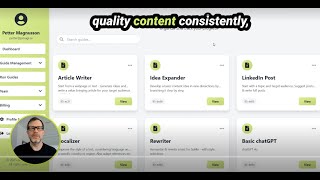
purposewrite.com - demo 250322 - Article Write
purposewrite - The Quality Content Writing Tool
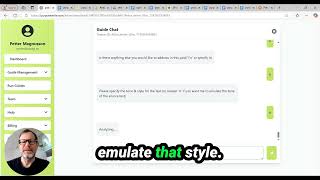
purposewrite demo article writer 2m
purposewrite - The Quality Content Writing Tool
YouTube returned 6 videos for “purposewrite”, and we withheld 4: 4 could not be judged, because “purposewrite” is a single word that other videos use for other things. Showing the 2 we can prove are about purposewrite.
Official links
Tools that pair well with purposewrite
Common stack mates teams adopt alongside purposewrite, with the specific reason each pairing earns its keep.
Quillbot
AI paraphrasing tool and writing suite for rewriting, grammar checks, and originality scans.
Jasper
Jasper runs 100+ AI marketing agents with GEO measurement, Content Pipelines and brand-governed content at scale.

Typli.ai
Typli.ai bundles 204 AI writing tools, multi-model chat, and an AI image generator under one token balance.
Featured Head-to-Head Comparisons
Purposewrite vs Truleo
Truleo is a must-have for law enforcement agencies drowning in siloed data – it turns jail calls, body cameras, and RMS into actionable leads. Purposewrite is the go-to for content teams who need consistent brand voice and governance, not just another chat interface. Pick based on your domain: crime solving or content creation.
Purposewrite vs Locus Robotics
If you run a warehouse and need to move boxes faster, Locus Robotics is the pick with its proven AMRs and RaaS model. If you manage a content team struggling with brand consistency, purposewrite's scripted SOPs with human checkpoints deliver process control. These tools serve completely different domains — choose based on whether your bottleneck is physical throughput or content quality.
Purposewrite vs Presto Voice
Presto Voice and purposewrite serve completely different buyers: one automates drive-thru ordering for QSR chains, the other scripts AI workflows for content teams. Pick Presto if you run a multi-location restaurant chain and want to boost revenue via voice AI upselling. Pick purposewrite if you manage content operations and need to enforce brand voice with repeatable, human-in-the-loop AI processes. There is no overlap.
Alternatives to purposewrite
View all
Frequently Asked Questions
Best-of guides
Used purposewrite? Help shape our editorial sentiment research.