
Resistant AI
Resistant AI detects forged, tampered, and AI-generated document fraud and upgrades your transaction monitoring.
Pick Resistant AI if your actual gap is document fraud at onboarding or claims, or if you run a rule engine and want AI models without a rip-and-replace. The named references — Payoneer on high-volume onboarding, Close Brothers on motor finance — plus a threat-intel desk publishing farmed-account and credit boost typologies are the strongest signals here. If your fraud volume can't instrument ROI, the math won't work in your favor.
Verified 4h ago · liveness 67/100 · cite: rightaichoice.com/tools/resistant-ai
- Merchant onboarding teams verifying KYB documents at volume
- Loan underwriters who need to flag suspicious documents without adding headcount
- AML teams augmenting an existing transaction monitoring system with AI models
- Claims units triaging fake versus genuine claims
- Small businesses seeking a free or low-cost document verification tool
- Teams that only need basic identity verification without advanced fraud detection
- Fraud teams that require on-premise-only or air-gapped deployment
We scan live Reddit threads, YouTube comments, X posts, G2 reviews and other communities — and hand you an honest verdict in under a minute.
- Honest verdict, not marketing
- Real pros & cons from real users
- Attributed quotes with receipts
3 free scans · no card needed
Skip Resistant AI if you need on-premise or air-gapped deployment, or if your fraud volume is so low that layering 80+ transaction models and document checks on top of your stack would never earn back the integration effort.
The API-first model means engineering time for Documents API and Transactions API integration lands on your team, not the vendor's.
No published tier list is available from the sources reviewed, so there is no anchor to compare against Onfido, Sumsub, or full transaction monitoring suites on price alone. The procurement route that is documented is AWS Marketplace, which lets committed-cloud buyers draw this down against existing AWS spend. Budget the cost of an integration project alongside the licence, since delivery is API-first.
In short
Resistant AI — Resistant AI detects forged, tampered, and AI-generated document fraud and upgrades your transaction monitoring. Best for Merchant onboarding teams verifying KYB documents at volume, Loan underwriters who need to flag suspicious documents without adding headcount, AML teams augmenting an existing transaction monitoring system with AI models. Contact Sales pricing.
What's new in Resistant AI
Checked 7 days agoAcross the latest 3 updates: 3 news mentions.
How to catch a farmed account: The Game
An interactive threat-intelligence piece from Resistant AI that walks through farmed-account typologies and lets the reader test whether they can spot the farmer type from the signals.
How to spot fake VAT certificates (UK)
A threat-intel article on identifying forged UK VAT certificates, aimed at onboarding and KYB teams that accept tax documentation as proof of business legitimacy.
Credit boost fraud pt. 1: Scamming your way into better credit
The first part of a Resistant AI series on credit boost fraud, covering how applicants manipulate documentation to improve their credit profile before applying for loans.
What people actually say about Resistant AI — is it worth it?
We ran a structured research pass across product reviews, community discussions, and post-purchase forum threads to surface the patterns vendors won't publish themselves. Below: the recurring strengths, the hidden costs people mention most, and the cohort that consistently regrets adopting this tool.
42 mentions across 3 sources (Hacker News, Bluesky, Lemmy) · researched Jul 16, 2026.
Average across the 3 sources that answered — each source counts once, not each post.
- +Detects forged documents from any country in under 20 seconds.
- +Explainable AI for transaction fraud alerts builds trust.
- +80+ off-the-shelf transaction monitoring models for various fraud types.
- +Works alongside existing systems without replacement needed.
- +Covers document and transaction fraud in one platform.
- −Almost no community feedback beyond a single Bluesky post.
- −Pricing not publicly disclosed, requiring sales calls.
- −No free trial or self-service demo available.
- −Complexity likely requires dedicated fraud team to leverage.
- −No integration with popular no-code tools like Zapier mentioned.
- • Potential integration consulting fees for large deployments.
- • API usage may have additional per-call charges not disclosed.
Viability Score
How well maintained and how widely used is Resistant AI? Built from what the vendor actually publishes (docs, changelog, tutorials, integrations, pricing), whether the site is live, and how much real users discuss it. How we calculate this
Last calculated: October 2026
How we score →Key Features
- Detects fake, tampered, and AI-generated documents in any PDF or image
- Returns a document fraud verdict in under 20 seconds
- Flags documents produced by all major generative AI models
- Country-agnostic document checks with no per-format setup
- Merchant onboarding: KYB document verification during signup
- Loan underwriting: income verification and document fraud checks
- Claims processing: flag fakes, fast-track genuine documents
- Marketplace seller screening and tenant screening document checks
- Insurance onboarding and income verification document workflows
- 80+ off-the-shelf transaction monitoring models built by AI and fincrime experts
- Overlays on your existing rule engine instead of a rip-and-replace
- Covers AML, APP fraud, mule accounts, fake payees, and synthetic identities
- BNPL synthetic identity and pre-default risk scoring before approval
- Explainable alerts that give investigators reasoning, not a bare score
- Transaction fraud detection in under 100 milliseconds
About Resistant AI
Resistant AI is document fraud detection built for the institutions that can't wave a fake through — banks, fintechs, lenders, insurers, and marketplaces. Resistant Documents takes any PDF or image, from any country, and returns a verdict on forgery, tampering, or generative-AI fabrication in under 20 seconds, with no per-format setup. Resistant Transactions sits on top of the rule engine you already run and layers 80+ off-the-shelf models built by AI and fincrime experts, firing in under 100 milliseconds. The reference list is the real proof here. Payoneer runs high-volume merchant onboarding automation on it, Habito uses it for decisioning in online mortgage brokering, Finom for cross-border AML transaction monitoring, Verto for Pan-African merchant onboarding, LYNK Capital for commercial real estate loan fraud, Planet42 for rent-to-buy car loan automation, and Close Brothers cites 22x ROI in motor finance fraud prevention. Published outcomes cluster around 3x more fraud detected, more than 90% fewer manual reviews, and 5x review speed. Named document workflows cover merchant KYB onboarding, loan underwriting, income verification, claims triage, marketplace seller screening, tenant screening, and insurance onboarding. Gen AI detection targets fabricated documents across all major generative models. The transactions side goes after AML, APP fraud, mule accounts, fake payees, synthetic identities, and BNPL pre-default risk. Alerts carry investigator-grade reasoning rather than a bare score, and delivery is API-first through the Documents API, with purchase also available on AWS Marketplace. Threat-intel output is unusually specific and current — farmed-account typologies, forged UK VAT certificates, and a running credit boost fraud series on applicants doctoring documents to inflate their credit profile. For buyers weighing it against document-verification tools or transaction-monitoring suites, the pitch is breadth plus explainability, not a single-purpose ID
Behind the Verdict
Resistant AI is two products that share one threat-intel operation, and that's the part most competitors can't copy quickly. Documents handles the forgery and generative-AI fabrication problem at the top of the funnel; Transactions goes after the money-laundering and scam behavior once an account exists. Buying both from one vendor means your onboarding signals and your monitoring signals come from the same house.We'd reach for this when the pain is document fraud at volume — merchant KYB, loan underwriting, income verification, claims triage — or when your rule engine is producing more alerts than analysts can clear. The published numbers (3x fraud detected, >90% fewer manual reviews, 5x review speed) are self-reported, but the customer roster is unusually specific: Payoneer, Habito, Finom, Verto, LYNK Capital, Planet42, Close Brothers.The alert explainability matters more than the marketing suggests. Investigators who get reasoning instead of a bare score don't have to re-derive the case from scratch, and that's where the labor savings actually come from. If you only need basic identity verification, you're buying far more than you need. If you require on-premise-only or air-gapped deployment, verify that before you get deep into procurement — the delivery model is API-first.The closest alternative depends on which half you're solving. For pure document checks, point solutions and OCR-plus-rules stacks are cheaper. For transaction monitoring, established AML platforms are the incumbent. Resistant AI's angle is being the AI layer on top of what you already run, rather than the
Researching Resistant AI? Get your full AI stack in 60 seconds.
Free, no signup — tell us your goal and get tools matched to your budget & existing stack.
Real-world workflow fit
Concrete scenarios for the personas Resistant AI actually fits — and what changes day-one when you adopt it.
Applications hit the queue with KYB packets — registration certificates, bank statements, IDs — from dozens of countries. Documents API checks each file for tampering and AI generation and returns a verdict in under 20 seconds.
Outcome: Clean packets pass straight through, flagged files route to a human with the specific tamper or AI-generation signal attached, and manual review volume drops.
Your existing rule engine fires alerts, but the reasoning is thin and the novel mule and APP-fraud patterns slip past. Resistant Transactions runs its 80+ models alongside the rules and returns explainable alerts in under 100 milliseconds.
Outcome: Analysts work from a narrative rather than a score, coverage widens beyond what the rules alone caught, and alert fatigue falls as low-value alerts get suppressed.
Claim packets arrive with supporting documents that may be altered or AI-generated. Resistant Documents checks each attachment and separates likely-fabricated files from genuine ones.
Outcome: Fabricated claims escalate automatically while genuine claims fast-track, keeping senior investigators on the cases that need judgement.
Use Cases
- Automate merchant KYB document verification in under 20 seconds
- Detect fake bank statements during loan underwriting
- Screen tenant applications for altered IDs and pay stubs
- Flag tampered invoices in accounts payable workflows
- Enhance AML transaction monitoring with document context
- Prevent insurance claims fraud by verifying supporting documents
- Onboard marketplace sellers securely at scale
- Protect against APP fraud using transaction forensics
Models Under the Hood
as of 2026-10-18
Limitations
- Resistant AI covers document fraud detection (PDFs and images, any country) and transaction monitoring, with document verification cited at under 20 seconds and transaction detection under 100 milliseconds.
- It detects AI-generated documents from all major generative models, though the exact model list is not fully enumerated on the site — if a specific model matters to your risk policy, confirm coverage directly.
- Delivery is API-first via the Documents API and Transactions API and is procurable through AWS Marketplace.
- The vendor's published performance figures (3x more fraud detected, >90% fewer manual reviews, 5x review speed, 5x analyst productivity, 3x risk coverage) are vendor-reported and should be validated against your own alert volumes before you commit.
- Self-serve or on-premise deployment options are not detailed in the provided content.
as of 2026-10-01
Verification history
We have re-verified Resistant AI 106 times since . Each pass re-reads the vendor's own pages and re-checks every listed field against that evidence; passes where nothing had changed are marked as such.
- — re-checked, vendor evidence unchanged
- — re-checked, vendor evidence unchanged
- — re-checked, vendor evidence unchanged
- — re-checked, vendor evidence unchanged
- — re-checked, vendor evidence unchanged
- — re-checked, vendor evidence unchanged
Showing the 6 most recent of 106 verification passes.
Free to cite with attribution — this page re-verifies continuously.
Where the pricing makes sense
The company stage and team size where Resistant AI's pricing actually pencils out — and where peers do it cheaper.
No published tier list is available from the sources reviewed, so there is no anchor to compare against Onfido, Sumsub, or full transaction monitoring suites on price alone. The procurement route that is documented is AWS Marketplace, which lets committed-cloud buyers draw this down against existing AWS spend. Budget the cost of an integration project alongside the licence, since delivery is API-first.
Setup time & first value
How long it actually takes to get something useful out of Resistant AI — broken out by persona, not the marketing-page minute.
API-first delivery through the Documents API and Transactions API means time to first value depends on your engineering capacity, not on a vendor-managed onboarding. Teams with an existing document or transaction pipeline should expect the integration work to dominate the timeline; an ops-only team without engineering support will move slower. Ask the vendor for reference timelines from
Switching to or from Resistant AI
How to bring data in from common predecessors and how to get it back out — written for the switcher, not the buyer.
- →From a document-only verification vendor (e.g. Onfido, Sumsub): keep your identity flow and add Resistant Documents alongside it for forgery and AI-generation detection on the same files.
- →From a rules-only transaction monitoring setup: run Resistant Transactions in parallel with your existing engine, compare alert output on historical data, then widen its role as coverage proves out.
- →From manual document review: route the highest-volume document type through the Documents API first rather than switching every workflow at once.
- ↗To a full transaction monitoring suite (e.g. Hawk, Point61): if you decide to replace rather than augment your rule engine, expect to rebuild rules, thresholds, and case management that the overlay left in place.
- ↗To a document-only verification vendor: you would lose the transaction-monitoring half and any shared document/transaction signal you had wired together.
Integrations
Resources & Guides
- Resourceresistant.ai
White papers, videos, one-pagers, and more
Take a closer look at our AI products and the features that make them up, or find research and opinion pieces we
- Resourceresistant.ai
Read our blog for our thoughts on AI today
Detect and prevent document fraud with AI, without replacing your existing systems. See how you can automate fraud checks and stop mass produced fraudulent documents that can’t be caught by the human eye.
Tutorials & Learning
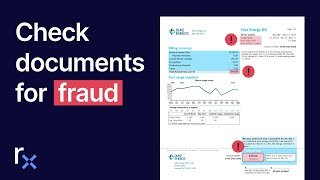
YouTube returned 6 videos for “Resistant AI”, and we withheld 5: 5 could not be judged, because “Resistant AI” is a single word that other videos use for other things. Showing the 1 we can prove is about Resistant AI.
Official links
Tools that pair well with Resistant AI
Common stack mates teams adopt alongside Resistant AI, with the specific reason each pairing earns its keep.

Hawk AI
Hawk AI delivers explainable AML transaction monitoring, screening and real-time fraud prevention for banks and fintechs

Featurespace
Featurespace delivers AI-native transaction monitoring that models each customer's behavior in real time to stop fraud and APP scams.

Coris
AI merchant risk platform that unifies merchant onboarding, underwriting, transaction monitoring, disputes, and portfolio surveillance for payment companies.
Featured Head-to-Head Comparisons
Anydoc vs Resistant Ai
Pick AnyDoc if your bottleneck is turning messy mixed files into clean Markdown for RAG, knowledge bases, or archiving—and you care about not uploading sensitive docs. Pick Resistant AI if your problem is verifying whether a document is real, forged, or AI-generated, and you need API-driven checks in under 20 seconds. They solve opposite halves of the document lifecycle: one creates, the other verifies.
Coro vs Resistant Ai
If you're a lean IT team or MSP drowning in security alerts and need a unified platform that automates threat resolution, pick Coro. If you're an enterprise fraud team verifying documents from any country and need AI forgery detection plus transaction monitoring, choose Resistant AI. They serve fundamentally different needs: Coro is a broad cybersecurity consolidator; Resistant AI is a specialized document fraud and transaction risk engine.
Malloc Inc vs Resistant Ai
If your organization needs to verify IDs and detect forged documents at scale, Resistant AI is the enterprise-grade pick with 80+ AI models. If you're an individual facing targeted spyware threats or want full mobile privacy transparency, Malloc's real-time detection and VPN are unmatched. They solve completely different problems — choose based on whether you need document fraud prevention or mobile spyware defense.
Mcp Scanner vs Resistant Ai
If you need to vet MCP servers for supply chain attacks before deploying agentic AI, pick free open-source MCP Scanner. If you're a bank or fintech fighting document forgery, synthetic identities, and APP fraud, go with Resistant AI — it's paid but delivers enterprise-grade speed and coverage. They solve completely different problems; choose based on whether your vulnerability is in AI infrastructure or in customer documents/transactions.
Typellm vs Resistant Ai
These are not competitors and nobody should be choosing between them. Resistant AI sells a fraud-decision system to risk teams at regulated financial institutions — document forgery checks, KYB/claims/tenant vetting, and 80+ transaction-monitoring models layered on existing rules. TypeLLM is a developer tool for engineers who already run open autoregressive models on SGLang or vLLM and want typed values instead of parsed free text. If you have a fraud problem, buy Resistant AI; if you have a stringly-typed extraction pipeline, use TypeLLM. The only surface where they touch is if a fraud team builds its own extraction stack — and even then Resistant AI is a purchase, TypeLLM is a component.
Alternatives to Resistant AI
View all
Hawk AI
Hawk AI delivers explainable AML transaction monitoring, screening and real-time fraud prevention for banks and fintechs

Featurespace
Featurespace delivers AI-native transaction monitoring that models each customer's behavior in real time to stop fraud and APP scams.

Frequently Asked Questions
Best-of guides
Used Resistant AI? Help shape our editorial sentiment research.