
Semantic Kernel
Microsoft's open-source SDK for building production-grade AI agents with plugins, memory, and orchestration.
Semantic Kernel is a strong choice if you're a .NET team already invested in Azure. Its Process Framework and security filters are production-ready, and the plugin system is flexible. However, model support is limited to OpenAI/Azure OpenAI without custom connectors, and the learning curve is steep. For Azure-native workflows, it's a solid pick; for cloud-agnostic flexibility, consider LangChain or LlamaIndex instead.
Verified 15d ago · liveness 73/100 · cite: rightaichoice.com/tools/semantic-kernel
- .NET developers building copilots and AI agents
- Enterprise teams on Microsoft Azure
- Multi-step AI workflows with process framework
- LLM applications requiring memory and context
- Teams needing rich prompt template libraries
- Cloud-agnostic deployments (strong Azure bias)
- Quick prototyping with minimal code (requires .NET setup)
We scan live Reddit threads, YouTube comments, X posts, G2 reviews and other communities — and hand you an honest verdict in under a minute.
- Honest verdict, not marketing
- Real pros & cons from real users
- Attributed quotes with receipts
3 free scans · no card needed
Skip Semantic Kernel if you're not on .NET or Azure—the tight Microsoft integration and steeper learning curve make it a poor fit for cloud-agnostic or non-Microsoft stacks.
You'll need an Azure subscription with Azure OpenAI to unlock the full potential, which has its own separate usage costs.
Semantic Kernel is free and open-source—you only pay for the underlying AI services. For .NET teams on Azure, it's cost-effective compared to managed orchestration platforms like Azure AI Foundry Agent Service, which charge per agent. For non-Microsoft stacks, LangChain is free too but offers more model flexibility.
In short
Semantic Kernel — Microsoft's open-source SDK for building production-grade AI agents with plugins, memory, and orchestration. Best for .NET developers building copilots and AI agents, Enterprise teams on Microsoft Azure, Multi-step AI workflows with process framework. Free to use.
What people actually say about Semantic Kernel — is it worth it?
We ran a structured research pass across product reviews, community discussions, and post-purchase forum threads to surface the patterns vendors won't publish themselves. Below: the recurring strengths, the hidden costs people mention most, and the cohort that consistently regrets adopting this tool.
62 mentions across 5 sources (Hacker News, YouTube, Stack Overflow, GitHub, Lemmy) · researched Aug 15, 2026.
Average across the 5 sources that answered — each source counts once, not each post.
- +Deep integration with Azure OpenAI and Microsoft Graph for enterprise.
- +Mature plugin system for composable, production-grade AI agents.
- +Multi-language support: C#, Python, Java covers diverse teams.
- +Process framework for stateful, durable workflows beyond simple chains.
- +Built-in security filters, observability, and telemetry for governance.
- −Steep learning curve, especially for beginners new to agent concepts.
- −Documentation is scattered and sometimes outdated, leading to confusion.
- −Frequent API changes cause friction and require constant maintenance.
- −MCP tool integration is buggy and not reliably followed.
- −Local vs. Azure deployment inconsistencies can be frustrating.
- • Azure services costs: OpenAI, Search, etc. can add up quickly
- • Infrastructure costs for running durable processes; time spent on debugging API changes and MCP issues
Viability Score
How well maintained and how widely used is Semantic Kernel? Built from what the vendor actually publishes (docs, changelog, tutorials, integrations, pricing), whether the site is live, and how much real users discuss it. How we calculate this
Last calculated: September 2026
How we score →Key Features
- Plugin-based skill composition
- Memory management for context
- Process Framework for stateful workflows
- Agent Framework for multi-agent systems
- Security filters and policy enforcement
- Observability and telemetry
- Multi-language support (C#, Python, Java)
- Integration with Azure OpenAI
- Integration with OpenAI
- Kernel extensibility through middleware
- Support for Microsoft Graph and 365 Copilot
- Connectors for various data sources
- ASP.NET Core integration
- Semantic functions and plans
About Semantic Kernel
Semantic Kernel is an open-source SDK from Microsoft that helps you build AI agents and copilots with plugins, memory, and orchestration. It supports C#, Python, and Java, and integrates with Azure OpenAI, OpenAI, Microsoft 365 Copilot, and Microsoft Graph. You compose AI into your applications using plugins—reusable functions that connect to external tools—and use the memory layer to give LLMs context. The Process Framework lets you create stateful, durable workflows, while the Agent Framework coordinates multiple agents. Security filters and observability tooling help you enforce responsible AI practices. Semantic Kernel is best for .NET teams building production copilots on Azure, offering mature orchestration compared to community tools like LangChain.
Behind the Verdict
Semantic Kernel is a well-engineered SDK from Microsoft, designed for teams building AI copilots and agents in the Microsoft ecosystem. The plugin system is a standout—it lets you modularize AI capabilities and reuse them across applications. The Process Framework is a significant differentiator: it enables long-running, stateful workflows that survive restarts, which is rare in open-source orchestration libraries. Security filters and observability are baked in, making it suitable for enterprise use. The tight integration with Azure OpenAI, Microsoft 365 Copilot, and Microsoft Graph means you can build deeply integrated solutions with less glue code. On the downside, the SDK is strongly biased toward Microsoft: you'll spend extra effort if you want to use Anthropic or Google models, or if you're on AWS or Google Cloud. The community is smaller than LangChain's, so you'll find fewer tutorials and third-party resources. The learning curve is real—you need to understand concepts like kernels, plugins, and middleware. Java support is newer and less mature. For .NET teams on Azure, Semantic Kernel is an excellent choice; for others, it may be a forced fit.
Researching Semantic Kernel? Get your full AI stack in 60 seconds.
Free, no signup — tell us your goal and get tools matched to your budget & existing stack.
Real-world workflow fit
Concrete scenarios for the personas Semantic Kernel actually fits — and what changes day-one when you adopt it.
You're building a customer support copilot that needs to query internal CRM data and escalate complex cases to human agents.
Outcome: You create a plugin for the CRM API, use the Process Framework to define a stateful workflow with approval steps, and deploy it on Azure with logging and security filters. You get a production-ready agent in about a day.
You need to build a RAG application over an Azure AI Search index to answer questions from company documents.
Outcome: You use Semantic Kernel's Python SDK to connect to Azure AI Search, set up the memory layer, and write a semantic function for Q&A. You have a working prototype in a few hours, but you miss the Process Framework.
You want to extend Microsoft 365 Copilot with a custom agent that pulls data from SharePoint and triggers workflows.
Outcome: You use Semantic Kernel's integration with Microsoft Graph and Copilot to register the agent, and you add security filters to enforce permissions. You deliver a scalable, compliant solution.
Use Cases
- Build a customer-service agent in C# that integrates with Entra ID-protected internal APIs.
- Ship a Java-based RAG agent over an enterprise Azure AI Search index.
- Orchestrate a long-running approval workflow using the Process Framework.
- Extend Microsoft 365 Copilot with a custom agent connected to internal data.
- Deploy a multi-agent system with group chat pattern for internal IT support.
Models Under the Hood
as of 2026-09-22
Limitations
- Semantic Kernel is tightly coupled to Microsoft's ecosystem; you'll need to integrate with Azure services for full benefit.
- Model support is limited to OpenAI and Azure OpenAI—other LLMs like Anthropic or Google require custom connectors.
- The learning curve is steep for beginners; understand concepts like kernels, plugins, and middleware.
- Community size is smaller than LangChain, so fewer third-party resources.
- Also, the SDK is primarily oriented to C# and Python; Java support is newer and less mature.
- Some advanced features (like the process framework) are only available in the .NET version.
as of 2026-08-30
Verification history
We have re-verified Semantic Kernel 19 times since . Each pass re-reads the vendor's own pages and re-checks every listed field against that evidence; passes where nothing had changed are marked as such.
- — re-checked, vendor evidence unchanged
- — re-checked, vendor evidence unchanged
- — re-checked, vendor evidence unchanged
- — re-checked, vendor evidence unchanged
- — re-checked, vendor evidence unchanged
- — re-checked, vendor evidence unchanged
Showing the 6 most recent of 19 verification passes.
Free to cite with attribution — this page re-verifies continuously.
12-month cost
Project the real annual outlay, including the implied monthly cost when only an annual tier is published.
Vendor list price only. Add-on usage, seat overages, and contract minimums are surfaced under Hidden costs & gotchas.
Plans compared
For each published Semantic Kernel tier: who it actually fits, and what it adds vs. the previous tier. Cross-reference the cost calculator above for projected annual outlay.
Open Source
$0/mo
Ideal for
Developers and enterprises that want a free, MIT-licensed SDK to build AI agents on Microsoft Azure with full control and community support.
What this tier adds
This is the only tier—it's free and includes all features, but you provide your own infrastructure and support.
Where the pricing makes sense
The company stage and team size where Semantic Kernel's pricing actually pencils out — and where peers do it cheaper.
Semantic Kernel is free and open-source—you only pay for the underlying AI services. For .NET teams on Azure, it's cost-effective compared to managed orchestration platforms like Azure AI Foundry Agent Service, which charge per agent. For non-Microsoft stacks, LangChain is free too but offers more model flexibility.
Setup time & first value
How long it actually takes to get something useful out of Semantic Kernel — broken out by persona, not the marketing-page minute.
For a C# developer familiar with .NET, you can get a basic kernel running in under 30 minutes using the quick start. A full production agent with plugins and workflows may take 1-2 days. Python and Java versions are similar, but you may need more time to find samples.
Switching to or from Semantic Kernel
How to bring data in from common predecessors and how to get it back out — written for the switcher, not the buyer.
- →From LangChain: Semantic Kernel offers similar plugin and memory concepts, but you'll need to rewrite your langchain tools as Semantic Kernel plugins, and your chains as processes or functions.
- ↗To LangChain: Port your Semantic Kernel plugins to LangChain tools and replace the kernel with a LangChain model. Your workflow logic will need reimplementation.
Integrations
Resources & Guides
- Resourcelearn.microsoft.com
Semantic Kernel documentation
Semantic Kernel documentation.
- Resourcelearn.microsoft.com
How to quickly start with Semantic Kernel
Follow along with Semantic Kernel's guides to quickly learn how to use the SDK
- Resourcelearn.microsoft.com
In-depth Semantic Kernel Demos
Go deeper with additional Demos to learn how to use Semantic Kernel.
- Conceptslearn.microsoft.com
Understanding the kernel in Semantic Kernel
Learn about the central component of Semantic Kernel and how it works
- Conceptslearn.microsoft.com
Plugins in Semantic Kernel
Learn how to use AI plugins in Semantic Kernel
Tutorials & Learning
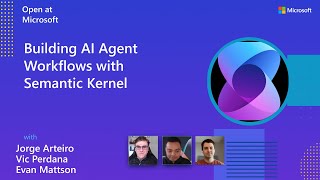


Official links
Tools that pair well with Semantic Kernel
Common stack mates teams adopt alongside Semantic Kernel, with the specific reason each pairing earns its keep.

AutoGen
Microsoft's open-source framework for building conversational and event-driven AI agents in Python and .NET.

Mastra
Mastra is an open-source TypeScript agent framework for building durable AI agents and workflows that run for days.

Zhipu GLM
Zhipu GLM delivers open-source LLM models, MaaS APIs, and autonomous agents for Chinese enterprises and developers.
Featured Head-to-Head Comparisons
Autogen vs Semantic Kernel
Langgraph vs Semantic Kernel
Langchain vs Semantic Kernel
If you're a .NET shop on Azure building production copilots, Semantic Kernel is the no-brainer——it's free, deeply integrated with Microsoft's stack, and the process framework handles durable workflows. But if you need multi-step agent orchestration with serious observability, evaluation, and deployment tooling, LangChain wins—especially with LangSmith's recent AI-driven issue detection and tuned evaluators. For non-Microsoft stacks, skip Semantic Kernel's Azure lock-in and go LangChain.
Alternatives to Semantic Kernel
View all


Frequently Asked Questions
Used Semantic Kernel? Help shape our editorial sentiment research.