
SEO formulas
AI content marketing engine for WordPress that writes SEO-optimized posts and tracks revenue
Attract earns its place when your blog is supposed to produce orders, not just sessions. Tying WooCommerce and Stripe revenue back to individual posts is the feature most content tools wave at and never ship, and one-time credits with no monthly minimum suit seasonal stores. Pass if you're not on self-hosted WordPress, or if you need backlink and rank-tracking depth instead of publishing automation.
Verified 15d ago · liveness 55/100 · cite: rightaichoice.com/tools/seo-formulas
- WordPress site owners who want blogging automated end to end
- WooCommerce store owners trying to grow organic revenue, not just sessions
- Solo founders and small teams without a dedicated content writer
- Marketers who need to prove content ROI with revenue attribution
- Anyone not on self-hosted WordPress — there's no other CMS support
- Teams needing a full SEO suite with backlink analysis and rank tracking
- Enterprise teams requiring multi-user collaboration and advanced analytics
We scan live Reddit threads, YouTube comments, X posts, G2 reviews and other communities — and hand you an honest verdict in under a minute.
- Honest verdict, not marketing
- Real pros & cons from real users
- Attributed quotes with receipts
3 free scans · no card needed
Skip Attract if you don't use self-hosted WordPress or WooCommerce, need advanced SEO features like backlink analysis, or prefer manual control over every post.
AI images cost +3 credits per post, and internal links +1 credit, so a full post with image and links costs 5 credits instead of 1.
Attract's pay-as-you-go credits fit solo founders and small WooCommerce stores that want low upfront costs and no monthly minimums. At $0.12–0.20 per credit, a full post with image and links costs ~$0.60–$1.00, cheaper than hiring a writer but pricier than some bulk AI content generators. Autopilot at $49/mo per site is a premium for hands-off automation, comparable to other scheduling tools.
In short
SEO formulas — AI content marketing engine for WordPress that writes SEO-optimized posts and tracks revenue. Best for WordPress site owners who want blogging automated end to end, WooCommerce store owners trying to grow organic revenue, not just sessions, Solo founders and small teams without a dedicated content writer. Free to start; paid plans from $10.
What's new in SEO formulas
Checked todayAcross the latest 6 updates: 6 news mentions.
E-commerce Content Marketing That Supports Revenue Growth
Article argues e-commerce content should be measured by revenue impact, not publishing volume.
Content Ops Tools for WordPress Marketing Teams: A Practical Stack for Growth
Guide to practical content ops tools for WordPress teams, focusing on operational efficiency.
How to Find Low-Competition Keywords That Drive SEO Growth
Explains what low-competition keywords are and how to find them for realistic ranking chances.
SEO Opportunities for E-commerce Brands to Win More Traffic
Advises focusing on SEO opportunities closest to revenue, where search demand and commercial value overlap.
How to Find SEO Opportunities That Actually Move Rankings
Asserts SEO teams have prioritization problems, not keyword shortages; real opportunities defined.
Why Product-Led Content Works for E-commerce Brands
Makes case for product-led content turning search intent into shopping intent.
What people actually say about SEO formulas — is it worth it?
We ran a structured research pass across product reviews, community discussions, and post-purchase forum threads to surface the patterns vendors won't publish themselves. Below: the recurring strengths, the hidden costs people mention most, and the cohort that consistently regrets adopting this tool.
1 mentions across 1 source (Lemmy) · researched Jul 3, 2026.
Average across the 1 source that answered — each source counts once, not each post.
- +Revenue attribution via Stripe and WooCommerce orders.
- +Pay-as-you-go credits never expire, no subscription required.
- +Autopilot mode for hands-off daily content publishing.
- +AI topic discovery and deduplication for fresh coverage.
- +Direct WordPress REST API integration with lightweight plugin.
- −Lack of public user reviews and community discussion.
- −Internal linking feature costs extra credits.
- −Only works with WordPress; no standalone or other CMS support.
- −Autopilot add-on increases total monthly expense.
- −No multi-site or team collaboration features mentioned.
- • Internal linking uses extra credits per link
- • Autopilot is a separate monthly fee on top of credits
Viability Score
How well maintained and how widely used is SEO formulas? Built from what the vendor actually publishes (docs, changelog, tutorials, integrations, pricing), whether the site is live, and how much real users discuss it. How we calculate this
Last calculated: October 2026
How we score →Key Features
- AI keyword and topic discovery from your niche
- One-click content generation at 1–5 credits per post
- Automatic publishing to WordPress via the REST API
- SEO optimization for Google, AI Overviews, ChatGPT, Perplexity, and Claude
- AI-generated featured images uploaded to the WordPress media library
- Internal linking recommendations at +1 credit
- Revenue attribution from WooCommerce orders and Stripe charges back to posts
- WooCommerce product catalog sync for product-aware, buyer-intent posts
- Topic deduplication so covered topics are never repeated
- Autopilot mode for hands-off topic finding, scheduling, writing, and publishing
- 30-day publishing buffer to keep a content queue ahead of schedule
- Drag-and-drop planner for scheduling posts
- Review-before-publish or auto-publish toggle
- Custom business context via uploaded docs, pasted URLs, or notes
- Smart inline rewrites at 1 credit per edit
About SEO formulas
Attract is an AI content marketing engine built for self-hosted WordPress and WooCommerce sites. It runs the content lifecycle end to end: keyword and topic discovery, planning, writing, publishing to your site, and revenue attribution. Founders, store owners, and small marketing teams use it to grow organic traffic without hiring a content team or buying a full SEO suite. The workflow starts with a multilayered content plan that evolves as you publish. Posts are optimized for Google plus the AI answer surfaces — AI Overviews, ChatGPT, Perplexity, and Claude — so you're writing for how people actually search now. A lightweight plugin connects to WordPress via the REST API; setup takes about a minute, and Attract syncs your categories, tags, and authors. Generation costs 1–5 credits per post, and an AI featured image gets uploaded to your media library automatically. For WooCommerce shops the product catalog syncs in, letting posts carry native product cards placed against buyer intent instead of generic affiliate blocks. Revenue attribution ties WooCommerce orders and Stripe charges back to the specific posts that drove them, which is the part most blogging tools skip entirely. Topic deduplication keeps you from re-covering ground, and a 30-day publishing buffer plus a drag-and-drop planner give you a queue instead of a panic. You can review before publish or let it go live automatically, and custom business context arrives as uploaded docs, pasted URLs, or notes. Optional Autopilot at $49/month per website handles topic finding, scheduling, publish-day writing, and auto-publishing. Credits are one-time purchases, never expiring subscriptions. Against broad SEO suites, Attract trades backlink analysis and rank tracking for WordPress-native automation and conversion tracking.
Behind the Verdict
The pitch here is narrow and that's the point. Attract doesn't try to be your SEO platform; it tries to be the thing that publishes on your WordPress site every week and tells you which posts made money. For a WooCommerce shop with 200 SKUs and no content hire, that's the whole job. Pick it when the bottleneck is output. You know the topics, you just don't have anyone writing and scheduling them. The 30-day buffer plus drag-and-drop planner is the practical bit — a queue you can audit, not a black box. Product catalog sync then lets posts carry native product cards keyed to buyer intent, which is where product-led content actually converts search intent into shopping intent. The revenue attribution is the reason to choose this over a generic AI writer. Most tools stop at "here are your pageviews." Knowing which post produced Stripe charges changes what you commission next quarter. Where it bites: the niche is genuinely narrow. Self-hosted WordPress is the requirement, and there's no path if you're on Shopify, Webflow, or a headless CMS. If your problems are backlinks, technical audits, or competitor rank tracking, you need a different category of tool and Attract won't pretend otherwise. Enterprise teams wanting multi-seat collaboration and advanced analytics will find the room small. Credits not expiring is a real advantage for seasonal e-commerce — you buy in a slow month and spend in Q4. Just watch the interaction: Autopilot at $49/month per website plus per-post credits means two cost lines, so run the math against your publishing volume before committing to the add-on. On a single site with modest output, credits alone may be enough. One caveat on content quality: no automated writer should publish unreviewed forever. Use the review-before-publish toggle for
Researching SEO formulas? Get your full AI stack in 60 seconds.
Free, no signup — tell us your goal and get tools matched to your budget & existing stack.
Real-world workflow fit
Concrete scenarios for the personas SEO formulas actually fits — and what changes day-one when you adopt it.
You want to start blogging to attract organic traffic but have no time to write.
Outcome: Install the WordPress plugin, add business context, and generate posts on demand or enable Autopilot to publish daily while you run the store.
You need to prove content ROI to leadership.
Outcome: Connect Stripe and WooCommerce for revenue attribution, then use reports to show which posts drive orders, justifying continued investment.
You want to scale content production across clients.
Outcome: Use credits and Autopilot per site to automate publishing, and use Zapier/Make to integrate with client workflows.
Use Cases
- Generate SEO-optimized blog posts directly to your WordPress site with one click, including AI images and internal links.
- Automate daily publishing for a lean e-commerce blog using the Autopilot add-on, with topics scheduled weeks in advance.
- Track which blog posts drive actual WooCommerce orders and Stripe payments to calculate content ROI.
- Sync your WooCommerce product catalog to automatically weave relevant products into new posts based on buyer intent.
- Deprioritize previously covered topics to ensure your blog always explores fresh areas and avoids cannibalization.
- Generate revenue attribution reports by connecting Stripe and seeing which blog posts led to conversions.
Limitations
- Attract is a WordPress/WooCommerce-focused content engine that publishes via a lightweight plugin and REST API.
- Pricing is pay-as-you-go with credits (posts cost 1–5 credits, packs from $10 for 50 credits to $120 for 1000), plus an optional Autopilot add-on for $49/month with a 3-day free trial.
- Revenue attribution works with WooCommerce and Stripe, and the tool synchronizes your product catalog for product-aware posts.
- The underlying AI model is not specified.
as of 2026-08-31
Verification history
We have re-verified SEO formulas 8 times since . Each pass re-reads the vendor's own pages and re-checks every listed field against that evidence; passes where nothing had changed are marked as such.
- — re-verified summary, description, our verdict, our analysis, pricing model, pricing tiers, features, integrations, who it suits, who should skip it
- — re-verified summary, description, our verdict, our analysis, pricing model, pricing tiers, features, integrations, who it suits, who should skip it
- — re-verified summary, description, our verdict, our analysis, pricing model, pricing tiers, features, integrations, who it suits, who should skip it
- — re-verified summary, description, our verdict, our analysis, pricing model, pricing tiers, features, integrations, who it suits, who should skip it
- — re-verified summary, description, our verdict, our analysis, pricing model, pricing tiers, features, integrations, who it suits, who should skip it
- — re-checked, vendor evidence unchanged
Showing the 6 most recent of 8 verification passes.
Free to cite with attribution — this page re-verifies continuously.
12-month cost
Project the real annual outlay, including the implied monthly cost when only an annual tier is published.
Vendor list price only. Add-on usage, seat overages, and contract minimums are surfaced under Hidden costs & gotchas.
Plans compared
For each published SEO formulas tier: who it actually fits, and what it adds vs. the previous tier. Cross-reference the cost calculator above for projected annual outlay.
Free trial
$0
Ideal for
New users who want to test Attract with WordPress before committing; includes 10 credits to generate a post.
What this tier adds
Free entry point with 10 credits; no credit card required, lets you try generation and publishing.
50 credits
$10 one-time
Ideal for
Solo bloggers or small sites needing occasional posts; ~10 full posts or ~50 drafts.
What this tier adds
First paid pack; costs $10 with $0.2/credit; gets you started without monthly commitment.
250 credits
$40 one-time
Ideal for
Growing blogs or e-commerce stores publishing regularly; ~50 full posts, most popular.
What this tier adds
Better value at $0.16/credit; most popular for active content teams.
1000 credits
$120 one-time
Ideal for
High-volume content operations; ~200 full posts, best per-credit price.
What this tier adds
Best price at $0.12/credit; for scaling production significantly.
Autopilot add-on
$49/mo per website
Ideal for
Founders who want hands-off blogging; AI finds topics, schedules, and publishes automatically.
What this tier adds
Subscription add-on ($49/mo per site) for automation; credits still purchased separately.
Where the pricing makes sense
The company stage and team size where SEO formulas's pricing actually pencils out — and where peers do it cheaper.
Attract's pay-as-you-go credits fit solo founders and small WooCommerce stores that want low upfront costs and no monthly minimums. At $0.12–0.20 per credit, a full post with image and links costs ~$0.60–$1.00, cheaper than hiring a writer but pricier than some bulk AI content generators. Autopilot at $49/mo per site is a premium for hands-off automation, comparable to other scheduling tools.
Setup time & first value
How long it actually takes to get something useful out of SEO formulas — broken out by persona, not the marketing-page minute.
Install the WordPress plugin and connect your site in about 60 seconds. You can generate your first post in under 5 minutes using the 10 free credits. With Autopilot, expect to spend 10 minutes setting up topics and schedule before it runs hands-off.
Switching to or from SEO formulas
How to bring data in from common predecessors and how to get it back out — written for the switcher, not the buyer.
- →From Manual Blogging: Use Attract's import of existing posts to avoid topic overlap; it deduplicates against your history.
- →From Other Content Tools: Upload your business docs or paste URLs to set context; switch publishing to Attract's WordPress plugin.
- ↗To WordPress Default Editor: Exported posts remain on your site; just stop using Attract and edit natively.
- ↗To Another AI Writer: Your published posts stay; you can use tools like Zapier to move drafts.
Integrations
Resources & Guides
Tutorials & Learning
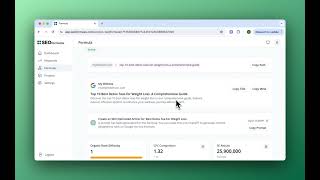
SEO formulas - Build formulas using the Formula Tool
Seo Formulas

SEO formulas - Find Keywords using the Keyword Tool
Seo Formulas

SEO formulas - Scout Keywords using the Scout Tool
Seo Formulas
YouTube returned 6 videos for “SEO formulas”, and we withheld 3: 3 did not mention SEO formulas. Showing the 3 we can prove are about SEO formulas.
Official links
Tools that pair well with SEO formulas
Common stack mates teams adopt alongside SEO formulas, with the specific reason each pairing earns its keep.

HubSpot
Agentic CRM platform uniting marketing, sales, service, content, data, and revenue on one Smart CRM.
Writesonic Chatsonic
Chatsonic is Writesonic's AI marketing agent: GPT-4o, o1, Claude 3.5, Gemini and Flux 1.1 in one chat, wired into WordPress and Google Search Console.

AirOps
AirOps tracks and grows your brand's citations across ChatGPT, Gemini, Perplexity and other AI answer engines, then executes the content strategy to fix them.
Featured Head-to-Head Comparisons
Seo Formulas vs Chili Piper
Choose SEO Formulas if you own a WordPress site and want to automate SEO-optimized content that ties directly to revenue via Stripe/WooCommerce. Choose Chili Piper if you're an enterprise B2B with Salesforce and need to instantly convert high-intent web visitors into booked meetings. They serve completely different stages of the funnel: content generation vs. conversion.
Seo Formulas vs Weglot
If you are a WordPress site owner focused on automating content creation and tying it to revenue, SEO Formulas is purpose-built for you. If you need to quickly launch a multilingual site on any CMS with AI translations and strong SEO support, Weglot is the clear choice. The two tools do not compete directly — choose based on whether your priority is content production or localization.
Seo Formulas vs Letterhead
For WordPress site owners automating SEO content and tracking revenue, SEO Formulas is the focused choice. For teams scaling multiple newsletters with AI-powered curation and portfolio analytics, Letterhead wins. They solve different problems—choose based on whether your priority is blog-driven organic growth or multi-newsletter operations.
Alternatives to SEO formulas
View all
HubSpot
Agentic CRM platform uniting marketing, sales, service, content, data, and revenue on one Smart CRM.
Writesonic Chatsonic
Chatsonic is Writesonic's AI marketing agent: GPT-4o, o1, Claude 3.5, Gemini and Flux 1.1 in one chat, wired into WordPress and Google Search Console.

Frequently Asked Questions
Categories
Best-of guides
Topics
Used SEO formulas? Help shape our editorial sentiment research.