
SigmaMind MCP
SigmaMind MCP exposes SigmaMind's voice AI call-center platform as Model Context Protocol tools you invoke from Claude Desktop, VS Code, or
If your team already lives in an MCP client and runs an outbound floor, SigmaMind MCP is doing genuine operational work, not demo calls — provisioning, test calls, and transcript reads from the editor. The layer-by-layer pricing is the real differentiator: you can see exactly what a minute costs and swap GPT-5.2 for Gemini 2.5 Flash Lite as a config change. Pass if nobody touches an MCP client, or if you want a full CCaaS replacement rather than an add-on to the dialer you already run.
Verified 2d ago · liveness 78/100 · cite: rightaichoice.com/tools/sigmamind-mcp
- Developer teams scripting voice AI pipelines from their IDE via MCP
- DevOps teams needing programmatic call orchestration with inline transcript debugging
- Platform engineers wiring voice AI into existing tooling through an MCP host
- Contact centers deploying AI agents behind an existing dialer without migration
- Non-technical teams who want a pure no-code dashboard rather than MCP or IDE workflows
- Organizations wanting a full CCaaS replacement — SigmaMind augments the dialer you run
- Teams that need on-premise deployment, since this is delivered as SaaS
We scan live Reddit threads, YouTube comments, X posts, G2 reviews and other communities — and hand you an honest verdict in under a minute.
- Honest verdict, not marketing
- Real pros & cons from real users
- Attributed quotes with receipts
3 free scans · no card needed
Skip SigmaMind MCP if nobody on your team works inside an MCP client — the automation layer is scriptable only, and you'd be paying per-second rates for a platform you'd drive by hand.
Playground testing is billed as live use, so iterating on an agent prompt before launch runs the same meter as a real call.
The $0.096/min pay-as-you-go rate and $0.006 per chat message suit small teams and pilot programs testing voice AI before a floor-wide rollout. Mid-size contact centers typically run 25k-100k minutes monthly on the same usage-based terms plus custom Enterprise volume rates for SLAs and support. Against Air.ai and Bland AI, SigmaMind's advantage is layer-level transparency — you can see and swap the STT, LLM, TTS, and telephony components rather than accepting a bundled rate.
In short
SigmaMind MCP — SigmaMind MCP exposes SigmaMind's voice AI call-center platform as Model Context Protocol tools you invoke from Claude Desktop, VS Code, or. Best for Developer teams scripting voice AI pipelines from their IDE via MCP, DevOps teams needing programmatic call orchestration with inline transcript debugging, Platform engineers wiring voice AI into existing tooling through an MCP host. Free to start; paid plans from $0.096.
What's new in SigmaMind MCP
Checked yesterdayAcross the latest 1 update: 1 news mention.
What people actually say about SigmaMind MCP — is it worth it?
We ran a structured research pass across product reviews, community discussions, and post-purchase forum threads to surface the patterns vendors won't publish themselves. Below: the recurring strengths, the hidden costs people mention most, and the cohort that consistently regrets adopting this tool.
10 mentions across 1 source (Product Hunt) · researched Jul 4, 2026.
Average across the 1 source that answered — each source counts once, not each post.
- +Eliminates context switching by managing voice agents directly from IDE.
- +Sub-800ms latency with noise cancellation and VAD out of the box.
- +Supports test calls, webhook management, and campaign automation from MCP.
- +Works with MCP clients like Claude Desktop and VS Code.
- +Free forever plan available with access to basic tools.
- −Very few user reviews exist beyond the initial Product Hunt launch.
- −Language support beyond English is unclear (Portuguese asked).
- −Multi-prompt agent routing and context switching not fully explained.
- −Tightly coupled to SigmaMind ecosystem; migration might be hard.
- −No independent benchmarks or long-term reliability data available.
- • Potential overage charges for call minutes beyond free tier limit.
- • Enterprise features likely require annual contract.
Viability Score
How well maintained and how widely used is SigmaMind MCP? Built from what the vendor actually publishes (docs, changelog, tutorials, integrations, pricing), whether the site is live, and how much real users discuss it. How we calculate this
Last calculated: October 2026
How we score →Key Features
- MCP server exposing voice AI platform operations as callable tools
- Provision and manage AI voice agents from Claude Desktop, VS Code, or any MCP client
- Trigger test calls and read call records inline in your editor
- Manage phone numbers, webhooks, and campaigns for voice and chat
- Deploy voice agents without leaving your IDE or terminal
- Sub-800ms voice-to-voice latency on live phone lines
- Natural interruption handling during live conversation
- Noise cancellation and voice activity detection (VAD)
- Answering machine and voicemail detection for outbound campaigns
- IVR navigation with escalation and warm transfer
- Warm transfer to human agents with full transcript and call summary
- No-code Agent Builder with unlimited drag-and-drop flows
- Playground for pre-launch testing, billed as live use
- App Library of ready-made voice agent templates
- Analytics with transcripts, recordings, and automated QA scoring against your rubric
About SigmaMind MCP
SigmaMind MCP is a Model Context Protocol server that turns SigmaMind's voice AI call center platform into callable tools — so you provision agents, fire test calls, read transcripts, and push campaign, phone number, and webhook changes without leaving Claude Desktop, VS Code, or whatever MCP host your team already runs. It's aimed at developers, DevOps engineers, and platform teams who treat call infrastructure as code rather than as a dashboard someone clicks through. Underneath sits a stack built for real phone lines. Agents sit behind your existing SIP trunk and connect to VICIdial, Convoso, Five9, Genesys and similar dialers — no rip-and-replace. Live conversations run at sub-800ms voice-to-voice latency with natural interruption handling, noise cancellation, voice activity detection, IVR navigation, answering machine detection, and warm transfers that hand the human agent a transcript and call summary before they say hello. The build and measure layer covers a no-code Agent Builder with unlimited drag-and-drop flows, a Playground for pre-launch testing (billed as live use), an App Library of ready-made templates, and analytics that give you every transcript and recording plus automated QA scoring against your own rubric. Multi-client workspaces isolate or centralize accounts for agencies and BPOs. Pricing is unusually auditable for this category: a $0.04/min platform fee billed per second, then STT, LLM, TTS, and telephony itemized separately — Deepgram at $0.01/min, ElevenLabs at $0.05/min, Twilio at $0.015/min, and per-model LLM rates from GPT-5 Nano at $0.003/min up to GPT 5.2 Fast Tier at $0.12/min. Swap a model or voice provider per workflow and the cost moves with it. Compared with all-in-one voice agent platforms that bundle everything into one opaque per-minute number, SigmaMind asks you to care about your stack — and pays you back in control.
Behind the Verdict
Where SigmaMind MCP earns its place is the outbound floor that already writes code. If your agents dial 20,000 calls a day and someone on the team would rather script a campaign than click through a dashboard, having agent provisioning and test calls inside Claude Desktop or VS Code removes a real context switch. The warm-transfer detail matters too — a human picking up a call with the transcript and summary already on screen is the difference between a useful escalation and an angry one. We'd reach for it when the dialer stays. SigmaMind sits behind your SIP trunk and connects to VICIdial, Convoso, Five9, Genesys and the rest, so you're not migrating a floor to use it. The sub-800ms latency target is the number to test against your own call recordings during a Playground trial — that's what a caller notices. Pass when there's no one technical in the loop. If your operations team wants a no-code dashboard and nothing else, the MCP angle is dead weight, and the pricing model asks more of you than a flat per-minute vendor would. Likewise, this augments the dialer you run — it is not a full contact-center replacement. Watch the cost math. The $0.096/min headline is a composite: $0.04 platform plus your chosen STT, LLM, TTS, and telephony. Pick ElevenLabs TTS and GPT-5.2 and you're well above the headline; drop to Rime AI and Gemini 2.5 Flash Lite and you're well under. That's a feature, but it means the bill is a decision you make every time you swap a provider — budget accordingly. One fresher consideration: SigmaMind's own recent guidance on STIR/SHAKEN attestation, number reputation, and dialing pace is worth reading before you scale AI outbound, because spam labeling will hurt you faster than latency will. The closest alternative in most evaluations is a bundled
Researching SigmaMind MCP? Get your full AI stack in 60 seconds.
Free, no signup — tell us your goal and get tools matched to your budget & existing stack.
Real-world workflow fit
Concrete scenarios for the personas SigmaMind MCP actually fits — and what changes day-one when you adopt it.
You connect SigmaMind MCP to Claude Desktop or VS Code, call the agent-provisioning tool to spin up an outbound qualification agent behind your existing Twilio trunk, then trigger a test call and read the transcript back inline without leaving the editor.
Outcome: An agent is live and debugged in one session, with no dashboard context switch and per-second billing visible from the first call.
You script campaign pushes and phone number or webhook changes as MCP tool calls inside your pipeline, promoting a tested agent config from staging to production the same way you promote application code.
Outcome: Voice agent configuration becomes a versioned artifact that ships alongside the rest of your release, with changes auditable in the pipeline log.
You stand up an isolated multi-client workspace per account, migrate the client's existing VICIdial or Five9 dialer connection, and run outbound qualification campaigns with warm transfer to each client's human reps.
Outcome: Each client sees only their own calls and transcripts while you manage provisioning centrally through one MCP connection.
Use Cases
- Provision voice AI agents and campaigns from your IDE instead of a web dashboard.
- Trigger test calls and debug call records without switching tools.
- Wire voice AI deployment scripts into CI/CD pipelines.
- Manage phone numbers, webhooks, and campaign configs through MCP tools.
- Stand up isolated workspaces per client for agencies running multiple brands.
- Estimate per-minute cost across platform, STT, LLM, TTS, and telephony before launch.
- Run outbound lead qualification and hand warm prospects to human reps with context.
- Handle inbound support calls end-to-end outside business hours.
Models Under the Hood
as of 2026-10-17
Limitations
- Usage-based pricing starts at $0.096/min for a Voice AI agent and $0.006 per message for a Chat AI agent, with cost varying by model choice, voice provider, and telephony.
- Enterprise pricing is custom and volume-based, adding SOC2, SSO, HIPAA, advanced reporting, and priority Slack-based support; the pay-as-you-go tier ships basic security and community/documentation support only.
- Playground testing is billed as live use, so pre-launch iteration carries real cost.
as of 2026-10-09
Verification history
We have re-verified SigmaMind MCP 11 times since . Each pass re-reads the vendor's own pages and re-checks every listed field against that evidence; passes where nothing had changed are marked as such.
- — re-verified summary, description, our verdict, our analysis, pricing model, pricing tiers, features, integrations, who it suits, who should skip it
- — re-verified summary, description, our verdict, our analysis, pricing model, pricing tiers, features, integrations, who it suits, who should skip it
- — re-checked, vendor evidence unchanged
- — re-verified summary, description, our verdict, our analysis, pricing model, pricing tiers, features, integrations, who it suits, who should skip it
- — re-verified summary, description, our verdict, our analysis, pricing model, pricing tiers, features, integrations, who it suits, who should skip it
- — re-verified summary, description, our verdict, our analysis, pricing model, pricing tiers, features, integrations, who it suits, who should skip it
Showing the 6 most recent of 11 verification passes.
Free to cite with attribution — this page re-verifies continuously.
12-month cost
Project the real annual outlay, including the implied monthly cost when only an annual tier is published.
Vendor list price only. Add-on usage, seat overages, and contract minimums are surfaced under Hidden costs & gotchas.
Plans compared
For each published SigmaMind MCP tier: who it actually fits, and what it adds vs. the previous tier. Cross-reference the cost calculator above for projected annual outlay.
Pay as you go
$0.096/min voice AI; $0.006 per chat message
Ideal for
Teams testing and launching voice AI agents at low-to-moderate volume, or developers who want to meter a pilot before committing to an enterprise contract.
What this tier adds
Starting tier: $0.096 per voice AI minute and $0.006 per chat AI message, with unlimited drag-and-drop agent builder flows, multi-client workspaces, app library, analytics, and basic security included at usage rates.
Enterprise
Custom (volume-based pricing)
Ideal for
High-volume call operations with 100,000+ minutes or messages a month that need SLAs, dedicated support, and regulated-industry compliance.
What this tier adds
Adds custom volume-based voice and chat rates, custom agent builder setup, advanced reporting, SOC 2 / SSO / HIPAA compliance, and priority Slack-based support on top of the pay-as-you-go feature set.
Where the pricing makes sense
The company stage and team size where SigmaMind MCP's pricing actually pencils out — and where peers do it cheaper.
The $0.096/min pay-as-you-go rate and $0.006 per chat message suit small teams and pilot programs testing voice AI before a floor-wide rollout. Mid-size contact centers typically run 25k-100k minutes monthly on the same usage-based terms plus custom Enterprise volume rates for SLAs and support. Against Air.ai and Bland AI, SigmaMind's advantage is layer-level transparency — you can see and swap the STT, LLM, TTS, and telephony components rather than accepting a bundled rate.
Setup time & first value
How long it actually takes to get something useful out of SigmaMind MCP — broken out by persona, not the marketing-page minute.
Developer with an existing Twilio or SIP trunk and an MCP client: roughly an hour to connect and place a first test call. DevOps wiring deployment into CI/CD: about a day once dialer credentials are in hand. BPO setting up isolated client workspaces: two to three days, mostly spent on per-client dialer and telephony configuration.
Switching to or from SigmaMind MCP
How to bring data in from common predecessors and how to get it back out — written for the switcher, not the buyer.
- →From VICIdial: connect the existing dialer rather than replacing it, then provision SigmaMind agents against the same campaign lists.
- →From Five9: point SigmaMind agents at the existing Five9 routing so AI handles qualification before handing to live reps.
- →From a hand-rolled voice script: port the prompt and call flow into the Agent Builder, then drive deployment through MCP tool calls.
- →From an Air.ai or Bland AI pilot: re-create the agent flow on SigmaMind and select the STT, LLM, TTS, and telephony providers you want layer by layer.
- ↗To Air.ai: re-build agent flows in their dashboard and API, accepting their bundled per-minute rate in place of layer-level pricing.
- ↗To Bland AI: move conversational logic to their API and dashboard, losing the MCP-native deployment path.
- ↗To a full CCaaS platform: export call recordings and transcripts first, since a CCaaS replacement takes over telephony as well as the AI layer.
- ↗To your own stack: use SigmaMind's MCP tool surface as the reference for what a scripted voice control plane has to cover.
Integrations
Resources & Guides
Tutorials & Learning
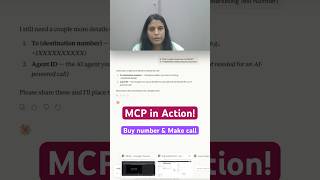
Buy Phone Numbers + Trigger Calls | SigmaMind MCP Server Demo
SigmaMind AI
Buy Phone No, Make Calls, and fetch Call details from Your IDE | SigmaMind MCP Demo
SigmaMind AI
Build a Voice AI Agent with One Simple Instruction | SigmaMind AI
SigmaMind AI
YouTube returned 6 videos for “SigmaMind MCP”, and we withheld 3: 3 did not mention SigmaMind MCP. Showing the 3 we can prove are about SigmaMind MCP.
Official links
Featured Head-to-Head Comparisons
Sigmamind Mcp vs Spider Cloud
Choose SigmaMind MCP if you are a developer or call center ops team needing to programmatically manage voice AI agents with sub-800ms latency and deep dialer integrations. Choose Spider Cloud if you are building AI agents or RAG pipelines that require fast, cheap, and reliable web data extraction. They solve completely different problems: voice orchestration vs. web data ingestion.
Sigmamind Mcp vs Temporal Ai
Choose Temporal AI if your priority is reliable, stateful orchestration for AI agents or microservices that must survive failures. Choose SigmaMind MCP if you are building voice AI pipelines for call centers and need to manage agents, calls, and campaigns directly from your IDE. They serve different needs: Temporal focuses on workflow durability, SigmaMind on voice AI tooling.
Sigmamind Mcp vs Presto Voice
Presto Voice and SigmaMind MCP solve fundamentally different problems: Presto is a turnkey drive-thru voice AI for QSR chains focused on order accuracy and upselling, while SigmaMind MCP is a developer toolkit for building and managing voice AI agents from an IDE. If you run a QSR chain and need a proven, low-friction drive-thru automation with revenue lift, choose Presto Voice. If you are building custom voice AI call flows for outbound or customer service and want to control everything programmatically from your development environment, SigmaMind MCP is the clear winner.
Popular in MCP Servers & Agent Tooling

Smithery
Smithery is an MCP server marketplace and connection layer that handles OAuth, credentials, and session state for your AI agent.

Arcade AI
Arcade AI is the MCP authorization runtime that enforces per-user permissions and logs every action your AI agents take.

Chrome DevTools MCP
Open-source MCP server that gives coding agents live Chrome DevTools for debugging, traces, and browser automation.
Frequently Asked Questions
Topics
Used SigmaMind MCP? Help shape our editorial sentiment research.