
TheFastest.ai
Free daily LLM speed benchmarks — compare time-to-first-token and tokens-per-second across models and regions.
For latency-sensitive work, this is the cleanest free dataset going. The multi-region angle matters: a model that's quick in Virginia can drag in Paris, and few comparison sites bother to show that. Use it to shortlist providers on raw speed, then sanity-check quality, safety and cost elsewhere — this tool won't tell you any of those. Pair it with a quality benchmark suite before you commit a provider to production.
Last checked 3d ago · cite: rightaichoice.com/tools/thefastest-ai
- Developers comparing LLM latency for real-time chatbots
- DevOps engineers choosing which region to deploy models in
- Product managers evaluating user-facing AI response speed
- SRE teams selecting providers on throughput metrics
- Users needing answer quality or accuracy benchmarks
- Teams looking for production API access or integrations
- Buyers requiring SLA-backed performance guarantees
We scan live Reddit threads, YouTube comments, X posts, G2 reviews and other communities — and hand you an honest verdict in under a minute.
- Honest verdict, not marketing
- Real pros & cons from real users
- Attributed quotes with receipts
3 free scans · no card needed
Skip TheFastest.ai if you need to compare answer quality, accuracy or cost per token — it measures inference speed only, so shortlist on latency here and evaluate everything else with a separate tool.
There is no cost to use it and no account to create — it sits alongside free quality-focused leaderboards as a speed-only complement, rather than replacing paid evaluation or observability suites you'd use to judge accuracy, safety and spend.
In short
TheFastest.ai — Free daily LLM speed benchmarks — compare time-to-first-token and tokens-per-second across models and regions. Best for Developers comparing LLM latency for real-time chatbots, DevOps engineers choosing which region to deploy models in, Product managers evaluating user-facing AI response speed. Free to use.
What people actually say about TheFastest.ai — is it worth it?
We ran a structured research pass across product reviews, community discussions, and post-purchase forum threads to surface the patterns vendors won't publish themselves. Below: the recurring strengths, the hidden costs people mention most, and the cohort that consistently regrets adopting this tool.
19 mentions across 2 sources (YouTube, Bluesky) · researched Jul 28, 2026.
Average across the 1 source that answered — each source counts once, not each post.
- +Daily-updated benchmarks keep data current.
- +Open-source code and public raw data ensure transparency.
- +Standardized methodology (1000/20 tokens) enables fair comparisons.
- +Multi-region testing (US West, US East, Europe) reveals geographic variance.
- +Filters by model name and prompt type (text, function, image, audio).
- −Only measures speed; ignores model quality, cost, and accuracy.
- −Supports only three US/EU regions – not truly global.
- −No community feedback or reviews to validate trust.
- −Tests only up to 20 output tokens – unrealistic for long responses.
- −No cost metrics or price-per-token comparisons.
Viability Score
How well maintained and how widely used is TheFastest.ai? Built from what the vendor actually publishes (docs, changelog, tutorials, integrations, pricing), whether the site is live, and how much real users discuss it. How we calculate this
Last calculated: October 2026
How we score →Key Features
- Daily-updated LLM inference speed benchmarks
- Time To First Token (TTFT) measurement
- Tokens Per Second (TPS) throughput reporting
- Total response time per model
- Multi-region testing from US West, US East, and Europe
- Filter leaderboard by model name
- Filter by prompt type: text, function, image, audio
- Standardized ~1000 input / 20 output token workload
- Best-of-three runs to remove outlier queuing delays
- Connection warmup that removes HTTP setup latency
- Raw benchmark data published in a public GCS bucket
- Open-source benchmarking code on GitHub
- Request new model coverage via GitHub issues
- No account or login required
- Switchable light/dark mode
About TheFastest.ai
TheFastest.ai is a free, daily-refreshed benchmarking site that measures how quickly large language models respond when called through real cloud endpoints. It ignores answer quality entirely and isolates raw inference speed across three metrics: Time To First Token (TTFT), Tokens Per Second (TPS), and total response time. Tests originate from data centers in US West (Seattle), US East (Virginia), and Europe (Paris), so you can see how latency shifts by geography instead of trusting a single-region hero number. The methodology is deliberately narrow and repeatable. A warmup connection strips out HTTP setup overhead, benchmarks use roughly 1,000 input tokens and 20 output tokens — about a typical conversational sentence — and each result is a best-of-three run to filter queuing noise. You can filter the leaderboard by model name (Llama, GPT-4, Claude, Gemini and others) and by prompt type covering text, function, image, and audio. Transparency is the draw for technical teams: raw results sit in a public GCS bucket, the benchmarking code is open-source on GitHub, and you file GitHub issues to request that new models be added. There is no account, no login, and no cost, and it runs on distributed infrastructure via Fly.io. It was built by Fixie in Seattle. Treat it as a speed-only complement, not a replacement for a broader evaluation suite.
Behind the Verdict
What TheFastest.ai gets right is restraint. Rather than scoring an all-in-one 'best model' number the way general leaderboards try to, it picks one axis — inference speed — and measures it carefully. The warmup connection removes HTTP setup latency, the workload is fixed at roughly 1,000 input tokens and 20 output tokens, and every result is a best-of-three run so a single queuing spike doesn't distort the table. That makes the numbers comparable across providers in a way that ad-hoc 'I ran it on my laptop' tests never are. The multi-region dimension is the real differentiator for anyone shipping user-facing AI. Running the same prompts from US West, US East and Europe exposes the gap between a demo that feels instant in one region and a chat experience that stalls for European users. For product managers and SRE teams choosing where to deploy, that's the kind of evidence vendor marketing pages rarely publish. Transparency is a genuine strength. Raw data lands in a public GCS bucket, the benchmarking code is open-source on GitHub, and you can file a GitHub issue to get a model added — so the whole pipeline is auditable rather than a black box. Where it falls short is scope, and the site itself doesn't hide it. A single fixed input length and a 20-token output won't represent long-context summarisation, batch generation, or agent loops that fan out dozens of calls. There is no accuracy, safety, or cost scoring here at all, and daily refreshes still can't capture real-time provider fluctuations. It's also not a place to get an API key — it measures speed through cloud endpoints, it doesn't serve models. Where it fits: engineering teams shortlisting providers for real-time chat, voice, or transcription; DevOps and SRE engineers deciding on a deployment region; researchers who want a repeatable latency dataset they can wire into CI to catch regressions. Where it doesn't: anyone who needs answer-quality evaluation, an SLA, production inference access, or a non-technical plug-and-play verdict. Use it as a speed-specific input to a decision you make with other tools.
Researching TheFastest.ai? Get your full AI stack in 60 seconds.
Free, no signup — tell us your goal and get tools matched to your budget & existing stack.
Real-world workflow fit
Concrete scenarios for the personas TheFastest.ai actually fits — and what changes day-one when you adopt it.
You filter the daily leaderboard by text prompt type, sort on TTFT, and cross-check the top two models from US East versus Europe before committing to a provider.
Outcome: You pick a model and region combination that keeps first-token latency low for both your US and EU users, instead of discovering the EU gap after launch.
You wire the public GCS benchmark dataset into your CI/CD pipeline and set alerts when your shortlisted models' tokens-per-second regresses.
Outcome: Latency regressions on the models you depend on surface as pipeline alerts rather than as user complaints.
You filter the leaderboard by the audio prompt type (and separately by image and function) to see how providers differ on non-text inputs.
Outcome: You get a defensible speed read for a multimodal feature before engineering spends a sprint integrating one provider.
Use Cases
- Compare TTFT of GPT-4, Claude 3, and Gemini across US and EU regions to pick a provider for your chatbot
- Find the fastest model for real-time audio transcription by filtering on prompt type
- Pull the public dataset into your CI/CD pipeline to monitor latency and alert on regressions
- Identify which model gives the best tokens-per-second for high-throughput text generation
- Request your own model be added via a GitHub issue and watch it appear in daily updates
- Evaluate the speed trade-off of image and function inputs across providers for multimodal apps
Models Under the Hood
as of 2026-09-01
Limitations
- The benchmarks use a single fixed input length (~1,000 tokens) and output length (20 tokens), so long-context summarisation, batch generation and agent loops aren't represented.
- Only speed is measured — there is no scoring of response quality, safety, or cost.
- Data is updated daily but can't capture real-time provider fluctuations.
- It measures speed through cloud endpoints; it does not serve models or provide API access.
as of 2026-10-08
Verification history
We have re-verified TheFastest.ai 11 times since . Each pass re-reads the vendor's own pages and re-checks every listed field against that evidence; passes where nothing had changed are marked as such.
- — re-checked, vendor evidence unchanged
- — re-verified summary, description, our verdict, our analysis, pricing model, pricing tiers, features, integrations, who it suits, who should skip it
- — re-checked, vendor evidence unchanged
- — re-checked, vendor evidence unchanged
- — re-checked, vendor evidence unchanged
- — re-checked, vendor evidence unchanged
Showing the 6 most recent of 11 verification passes.
Free to cite with attribution — this page re-verifies continuously.
12-month cost
Project the real annual outlay, including the implied monthly cost when only an annual tier is published.
Vendor list price only. Add-on usage, seat overages, and contract minimums are surfaced under Hidden costs & gotchas.
Plans compared
For each published TheFastest.ai tier: who it actually fits, and what it adds vs. the previous tier. Cross-reference the cost calculator above for projected annual outlay.
Free
$0/mo
Ideal for
Any developer, SRE or product manager who needs LLM latency numbers without a budget line or an account signup
What this tier adds
Starting tier — daily-updated speed benchmarks across three regions with raw data in a public GCS bucket and open-source code on GitHub
Where the pricing makes sense
The company stage and team size where TheFastest.ai's pricing actually pencils out — and where peers do it cheaper.
There is no cost to use it and no account to create — it sits alongside free quality-focused leaderboards as a speed-only complement, rather than replacing paid evaluation or observability suites you'd use to judge accuracy, safety and spend.
Setup time & first value
How long it actually takes to get something useful out of TheFastest.ai — broken out by persona, not the marketing-page minute.
No setup for the leaderboard itself — open the site, filter by model or prompt type, and read the daily numbers in under a minute. Connecting the public GCS dataset to a CI/CD pipeline is a small scripted task, typically an afternoon for an engineer who already owns your monitoring stack.
Tutorials & Learning
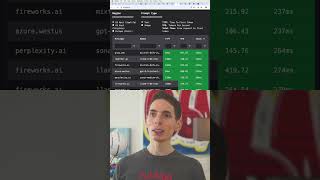
YouTube returned 6 videos for “TheFastest.ai”, and we withheld 5: 5 could not be judged, because “TheFastest.ai” is a single word that other videos use for other things. Showing the 1 we can prove is about TheFastest.ai.
Official links
Tools that pair well with TheFastest.ai
Common stack mates teams adopt alongside TheFastest.ai, with the specific reason each pairing earns its keep.

Token Monitor
Token Monitor is a free desktop widget that tracks AI coding token usage, cost, and quota limits across 44+ tools and providers.

Opencompass
OpenCompass (司南) benchmarks LLMs, VLMs, and AI4S models on 100+ open evaluation datasets with dated leaderboards

Matharena
Free public leaderboard benchmarking LLMs on competition math and Lean proof benchmarks like ArXivMath and ArXivLean.
Featured Head-to-Head Comparisons
Thefastest Ai vs Spider Cloud
Choose TheFastest.ai if you need real-world LLM latency benchmarks to pick the fastest provider for your app; choose Spider Cloud if you need a fast, reliable web scraping API to feed data into AI agents or RAG pipelines. They serve completely different needs and are not direct competitors.
Thefastest Ai vs Temporal Ai
These tools serve completely different purposes: TheFastest.ai helps you pick the fastest LLM provider with free, daily benchmarks, while Temporal AI orchestrates durable workflows for AI agents and microservices. If you need latency data to choose a model, go with TheFastest.ai. If you need to build fault-tolerant, long-running AI workflows, Temporal is the clear choice.
Thefastest Ai vs Voyage Ai
These tools are not direct competitors. Voyage AI is a paid enterprise embedding and reranker service for accurate retrieval, while TheFastest.ai is a free benchmarking site for LLM inference speed. Choose Voyage if you need high-quality embeddings for finance/legal RAG; use TheFastest to compare provider latency.
Phoenix vs Thefastest Ai
If you need to pick the fastest provider for a latency-sensitive chatbot, TheFastest.ai gives you free, daily-updated benchmarks across regions. If you're debugging or evaluating complex AI agent workflows — with full traces, LLM-as-judge scoring, and dataset creation — Phoenix is the open-source choice. They serve different problems: speed measurement vs. agent quality. Your pick depends on whether you're optimizing for latency or building reliable agents.
Alternatives to TheFastest.ai
View all
Token Monitor
Token Monitor is a free desktop widget that tracks AI coding token usage, cost, and quota limits across 44+ tools and providers.
Opencompass
OpenCompass (司南) benchmarks LLMs, VLMs, and AI4S models on 100+ open evaluation datasets with dated leaderboards

Frequently Asked Questions
Categories
Topics
Used TheFastest.ai? Help shape our editorial sentiment research.