
Zep Memory
Enterprise agent memory with temporal context graphs and built-in governance for production AI agents.
Zep Memory is the enterprise-grade choice for governed agent context, with deep compliance and temporal contradiction handling that open-source alternatives like Mem0 and MemGPT can't match. Its credit-based pricing and gated enterprise features mean it's overkill for simple RAG or stateless agents. If you need persistent memory with audit trails and temporal reasoning, Zep is a strong bet. For lighter needs, consider Mem0 or MemGPT.
Verified 10d ago · liveness 75/100 · cite: rightaichoice.com/tools/zep-memory
- Enterprise AI agents requiring persistent user memory across sessions
- Deal-flow management and portfolio review agents in finance
- Customer support agents needing accurate, auditable context
- Compliance-heavy industries needing governance on agent memory
- Simple RAG or Q&A over static documents
- Stateless agents that don't need memory across sessions
- Small-scale prototypes where governance is not required
We scan live Reddit threads, YouTube comments, X posts, G2 reviews and other communities — and hand you an honest verdict in under a minute.
- Honest verdict, not marketing
- Real pros & cons from real users
- Attributed quotes with receipts
3 free scans · no card needed
Skip Zep Memory if you need only simple RAG over static documents, have no need for persistent memory, or operate at a scale where governance and audit trails aren't a requirement.
Flex overage is $25 per 10,000 credits after your included 50,000; your monthly bill can balloon if you send large Episodes.
Zep's credit-based pricing suits teams already invested in enterprise infrastructure; it's costlier than open-source options like Mem0 or MemGPT, but those lack Zep's governance and provenance. For regulated industries, Zep's SOC 2 and HIPAA BAA are worth the premium.
In short
Zep Memory — Enterprise agent memory with temporal context graphs and built-in governance for production AI agents. Best for Enterprise AI agents requiring persistent user memory across sessions, Deal-flow management and portfolio review agents in finance, Customer support agents needing accurate, auditable context. Free to start; paid plans from $104/mo.
What people actually say about Zep Memory — is it worth it?
We ran a structured research pass across product reviews, community discussions, and post-purchase forum threads to surface the patterns vendors won't publish themselves. Below: the recurring strengths, the hidden costs people mention most, and the cohort that consistently regrets adopting this tool.
23 mentions across 3 sources (Hacker News, YouTube, Lemmy) · researched Aug 14, 2026.
Average across the 3 sources that answered — each source counts once, not each post.
- +Temporal context graphs handle contradictions and track fact evolution.
- +Sub-200ms retrieval at scale supports production agents with low latency.
- +Provenance preservation traces each fact to its source episode.
- +Built-in governance: ABAC, retention policies, legal hold, audit logs.
- +Integrates with Python, TypeScript, and Go — flexible for any stack.
- −LLM calls on every turn drive token costs and third-party exposure.
- −Steep learning curve; documentation is sparse for advanced setup.
- −Little community troubleshooting; user questions often unanswered.
- −Overkill for simple agent memory; lighter tools are cheaper.
- −Pricing transparency is weak; hidden costs for Flex Plus tiers.
- • Tokens for LLM fact extraction on every turn
- • Potential overage charges for high volume API calls
- • Enterprise support likely requires a premium contract
Viability Score
How well maintained and how widely used is Zep Memory? Built from what the vendor actually publishes (docs, changelog, tutorials, integrations, pricing), whether the site is live, and how much real users discuss it. How we calculate this
Last calculated: September 2026
How we score →Key Features
- Temporal context graphs for agent memory
- Automated context assembly from chat, business data, interactions
- Sub-200ms retrieval latency at scale (up to 100M graphs)
- Provenance preservation: every fact traced to source episode
- Automatic invalidation of old facts on contradiction
- Observations: pattern and recurrence detection
- Attribute-based access control (ABAC)
- Policy-driven data retention and legal hold
- Full audit and API logs
- Entity extraction: people, companies, topics, products
- Python, TypeScript, Go SDKs
- Live ingestion of chat history and business data
- Context Lake for millions of governed graphs
- Webhooks (Flex Plus and Enterprise)
- Custom extraction instructions (Flex Plus and Enterprise)
About Zep Memory
Zep Memory is a persistent, governed memory layer for AI agents operating at enterprise scale. Instead of storing flat summaries, it builds temporal context graphs that track facts, entities, and relationships as they change over time. The system ingests chat history, business data, and user interactions, automatically assembling the relevant context for any query. It supports millions of active graphs with sub-200ms retrieval latency, making it suitable for production agents that need to reason across long-running sessions without ballooning token counts. Key capabilities include automated context assembly, provenance preservation (every fact traces back to its source episode), and temporal contradiction handling—when new information contradicts existing facts, old facts are invalidated but retained as history. Zep also surfaces Observations, which are patterns and recurrences derived from the graph structure. Governance is built into the substrate: attribute-based access control (ABAC), policy-driven data retention, legal hold, and full audit trail logging. Zep integrates with any agent framework via Python, TypeScript, and Go SDKs, and can be deployed as a managed service, in your VPC, or with BYOK. It is recognized in an S&P Global Market Intelligence report as a key player in the agent memory layer. Recent benchmarks show improved connected-fact reasoning, addressing a common blind spot in AI memory systems. For teams building compliant, context-aware agents, Zep provides a more complete governance story than open-source alternatives like Mem0 or MemGPT, which lack built-in temporal contradiction handling and enterprise access controls. For simpler needs, those alternatives may be lighter and cheaper.
Behind the Verdict
Zep Memory is a purpose-built agent memory layer that stands out for its temporal context graph approach. Unlike simpler memory tools that store flat summaries or conversation history, Zep constructs a knowledge graph of entities, facts, and relationships, and updates it as new information arrives. This gives you capabilities you won't find in most alternatives: provenance (every fact traces back to the exact chat message or data source), temporal reasoning (ask what the agent knew on a past date), and automatic invalidation of outdated facts when contradictions arise. For teams building customer support agents, deal-flow trackers, or any assistant that must remember a user's evolving preferences and history, this is a significant advantage. The governance story is also strong. Attribute-based access control, policy-driven retention, legal hold, and full audit logs are baked into the data layer, not bolted on. That's why regulated industries—finance, healthcare, legal—can realistically adopt Zep where open-source memory tools would fail compliance reviews. SOC 2 Type II and HIPAA BAA are available on Enterprise, and you can deploy in your own VPC with BYOC if you need complete control over your data perimeter. However, Zep is not a lightweight tool. Its credit-based pricing can be unpredictable if your usage spikes, and the memory-graph architecture is overkill for simple Q&A over static documents or stateless agents that don't need to remember anything. The free tier is limited to 10,000 credits per month, and many advanced features—Observations, webhooks, custom extraction—are gated behind Flex Plus or Enterprise. For small teams just prototyping, Mem0 or MemGPT might get you 80% of the value with far less complexity and cost. In short, Zep is the right choice if you need governed, temporal, auditable memory at scale. If you don't need those enterprise controls, you're paying for features you'll never use. Before committing, use the free tier to validate your volume and confirm the credit math fits your budget.
Researching Zep Memory? Get your full AI stack in 60 seconds.
Free, no signup — tell us your goal and get tools matched to your budget & existing stack.
Real-world workflow fit
Concrete scenarios for the personas Zep Memory actually fits — and what changes day-one when you adopt it.
Integrate Zep with an existing LangChain agent to give it long-term memory of customer interactions, preferences, and past issues across sessions.
Outcome: The agent now recalls a user's previous tickets and preferences, reducing repeated questions and improving resolution accuracy, while keeping full audit trails.
Deploy a deal-flow agent that ingests business data and updates context graphs as negotiations progress, with temporal contradiction handling.
Outcome: The agent provides up-to-date deal context and historical decisions, helping analysts review portfolios with confidence in the accuracy of each fact.
Use Zep Enterprise with BYOC to keep all agent memory inside the company's VPC, meeting data residency and compliance requirements.
Outcome: You get the memory and governance features without moving sensitive data to the cloud, passing security review faster.
Use Cases
- Build a customer support agent that remembers user preferences, past issues, and account status across sessions.
- Create a personal shopping assistant that tracks brand preferences, purchase history, and return/warranty status.
- Develop a voice agent for live support that retrieves relevant business data and recent interactions in under 200ms.
- Integrate Zep into an existing agent framework (e.g., LangChain) to add persistent memory and context graph capabilities.
- Deploy a compliant context engineering pipeline in a regulated industry using SOC 2 or HIPAA-certified infrastructure.
Limitations
- Zep is a credit-based memory service where credits are consumed based on the size of each episode.
- Self-serve plans start at $125/month for 50,000 credits, with limits on projects, entity types, and API log retention.
- Advanced features like webhooks and custom extraction instructions are only available in higher tiers or enterprise plans.
as of 2026-08-29
Verification history
We have re-verified Zep Memory 13 times since . Each pass re-reads the vendor's own pages and re-checks every listed field against that evidence; passes where nothing had changed are marked as such.
- — re-verified summary, description, our verdict, our analysis, pricing model, pricing tiers, features, integrations, who it suits, who should skip it
- — re-verified summary, description, our verdict, our analysis, pricing model, pricing tiers, features, integrations, who it suits, who should skip it
- — re-verified summary, description, our verdict, our analysis, pricing model, pricing tiers, features, integrations, who it suits, who should skip it
- — re-verified summary, description, our verdict, our analysis, pricing model, pricing tiers, features, integrations, who it suits, who should skip it
- — re-verified summary, description, our verdict, our analysis, pricing model, pricing tiers, features, integrations, who it suits, who should skip it
- — re-verified summary, description, our verdict, our analysis, pricing model, features, integrations, who it suits, who should skip it
Showing the 6 most recent of 13 verification passes.
Free to cite with attribution — this page re-verifies continuously.
12-month cost
Project the real annual outlay, including the implied monthly cost when only an annual tier is published.
Vendor list price only. Add-on usage, seat overages, and contract minimums are surfaced under Hidden costs & gotchas.
Plans compared
For each published Zep Memory tier: who it actually fits, and what it adds vs. the previous tier. Cross-reference the cost calculator above for projected annual outlay.
Free
$0/mo
Ideal for
Solo developers or small teams prototyping agent memory with up to 10,000 credits per month, no upfront cost.
What this tier adds
Entry tier with 10,000 credits/month; no rollover, limited to 5 projects, and no advanced features like Observations or webhooks.
Flex
$104/mo (annual)
Ideal for
Startups and small teams needing 50,000 credits/month with auto top-up and 30-day rollover; suitable for moderate production use.
What this tier adds
Adds 40,000 extra credits over Free, auto top-up, 30-day rollover, 600 RPM, 5 projects, 5 MCP seats, and 10 custom entity/edge types.
Flex Plus
$312/mo (annual)
Ideal for
Growing teams with higher throughput needs (1,000 RPM) and advanced features like Observations and webhooks.
What this tier adds
Increases credits to 200,000/month, raises RPM to 1,000, expands to 10 projects and 15 MCP seats, and unlocks Observations, custom extraction, and webhooks.
Emerging Companies
$13,000/yr
Ideal for
Venture-backed startups that need enterprise-grade governance and SLAs but at a negotiated, affordable price point.
What this tier adds
Custom credits, negotiated rates, and SLA—for qualifying startups, providing enterprise capabilities without full Enterprise pricing.
Enterprise
Custom
Ideal for
Large enterprises in regulated industries requiring guaranteed rate limits, unlimited projects, and full compliance certifications.
What this tier adds
Adds guaranteed SLA, unlimited projects, custom MCP seats, SOC 2 Type II, HIPAA BAA, and 1-year audit/API log retention.
Where the pricing makes sense
The company stage and team size where Zep Memory's pricing actually pencils out — and where peers do it cheaper.
Zep's credit-based pricing suits teams already invested in enterprise infrastructure; it's costlier than open-source options like Mem0 or MemGPT, but those lack Zep's governance and provenance. For regulated industries, Zep's SOC 2 and HIPAA BAA are worth the premium.
Setup time & first value
How long it actually takes to get something useful out of Zep Memory — broken out by persona, not the marketing-page minute.
For a developer familiar with Python, you can get a basic memory integration running in under 30 minutes using the Quickstart. For a production deployment with business data ingestion and governance policies, expect 1-2 days depending on your integration complexity.
Switching to or from Zep Memory
How to bring data in from common predecessors and how to get it back out — written for the switcher, not the buyer.
- →From Mem0: Use Zep's Python/TypeScript SDK to import existing memory entries and map them into context graphs; historical episodes may need manual structuring.
- →From MemGPT: Use Zep's API to ingest past conversation data as Episodes; Zep will automatically build the temporal graph.
- ↗To Mem0: Export graph facts via Zep's API and flatten them into key-value memories; expect to lose temporal and provenance features.
- ↗To MemGPT: Pull context history from Zep's API and convert into MemGPT's format; governance features are not transferable.
Integrations
Resources & Guides
Tutorials & Learning

Zep Quickstart: Agent Memory + Automated Context Assembly!
Zep AI

How To Build AI Agents With Human-Like Memory (ZEP & n8n)
Yash | AI Automation
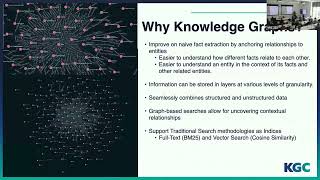
Zep: A Temporal Knowledge Graph Architecture for Agent Memory
The Knowledge Graph Conference
YouTube returned 6 videos for “Zep Memory”, and we withheld 2: 2 did not mention Zep Memory. Showing the 4 we can prove are about Zep Memory.
Official links



Frequently Asked Questions
Categories
Best-of guides
Topics
Used Zep Memory? Help shape our editorial sentiment research.