Zuzia is live · free plan, paid from $9/mo · last verified 22 Nov 2026 · viability healthy

Zuzia
Zuzia monitors servers and websites with a tiny agent that restarts crashed services and runs shell commands straight from your browser.
Buy Zuzia for the fix-it half. Autopilot restarting a dead systemd service, a browser shell with a full command history, and turning any command into an OK/WARNING/CRITICAL check are things UptimeRobot and HetrixTools don't do at any price. At $9/mo for 10 servers it undercuts per-seat monitors. If you only want a ping when a site drops, take UptimeRobot's free monitors or self-host Uptime Kuma — the vendor says as much itself.
Verdict generatedVerified 1d ago · liveness 78/100 · cite: rightaichoice.com/tools/zuzia
- Freelance developers running 5–20 client VPSes who want to restart services without SSH
- Small studios putting every client server, site and scheduled task under one per-host bill
- Solo SaaS founders needing SSL and domain expiry alerts plus backup checks on a production box
- Laravel Forge users who want their servers and sites imported into one panel
- Agencies needing multi-seat logins today — the vendor says there is one login per account for now
- Enterprises wanting Datadog-level log and trace pipelines
- Client environments where an agent with root permissions is not allowed on the box
We scan public community discussion about Zuzia and hand you an honest verdict, or say plainly when we cannot tie the posts to this tool.
- Honest verdict, not marketing
- Real pros & cons from real users
- Attributed quotes with receipts
Free scans included · no card needed
Skip Zuzia if all you want is a ping when a site goes down — UptimeRobot gives 50 free monitors and self-hosted Uptime Kuma is free, and the vendor says as much itself.
Autopilot auto-restarts and the MCP server run during the 14-day trial, then need Starter at $9/mo or higher — the Free plan doesn't include them.
Per-host pricing puts Zuzia at the cheap end for anyone holding servers: $9/mo covers 10 servers and $19/mo covers 30, both monthly, versus per-seat monitors that charge roughly $10–15 per user per month. Against UptimeRobot's paid solo tier (about €10/mo) and HetrixTools at $9.95/mo for 30 uptime plus 30 server monitors, Zuzia costs about the same and adds command execution and auto-restart. Only Datadog-scale spend buys you less here, not more.
In short
Zuzia — Zuzia monitors servers and websites with a tiny agent that restarts crashed services and runs shell commands straight from your browser. Best for Freelance developers running 5–20 client VPSes who want to restart services without SSH, Small studios putting every client server, site and scheduled task under one per-host bill, Solo SaaS founders needing SSL and domain expiry alerts plus backup checks on a production box. Free to start; paid plans from $9/mo.
What is Zuzia?
Zuzia — Zuzia monitors servers and websites with a tiny agent that restarts crashed services and runs shell commands straight from your browser. Best for Freelance developers running 5–20 client VPSes who want to restart services without SSH, Small studios putting every client server, site and scheduled task under one per-host bill, Solo SaaS founders needing SSL and domain expiry alerts plus backup checks on a production box. Free to start; paid plans from $9/mo.
Zuzia is server and website monitoring aimed at people holding a handful of VPSes together — freelance devs, small studios, solo SaaS founders. Paste a URL and it checks uptime, SSL certificate expiry and domain expiry from three locations, as often as every minute. Port and DNS checks run entirely from outside, so your database, mail server or API gets watched without installing anything. Add the optional agent and you get CPU, RAM, disk and load metrics, per-server learned baselines that flag drift, and a disk-fill forecast. The half that separates it from a ping checker is fixing things. Autopilot watches the systemd services you pick and restarts a dead one, starting in dry-run or gated behind an email approval link. Any command becomes a check reporting OK, WARNING or CRITICAL — 36 ready-made ones cover backup file freshness, software RAID health, SMART disk health and pending security updates. A browser shell runs commands on any host with the whole history kept, and scheduled cyclical tasks handle backups, cleanups and restarts with AI summarizing output so you only hear about failures. An MCP server hooks Claude Code, Cursor and VS Code to your hosts: ask why web-03 is slow and the assistant reads metrics, logs and alerts, with server actions off until you allow them. Alerts route to email, Slack, Discord, Pushover, or SMS through your own Vonage account, per monitor or task. Public status pages and embeddable widgets let clients check before they call you, and Laravel Forge users can import servers and sites with an API key. Billing counts hosts, not seats or metric volume: Free covers 1 server and 10 websites, Starter is $9/mo for 10 servers, Pro is $19/mo for 30, and Lifetime is $129 one-time (15 servers) while the product is early — the vendor has said it moves to $229 once the team plan ships. Compare it against UptimeRobot and HetrixTools only if pinging is all you need; Zuzia's case rests on what happens after the alert.
Key features
- Website uptime, SSL expiry and domain expiry checks from three locations, as often as every minute
- Multi-location down confirmation before a site is called down
- TCP port monitoring for databases, mail servers, APIs and game servers
- DNS record monitoring with expected-value checks for hijacks
- Optional agent reporting CPU, RAM, disk and load metrics
- Per-server learned baselines with drift alerts and disk-fill forecasting
- Autopilot auto-restarts crashed systemd services, in dry-run or email-approved mode
- Remote shell commands from the browser with full history and audit log
- Scheduled cyclical tasks for backups, cleanups and restarts with AI-summarized output
- 36 ready-made checks including backup freshness, software RAID and SMART health
- Any command becomes a monitor reporting OK, WARNING or CRITICAL
- MCP server for Claude Code, Cursor and VS Code, with server actions opt-in
- AI writes shell commands and explains command and task output
- Host security audits with an AI summary
- Public status pages and embeddable status widgets
Behind the verdict
We'd reach for Zuzia the moment the job stops being "tell me the site is down" and becomes "restart the thing before the client notices." Autopilot on selected systemd services, with a dry-run and an email-approval mode in between, is a genuinely sensible ramp for anyone nervous about letting software restart production daemons. The per-host pricing is the quiet win. Ten servers for $9/mo, thirty for $19, no per-seat maths and no metric volume to forecast. If you're a freelancer billing five to twenty client VPSes, that's a line item you stop thinking about — and it's why the Lifetime offer at $129 (15 servers) is worth a hard look if you plan to stay on it for a year or more. The vendor has published that it rises to $229 when the team plan ships, so early buyers lock the lower number. Where it bites: one login per account for now. Agencies with three people needing their own logins should wait for the team plan rather than share credentials. The agent runs with elevated permissions, which some client environments simply won't allow — the vendor documents the lockdown (a port you choose, answered only from Zuzia's IPs) but that argument won't land with every hosting client. And if your world is logs and traces rather than a crashed nginx unit, this is not a Datadog substitute. Against UptimeRobot and HetrixTools, Zuzia loses the free-monitor contest outright and doesn't pretend otherwise. Its edge is the panel that lets you act. Against self-hosted Uptime Kuma, the honest split is cost versus placement: Kuma is free, but if you run it on the box it's watching, the monitor dies with the server. In practice the feature we'd lean on most is scheduled cyclical tasks — backups, cleanups, restarts — with AI reading the output and alerting only on failure. That's the
Limitations
- The Free plan is capped at 1 server, 10 websites, 1 port or DNS check and 1 scheduled task — enough to try, not to run a client book on.
- Autopilot auto-restarts and the MCP server are included in the 14-day trial and then require a paid plan; if the trial ends without an upgrade you drop to Free rather than being billed.
- Commands, scheduled tasks and CPU/RAM/disk metrics all depend on installing the agent on each server.
- It is a solo-built, bootstrapped product aimed at freelancers and small agencies rather than large SRE teams.
as of 2026-11-18
Researching Zuzia? Get your full AI stack in 60 seconds.
Free, no signup — tell us your goal and get tools matched to your budget & existing stack.
Is Zuzia still active?
Zuzia is live · free plan, paid from $9/mo · last verified 22 Nov 2026 · viability healthy.
Viability score
How well maintained and how widely used is Zuzia? Built from what the vendor actually publishes (docs, changelog, tutorials, integrations, pricing), whether the site is live, and how much real users discuss it. How we calculate this
Last calculated: November 2026
How we score →What's new in Zuzia
Checked 5 days agoAcross the latest 1 update: 1 news mention.
What do users say about Zuzia?
What people actually say about Zuzia — is it worth it?
Our community sentiment research written Aug 20, 2026 is more than 90 days old, so it is being re-reviewed against current data and is not shown.
How we verified this
Every listed fact about Zuzia — pricing, features, links, status — is re-read from the vendor's own pages by our verification pipeline and each change is logged with a date; the last pass ran on 22 Nov 2026. Analysis is drafted with AI models and checked against our editorial standards before publishing; see how we verify.
Verification history
We have re-verified Zuzia 16 times since . Each pass re-reads the vendor's own pages and re-checks every listed field against that evidence; passes where nothing had changed are marked as such.
- — changed limitations
- — changed summary, pricing tiers, features, our verdict, who should skip it, description
- — changed switching in, pricing tiers, who it suits, use cases, our verdict, description, limitations, setup time, integrations, hidden costs, summary, who should skip it, switching out, features, pricing fit
- — changed features, who it suits, pricing tiers, summary, our verdict, description, integrations, who should skip it, pricing page, limitations
- — changed features, summary, our verdict, pricing tiers, description, who should skip it, integrations
- — changed pricing page
Showing the 6 most recent of 16 verification passes.
Free to cite with attribution — this page re-verifies continuously.
How much does Zuzia cost in 2026?
Zuzia: Free to start; paid plans from $9/mo. Pricing last verified 22 Nov 2026.
We read Zuzia’s pricing page every week; last read . No proven price change since we began watching it on 14 Nov 2026. How this is checked
Plans compared
Every published Zuzia tier, its price as the vendor publishes it, who it fits, and what it adds over the tier below. The 12-month cost projection follows.
| Plan | Price | Billing | Who it's for |
|---|---|---|---|
| Free | Free | — | One production box plus a handful of client sites you want outside-in uptime, SSL and domain expiry on without paying.Adds: Starting tier: 1 server, 10 websites, 1 port or DNS check, 1 scheduled task, unlimited email alerts and Slack/Discord/Pushover. No Autopilot or MCP. |
| Starter | $9/mo | monthly | A freelancer with up to 10 client servers who wants Autopilot restarts and MCP access without a big monthly bill.Adds: Adds 9 more servers, 30 websites, 10 port or DNS checks, 25 scheduled tasks, Autopilot auto-restart, the MCP server and AI command writing over Free. |
| Pro | $19/mo | monthly | A small studio or agency running up to 30 servers across a client book, at $19/mo.Adds: Raises the ceiling to 30 servers, 60 websites, 30 port or DNS checks and 50 scheduled tasks — everything in Starter, tripled. |
| Lifetime | $129 one-time | one-time | Anyone who knows 15 servers is a ceiling they'll stay under and would rather pay once than keep a subscription open.Adds: One-time $129 for 15 servers, 30 websites, 15 port or DNS checks and 25 scheduled tasks with all future updates included; locked at $129 before the price moves to $229. |
12-month cost
Project the real annual outlay, including the implied monthly cost when only an annual tier is published.
Prices as the vendor publishes them, including any current offer. Add-on usage, seat overages, and contract minimums are surfaced under Hidden costs & gotchas.
Where the pricing makes sense
The company stage and team size where Zuzia's pricing actually pencils out — and where peers do it cheaper.
Per-host pricing puts Zuzia at the cheap end for anyone holding servers: $9/mo covers 10 servers and $19/mo covers 30, both monthly, versus per-seat monitors that charge roughly $10–15 per user per month. Against UptimeRobot's paid solo tier (about €10/mo) and HetrixTools at $9.95/mo for 30 uptime plus 30 server monitors, Zuzia costs about the same and adds command execution and auto-restart. Only Datadog-scale spend buys you less here, not more.
Has Zuzia's pricing changed?
No plan price for Zuzia has moved since we began tracking it in Aug 2026; the pricing page is re-read on every verification pass.
Who should pick Zuzia?
Pick Zuzia if you are Freelance developers running 5–20 client VPSes who want to restart services without SSH, Small studios putting every client server, site and scheduled task under one per-host bill, Solo SaaS founders needing SSL and domain expiry alerts plus backup checks on a production box, Laravel Forge users who want their servers and sites imported into one panel.
Look elsewhere if you are Agencies needing multi-seat logins today — the vendor says there is one login per account for now, Enterprises wanting Datadog-level log and trace pipelines, Client environments where an agent with root permissions is not allowed on the box, Anyone shopping purely for maximum free monitors — the vendor points to UptimeRobot and HetrixTools.
Skip it if Skip Zuzia if all you want is a ping when a site goes down — UptimeRobot gives 50 free monitors and self-hosted Uptime Kuma is free, and the vendor says as much itself.
GeneratedReal-world workflow fit
Concrete scenarios for the personas Zuzia actually fits — and what changes day-one when you adopt it.
Sets up outside-in checks on every client domain first, then installs the agent on the boxes that run backups and systemd services. Turns on Autopilot in email-approval mode for nginx and the app service.
Outcome: A dead service at 3 a.m. produces an email with an approval link; one tap restarts it and the restart lands in the command history. Disk-fill forecasts flag a client box a week before it fills.
Imports servers and sites with a Forge API key, turns on the 36 ready-made checks for backup freshness and pending security updates, and schedules a weekly cleanup task on each host.
Outcome: Every client site sits under one $19/mo Pro plan covering 30 servers; AI summarizes task output so only failures reach Slack, and each client gets a status page link.
Watches the site's SSL and domain expiry from three locations with no agent, then adds the agent for CPU, RAM and disk, with learned baselines instead of hand-set thresholds.
Outcome: Certificate renewal is caught weeks early, a memory drift alert fires before users notice, and an MCP-connected Claude Code session can read metrics and logs to explain the spike.
Use cases
- Watch uptime, SSL expiry, ports and DNS records for every client site from one dashboard.
- Restart a crashed systemd service from your phone at 3 a.m. without hunting for SSH keys.
- Turn a backup-freshness or RAID-health script into a monitor that pages you only when it changes.
- Schedule recurring backups and cleanups and get AI-summarized output that flags only failures.
- Ask Claude Code or Cursor why web-03 is slow and have it read the server's metrics and logs.
- Publish a status page and embeddable widget so clients check service state before calling you.
- Import existing Laravel Forge servers and sites with an API key into one panel.
Setup time & first value
How long it actually takes to get something useful out of Zuzia — broken out by persona, not the marketing-page minute.
Website-only monitoring: about two minutes — paste a URL, watch it check from three locations, and the site is on your dashboard when you sign up. Full server monitoring: roughly a minute per box, copying the install command from the panel and running it as root, plus time to open the agent port in any cloud firewall. Autopilot and scheduled tasks take a few more minutes to pick services and
Switching to or from Zuzia
How to bring data in from common predecessors and how to get it back out — written for the switcher, not the buyer.
- →From UptimeRobot: recreate each monitor as a website or port check; Zuzia's three-location confirmation replaces the free 5-minute check interval.
- →From Uptime Kuma: move each HTTP, TCP and DNS monitor across, then install the agent on the boxes Kuma was watching to pick up CPU, RAM and disk.
- →From HetrixTools: re-add uptime and server monitors as website and port checks, and rebuild custom checks as command monitors reporting OK, WARNING or CRITICAL.
- →From Laravel Forge: import servers and sites directly with a Forge API key instead of re-entering them.
- ↗To UptimeRobot: rebuild website, port and DNS checks as monitors — you keep more free monitors but lose Autopilot restarts, browser commands and the command-as-monitor checks.
- ↗To Better Stack: export your site list and recreate uptime and SSL checks; command monitors and scheduled tasks have no direct equivalent.
- ↗To self-hosted Uptime Kuma: stand it up off the box you are watching, since a monitor on the same server dies with it.
Integrations
Resources & guides
Tutorials & Learning
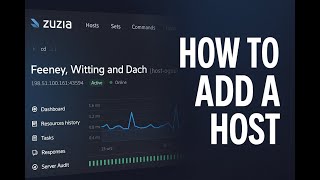
YouTube returned 6 videos for “Zuzia”, and we withheld 5: 5 could not be judged, because “Zuzia” is a single word that other videos use for other things. Showing the 1 we can prove is about Zuzia.
Official links
What are the best Zuzia alternatives?
The closest alternatives to Zuzia we list are Phare Incident AI, Stakpak 3.0 CLI and Flawless. Ranked by direct product-type match, not category overlap.
| Alternative | Pricing | Starts at | Last verified |
|---|---|---|---|
| Phare Incident AI | Freemium | €5/mo | 23 Nov 2026 |
| Stakpak 3.0 CLI | Free | Free | 20 Nov 2026 |
| Flawless | Free | Free | 23 Nov 2026 |
Alternatives to Zuzia
View all
Phare Incident AI
Phare Incident AI turns your uptime incident timeline into a readable summary or post-mortem in one click.

Stakpak 3.0 CLI
Stakpak 3.0 CLI: an open-source autonomous DevOps agent that runs 24/7 on your own machines and pings you only when it needs a human.

Zuzia vs its closest rival
Zuzia's closest head-to-head is with Spider Cloud.
Our Zuzia vs Spider Cloud verdict written Jul 3, 2026 is more than 90 days old, so it is being re-reviewed against current data and is not shown.
Frequently asked questions
For makers of Zuzia
- Get a Verified Listing for Zuzia ($39): a written decision within 1 working day.
- Free listing for another tool: Free reviews are decided in order, within 3 weeks of the review starting.
Used Zuzia? Help shape our editorial sentiment research.