
AR Code Object Capture 3D Scan
Scan real objects with LiDAR or AI, then publish app-free AR QR codes with scan analytics baked in.
AR Code sells the whole capture-to-QR pipeline rather than one slice of it, and that bundling is the reason to pick it: LiDAR scanning, AI model generation, WebAR hosting, and ad retargeting in one place. The price is real — Standard is $44.50 for the first month then $89/mo, PRO is $990/mo — and LiDAR capture is Apple-only, so Android teams fall back to photogrammetry. If you only need to host a model, Sketchfab or Vectary cost far less; if you need scannable, trackable AR in the wild plus STL and .SPZ downloads, the shortlist is small.
Verified 5d ago · liveness 80/100 · cite: rightaichoice.com/tools/ar-code-object-capture-3d-scan
- Marketing teams running app-free QR-triggered AR campaigns with scan analytics
- E-commerce brands adding interactive 3D product previews to packaging or product pages
- Museums and exhibitions offering QR-triggered interactive displays
- Resellers and agencies white-labeling AR under the PRO reseller license
- Hobbyists and solo creators — the Free tier holds 1 AR code and 5 scans per month
- Low-margin businesses where $89/mo Standard or $990/mo PRO exceeds the AR campaign's return
- Android-first teams that need on-device LiDAR scanning, since on-device capture is Apple-only
We scan live Reddit threads, YouTube comments, X posts, G2 reviews and other communities — and hand you an honest verdict in under a minute.
- Honest verdict, not marketing
- Real pros & cons from real users
- Attributed quotes with receipts
3 free scans · no card needed
Skip AR Code Object Capture if you're Android-first and need on-device LiDAR scanning, or if you only want to host a 3D model — the $89/mo Standard and $990/mo PRO tiers are built for campaigns that need scannable AR plus measurement.
Custom pages and retargeting tracking stop at 1,000/month on Standard and 10,000/month on PRO, so high-volume campaigns hit a ceiling before the scan quota does.
Free ($0) tests 1 AR code and 5 scans/month; Standard ($44.50 first month, then $89/mo monthly) covers 1,000 codes and 100,000 scans; PRO ($990/mo monthly) scales to 10,000 codes, 1,000,000 scans, and 10 team seats with reseller rights. Yearly billing is advertised at up to 40% off. Against model-hosting-only tools like Sketchfab or Vectary it looks expensive; against a custom WebAR build or a separate scan-hosting-retargeting stack, the bundling is the justification.
In short
AR Code Object Capture 3D Scan — Scan real objects with LiDAR or AI, then publish app-free AR QR codes with scan analytics baked in. Best for Marketing teams running app-free QR-triggered AR campaigns with scan analytics, E-commerce brands adding interactive 3D product previews to packaging or product pages, Museums and exhibitions offering QR-triggered interactive displays. Free to start; paid plans from $44.5/mo.
What's new in AR Code Object Capture 3D Scan
Checked 5 days agoAcross the latest 5 updates: 4 feature updates and 1 launch.
World Cup 2026 AR Face Filter Flags
AR Code launched app-free AR Face Filters for World Cup 2026 fans, letting brands deliver a QR-triggered face filter straight to the mobile browser with no app install.
Free 3D Printing STL Files
Every AR Code 3D model now comes with a downloadable STL file for 3D printing, added at no extra charge alongside the existing GLB and USDZ downloads.
Free AI-Generated AR 3D Models
AR GenAI now produces free AI-generated 3D models in GLB, USDZ, and STL, generated from a single input image.
Download Free Gaussian Splat 3D Models
AR Splat captures are now downloadable as Gaussian splat 3D models in .SPZ format at no extra cost.
Instantly Download .MP4 Demo Videos
Auto-generated MP4 demo videos of 3D models can now be downloaded directly from the AR Code platform.
What people actually say about AR Code Object Capture 3D Scan — is it worth it?
We ran a structured research pass across product reviews, community discussions, and post-purchase forum threads to surface the patterns vendors won't publish themselves. Below: the recurring strengths, the hidden costs people mention most, and the cohort that consistently regrets adopting this tool.
20 mentions across 2 sources (App Store, Lemmy) · researched Sep 22, 2026.
Weighted by the 21 posts each of 2 sources contributed.
- +Full pipeline from LiDAR capture to hosted WebAR QR code in one platform
- +App-free browser rendering works across iOS, Android, visionOS, and Meta Horizon OS
- +Gaussian Splatting (AR Splat) enables photorealistic scans beyond basic mesh capture
- +Cloud photogrammetry path serves users without LiDAR hardware
- +Detailed analytics track scans by day, location, OS, and browser
- −Dominated by 1-star App Store reviews citing failed scans and broken uploads
- −Users on iPhone 12 Pro and iPad Pro report mushy, low-resolution, distorted models
- −Free tier is effectively a trial: one AR code and limited scans
- −$990/month PRO plan called extortionate relative to delivered quality
- −No visible activity on Reddit, Hacker News, GitHub, or Product Hunt
- • PRO plan at $990/month is the only realistic tier for production use
- • Free tier's single AR code makes evaluation nearly impossible
- • Users describe monthly fees as 'extortionate' relative to results
Viability Score
How well maintained and how widely used is AR Code Object Capture 3D Scan? Built from what the vendor actually publishes (docs, changelog, tutorials, integrations, pricing), whether the site is live, and how much real users discuss it. How we calculate this
Last calculated: October 2026
How we score →Key Features
- LiDAR-based 3D object scanning on iPhone, iPad, and M-series MacBook
- Cloud photogrammetry scanning for photos taken without LiDAR hardware
- AR Splat Gaussian Splatting capture with free downloadable .SPZ files
- AR GenAI: generate a 3D model from a single image
- Free AI-generated 3D models in GLB, USDZ, and STL formats
- Free downloadable STL files for 3D printing on every 3D model
- Auto-generated downloadable MP4 demo videos of 3D models
- App-free AR QR codes rendered in mobile browsers via WebAR
- Immersive AR rendering on iOS, Android, visionOS, Meta Horizon OS, and Android XR
- AI Code: AI-assisted try-on from a user-supplied photo
- AR Face Filter built from an image or logo
- AR Video that hovers over an AR Code
- AR Portal: immersive 360° room-scale AR scenes
- AR Text and AR Logo 3D generation
- 3D file upload in GLB, GLTF, USDZ, PLY, STL, FBX, OBJ, X3D, or ZIP with textures
About AR Code Object Capture 3D Scan
AR Code Object Capture 3D Scan is the capture arm of AR Code, a platform that packages augmented reality experiences into QR codes that render in a mobile browser — no app install — on iOS, Android, visionOS, Meta Horizon OS, and Android XR. You can scan physical objects with LiDAR on an iPhone, iPad, or M-series MacBook, push ordinary photos through cloud photogrammetry when you have no LiDAR hardware, or generate a model from one image with AR GenAI. AR Splat adds Gaussian Splatting captures and free .SPZ downloads. Finished captures become AR Codes that display 3D models, hovering AR Video, AR Face Filters built from an image or logo, or 360° AR Portal scenes. Uploads accept GLB, GLTF, USDZ, PLY, STL, FBX, OBJ, X3D, or a ZIP with textures; AR Cloud hosts the result. Every model now also ships with a downloadable STL for 3D printing, an auto-generated MP4 demo video, and free GLB/USDZ/STL AI-generated models — all added at no extra charge since June 2026. Scan statistics (per day, location, OS, browser) and Facebook/Meta, Google AdWords, LinkedIn, and X retargeting tracking are included. Four iOS/iPadOS apps and one macOS app handle capture on the move. This is aimed at marketing teams, e-commerce brands, museums, real estate firms, and resellers — not hobbyists, given the Free tier's 1 code and 5 scans per month.
Behind the Verdict
AR Code is best understood as an output platform that happens to include a scanner, not a scanner that happens to include hosting. The 3D capture side is genuinely capable: AR Code Object Capture does LiDAR scanning on iPhone, iPad, and M-series MacBook, cloud photogrammetry covers photos from devices without a depth sensor, AR GenAI builds a model from a single image, and AR Splat produces Gaussian splats that you can download as .SPZ. Those are four different capture paths at four different quality and effort levels, and having all of them under one account is the practical argument for the platform. The distribution side is where the differentiation sits. An AR Code is a QR code that renders WebAR in a mobile browser on iOS, Android, visionOS, Meta Horizon OS, and Android XR — no app, which matters enormously for a packaging insert, a museum placard, or a trade-show poster where you cannot ask a stranger to install anything. Output formats go past 3D models to AR Video hovering over the code, AR Face Filters from an image or logo, AR Portal room-scale scenes, AR Text, and AR Logo. You can also embed an HTML 3D viewer on a website. Scan statistics break down by day, location, OS, and browser, and retargeting tracking feeds Facebook/Meta, Google AdWords, LinkedIn, and X. The June 2026 additions changed the value math noticeably. Every 3D model now includes a downloadable STL for 3D printing, AR GenAI models ship free in GLB, USDZ, and STL, AR Splat model downloads are free in .SPZ, and each model gets an auto-generated MP4 demo video. None of these are add-ons. For an agency or reseller delivering to clients, that is a set of deliverables you would otherwise stitch together from three or four tools. The honest drawbacks. First, on-device LiDAR is Apple-only — iPhone, iPad, or M-series MacBook — so Android-first teams are stuck with cloud photogrammetry, which takes processing time and is not instant. Second, the tier ladder is steep: Free holds 1 AR code and 5 scans/month, Standard runs $44.50 for the first month then $89/mo, and PRO is $990/mo. Third, custom pages and retargeting tracking are capped at 1,000/month on Standard and 10,000/month on PRO, so a large always-on campaign can run into ceilings. Fourth, AR Code is WebAR rather than a native AR app, so persistent anchors and device-level AR features are out of reach. Where it fits: teams that need a campaign-grade AR delivery channel with measurement. Where it does not: anyone who just wants to host a model and share a link, and low-margin operators for whom $89–$990 per month exceeds the campaign's return.
Researching AR Code Object Capture 3D Scan? Get your full AI stack in 60 seconds.
Free, no signup — tell us your goal and get tools matched to your budget & existing stack.
Real-world workflow fit
Concrete scenarios for the personas AR Code Object Capture 3D Scan actually fits — and what changes day-one when you adopt it.
You LiDAR-scan a shoe on an iPhone with AR Code Object Capture, generate the AR Code, and print it on the shoebox and the product page.
Outcome: Shoppers scan the code and see the product in AR in their mobile browser with no app install, and you watch scan counts by location, OS, and browser in the AR Code dashboard.
You scan a fragile artifact with LiDAR, publish it as an AR Code on the placard next to the display case, and password-restrict the code to gallery-only access if needed.
Outcome: Visitors point a phone at the placard and rotate a detailed 3D model of the artifact, with each model also downloadable as an STL for your education program.
You put a client's logo through AR Face Filter for a World Cup 2026 activation, print the AR Code on event materials, and add retargeting tracking for Meta and Google AdWords.
Outcome: Attendees generate branded face filters in-browser, scanners get retargeted across four ad networks, and you deliver the campaign under the PRO Reseller License.
Use Cases
- Scan a physical product with LiDAR and publish an app-free AR preview triggered from its packaging
- Generate AR QR codes for museum exhibits that display 3D-scanned artifacts in a visitor's browser
- Run AI Code try-on experiences where a shopper's photo returns a personalized view of clothing or accessories
- Build branded AR Face Filters from a logo for events such as World Cup 2026
- Embed interactive 3D models on a website with the HTML 3D viewer instead of asking visitors to install an app
- Download STL files from your scans to 3D-print physical replicas
- Track campaign scan volume by location, OS, and browser, then retarget scanners on Meta, Google, LinkedIn, or X
- Resell AR experiences and AR Codes to clients under the PRO reseller license
Limitations
- On-device LiDAR scanning needs an iPhone, iPad, or M-series MacBook; Android users fall back to cloud photogrammetry, which takes processing time rather than returning instant results.
- AR Code is WebAR rather than a native AR app, so experiences render in the mobile browser and on AR/VR headsets without an app install.
- AR GenAI creations and AI Scans are metered per tier, and AR experiences depend on the associated AR Code scans/month tied to the plan.
- The PRO plan runs US$990/month with 10,000 AR Codes and 1,000,000 AR Scans/month.
as of 2026-10-13
Verification history
We have re-verified AR Code Object Capture 3D Scan 8 times since . Each pass re-reads the vendor's own pages and re-checks every listed field against that evidence; passes where nothing had changed are marked as such.
- — re-verified summary, description, our verdict, our analysis, pricing model, pricing tiers, features, integrations, who it suits, who should skip it
- — re-checked, vendor evidence unchanged
- — re-verified summary, description, our verdict, our analysis, pricing model, pricing tiers, features, integrations, who it suits, who should skip it
- — re-verified summary, description, our verdict, our analysis, pricing model, pricing tiers, features, integrations, who it suits, who should skip it
- — re-checked, vendor evidence unchanged
- — re-verified summary, description, our verdict, our analysis, pricing model, pricing tiers, features, integrations, who it suits, who should skip it
Showing the 6 most recent of 8 verification passes.
Free to cite with attribution — this page re-verifies continuously.
12-month cost
Project the real annual outlay, including the implied monthly cost when only an annual tier is published.
Vendor list price only. Add-on usage, seat overages, and contract minimums are surfaced under Hidden costs & gotchas.
Plans compared
For each published AR Code Object Capture 3D Scan tier: who it actually fits, and what it adds vs. the previous tier. Cross-reference the cost calculator above for projected annual outlay.
Free
$0/mo
Ideal for
An individual or small team testing whether QR-triggered WebAR works for their product before committing budget.
What this tier adds
Free entry point: 1 AR Code and 5 AR Scans per month, plus try-on of AR and AI solutions before upgrading.
Standard
$44.50 first month, then $89/mo monthly
Ideal for
E-commerce brands, marketing teams, and small agencies running live campaigns across hundreds of products or exhibits.
What this tier adds
Adds 1,000 AR Codes, 100,000 AR Scans/month, 100 AR GenAI creations, 1,000 AI Scans, full 3D Scan and AR Splat tooling, 1,000 custom pages and retargeting tracking, 4 iOS/iPadOS apps plus the macOS app and API Key.
PRO
$990/mo monthly
Ideal for
Resellers, agencies, and enterprises selling or scaling AR campaigns with a team and client-side licensing needs.
What this tier adds
Raises limits to 10,000 AR Codes, 1,000,000 AR Scans/month, 10 team members with customized rights, 1,000 AR GenAI creations, 10,000 AI Scans, 10,000 custom pages and retargeting tracking, plus the Commercial License, Reseller License, and 24-hour dedicated support seven days a
Where the pricing makes sense
The company stage and team size where AR Code Object Capture 3D Scan's pricing actually pencils out — and where peers do it cheaper.
Free ($0) tests 1 AR code and 5 scans/month; Standard ($44.50 first month, then $89/mo monthly) covers 1,000 codes and 100,000 scans; PRO ($990/mo monthly) scales to 10,000 codes, 1,000,000 scans, and 10 team seats with reseller rights. Yearly billing is advertised at up to 40% off. Against model-hosting-only tools like Sketchfab or Vectary it looks expensive; against a custom WebAR build or a separate scan-hosting-retargeting stack, the bundling is the justification.
Setup time & first value
How long it actually takes to get something useful out of AR Code Object Capture 3D Scan — broken out by persona, not the marketing-page minute.
Solo creator testing the concept: minutes — point an iPhone at an object with AR Code Object Capture and the code generates in the same session. Marketing team standing up a campaign: an afternoon, mostly scanning multiple SKUs and printing codes. Agency or reseller starting client work: a few days, since you'll want AR Splat or photogrammetry passes, custom page branding, and retargeting
Switching to or from AR Code Object Capture 3D Scan
How to bring data in from common predecessors and how to get it back out — written for the switcher, not the buyer.
- →From Sketchfab: download your models in GLB/USDZ, re-upload through AR Code's 3D Files Upload, and attach an AR Code to each for app-free WebAR delivery plus scan analytics.
- →From a native AR app build: replace the app dependency by publishing the same 3D assets as AR Codes, which render in mobile browsers on iOS, Android, visionOS, Meta Horizon OS, and Android XR.
- →From a DIY scannable experience: move the assets into AR Cloud, add Custom Pages for pre-AR branded context, and switch on retargeting tracking for Meta, Google AdWords, LinkedIn, and X.
- →From plain photo captures: run the images through cloud photogrammetry or AR GenAI to get a 3D model in GLB or USDZ without owning LiDAR hardware.
- ↗To Sketchfab or Vectary: download your models in GLB or USDZ and re-upload for hosting-only sharing, accepting the loss of AR Code scan analytics and retargeting.
- ↗To a native AR app: export GLB/USDZ and rebuild the experience in a mobile AR framework, trading the app-free WebAR reach for persistent anchors.
- ↗To a 3D-printing service: your AR Code models come with STL downloads, so you can take them straight into slicer software or a print vendor without conversion.
Integrations
Resources & Guides
Tutorials & Learning
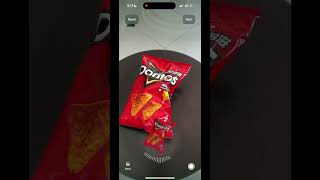
Revolutionize Customer Engagement: 3D Scanning & AR QR Codes No App Required | ar-code.com
AR Code
Create AR 3D Models from Videos No App or LiDAR Needed | ar-code.com
AR Code
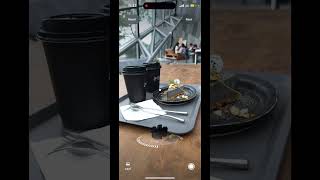
Restaurant Menu with AR Code Object Capture: 3D Scanning and AR QR Codes | ar-code.com
AR Code
YouTube returned 6 videos for “AR Code Object Capture 3D Scan”, and we withheld 3: 3 did not mention AR Code Object Capture 3D Scan. Showing the 3 we can prove are about AR Code Object Capture 3D Scan.
Official links
Tools that pair well with AR Code Object Capture 3D Scan
Common stack mates teams adopt alongside AR Code Object Capture 3D Scan, with the specific reason each pairing earns its keep.
Spline
Browser-based 3D design platform for real-time interactive 3D and 2D experiences you ship to web, iOS and Android.

Convai
Convai builds embodied 3D AI characters with real-time perception that see, hear, and act inside Unity, Unreal Engine, and XR.

Spline AI
Spline AI is a browser-based 3D design tool where an AI agent builds and edits models, textures, and scenes in your file.
Featured Head-to-Head Comparisons
Ar Code Object Capture 3d Scan vs Weglot
These tools serve entirely different purposes. Weglot is for translating websites with AI‑powered brand voice consistency, ideal for international ecommerce and SaaS. AR Code Object Capture is for creating 3D scans and AR experiences from single photos or LiDAR scans. Buyers should choose based on need: translation vs 3D/AR. Both offer freemium pricing, but there's no feature overlap.
Ar Code Object Capture 3d Scan vs The New Black
If you're a fashion brand designing new collections, The New Black is purpose-built for apparel with AI text-to-design and tech pack exports. For 3D scanning objects and creating AR experiences without an app, AR Code Object Capture 3D Scan is the superior choice, especially with recent upgrades like AR GenAI and free 3D printable files. Choose based on your core need: fashion design vs. 3D scanning & AR.
Ar Code Object Capture 3d Scan vs Chili Piper
For businesses needing to create and embed 3D scans into immersive AR marketing without an app, AR Code Object Capture is the clear choice with its low-cost entry and free downloads. Chili Piper wins for B2B revenue teams that want to instantly convert high-intent website visitors into booked meetings, but its enterprise pricing and Salesforce dependency make it overkill for low-traffic sites or simple scheduling.
Alternatives to AR Code Object Capture 3D Scan
View all

Frequently Asked Questions
Best-of guides
Topics
Used AR Code Object Capture 3D Scan? Help shape our editorial sentiment research.