
Decoda Health
AI-native EMR for med spas and elective-care clinics: scheduling, charting, payments, inventory, and marketing in one system instead of six.
Decoda earns a look if front-desk load and charting time are your bottleneck — the AI Front Desk, AI Scribe, and Care Plans are the parts competitors still bolt on, and the 89% plan-completion figure the vendor publishes is the kind of number that shows up on a P&L. What you're buying is consolidation plus customization: the team will adapt the platform to how your clinic runs, and the Slack-and-phone support model is unusual at this stage. Weigh that against switching costs and a young product — Mangomint and Boulevard have more mileage behind them and published per-seat pricing you can compare before you talk to anyone. Decoda does not publish a pricing page, so budget a sales
Verified 5d ago · liveness 60/100 · cite: rightaichoice.com/tools/decoda-health
- Med spa and aesthetics clinics replacing a stack of scheduling, charting, payments, and marketing tools
- Weight loss and IV therapy practices selling memberships, packages, and recurring treatment plans
- Multi-location or franchise elective-care groups losing time to handoffs between disconnected systems
- Clinics whose front desk is buried in texts, calls, and Instagram DMs and wants AI to answer and book
- Solo injectors watching every dollar — lighter scheduling-and-charting tools may cover the basics for less
- Practices that need deep medical insurance billing or hospital-grade HL7 interoperability
- Teams that need a large third-party app marketplace and want to assemble their own stack
We scan live Reddit threads, YouTube comments, X posts, G2 reviews and other communities — and hand you an honest verdict in under a minute.
- Honest verdict, not marketing
- Real pros & cons from real users
- Attributed quotes with receipts
3 free scans · no card needed
Skip Decoda if you need to compare published per-seat pricing before booking a call, or if you want a large third-party app marketplace rather than one integrated suite.
Adding locations or providers to a franchise group typically moves you onto a different contract size, so per-location cost is worth pinning down in writing before you sign.
Pricing is not published — Decoda sells through a demo and a sales conversation, so you cannot ballpark cost from the site. In elective care, Decoda sits above lighter scheduling-and-charting tools that cover booking and notes for a low monthly fee, and alongside or below mature all-in-one platforms that publish per-seat pricing you can compare up front. Budget for a quote, and ask explicitly how per-location and per-provider cost scales if you run more than one site.
In short
Decoda Health — AI-native EMR for med spas and elective-care clinics: scheduling, charting, payments, inventory, and marketing in one system instead of six. Best for Med spa and aesthetics clinics replacing a stack of scheduling, charting, payments, and marketing tools, Weight loss and IV therapy practices selling memberships, packages, and recurring treatment plans, Multi-location or franchise elective-care groups losing time to handoffs between disconnected systems. Contact Sales pricing.
What's new in Decoda Health
Checked 5 days agoAcross the latest 5 updates: 5 news mentions.
Top Mangomint Alternative for Elective-Care Practices in July 2026
Positions Decoda as a Mangomint alternative for elective-care practices that need integrated clinical intake, billing, and treatment tracking in one system.
Medical Spa POS Systems: A Complete Guide for July 2026
Guide to medical spa POS systems covering EMR integration, inventory, memberships, and HIPAA payment processing.
New Med Spa Laws 2026: 5 States Explained
Explains new med spa laws in Indiana, Texas, California, New Jersey, and Florida, including SB 282, Jenifer's Law, SB 351, and S2996.
Reduce Med Spa No-Shows: 2026 Data-Backed Guide
Data-backed guide to holding no-shows below 5% using reminder schedules, deposit rules, and card-on-file policies.
How Much Does It Cost to Open a Med Spa in 2026?
Breaks down med spa startup costs of roughly $150K to $500K, medical director requirements, and the profitability timeline.
Viability Score
How well maintained and how widely used is Decoda Health? Built from what the vendor actually publishes (docs, changelog, tutorials, integrations, pricing), whether the site is live, and how much real users discuss it. How we calculate this
Last calculated: October 2026
How we score →Key Features
- AI Front Desk answers patient texts and calls and replies with live booking slots
- AI Scribe records the visit and auto-generates a SOAP note before checkout
- Instagram DM automation that replies with open appointment times
- VoIP telephony with AI call intelligence
- Automated SMS, call, and email campaigns with win-back sequences
- Campaign optimizer for lead nurturing across Meta Ads, Google Ads, and referrals
- Care Plans with structured treatment timelines and protocol library templates
- Care plan adherence scoring with AI-powered drop-off risk detection
- Automated re-engagement sequences for at-risk patients
- Membership management with recurring revenue and auto-applied discounts
- Bundled packages with automatic inventory deduction
- AI inventory tracking with low-stock reorder alerts
- Billing and payments: checkout, invoices, and POS in one system
- Charting and sign-off plus paperless forms and intake
- Medications and ePrescribe with dispensing and dosing
About Decoda Health
Decoda Health is an AI-native EMR built for elective-care practices — med spas, wellness and weight loss clinics, IV therapy, longevity, and regenerative medicine. Rather than running booking in one app, charting in another, and payments in a third, it puts scheduling, clinical notes, billing, inventory, and marketing into a single system. The vendor frames the whole patient visit as six systems collapsed into one, and serves solo injectors through multi-location and franchise groups. The AI layer is where Decoda spends its effort. AI Front Desk answers patient texts and calls, replying with live booking slots — the homepage shows a 4-second SMS response with three openings. AI Scribe records the visit and auto-generates the SOAP note before the patient leaves, and a campaign optimizer, recovery sequences, and win-back offers chase leads who ghosted. Care Plans turn a six-session protocol into tracked, scheduled sessions with adherence scoring, AI-powered drop-off risk detection, and automated re-engagement; the vendor cites plan completion rising from roughly 35% to 89% and 3.2x patient lifetime value on structured plans. The platform also covers memberships and bundled packages with automatic inventory deduction, AI inventory tracking and reorder alerts, labs, medications and ePrescribe, intake forms, and a real-time revenue dashboard. Clinical compliance for elective care is handled directly, including Good Faith Exams through a SpaKinect integration alongside direct integrations with Growth 99, Diamond Accelerator, and Thinnr. It's HIPAA compliant with a Drummond Certified EPCS integration. Support runs through a dedicated Slack channel plus a phone line staffed by the team that builds the product, with the vendor claiming most answers in under five minutes. The company raised $4.5M led by Y Combinator. Decoda positions itself as the AI-heavy alternative to established med spa platforms like Mangomint and Boulevard — check its fit against your workflow before you commit.
Behind the Verdict
The honest read on Decoda is that it is two products stapled together, and the AI half is the reason to care. The EMR half — scheduling, clinical notes, forms, medications and ePrescribe, labs, billing, inventory, memberships, packages — is table stakes in this category, and it is not where Decoda differentiates. The AI Front Desk, which answers texts and calls within seconds and replies with actual open slots, plus AI Scribe auto-generating a SOAP note before the patient leaves the room, target the two places med spa staff lose the most hours. Care Plans extend that into revenue: the platform tracks remaining sessions in a protocol, scores adherence, flags at-risk patients, and fires re-engagement sequences. The vendor's own figures — 89% plan completion versus roughly 35% without structured plans, 3.2x lifetime value, $14K recovered monthly — are marketing numbers, not audited ones, but the mechanism is real and the problem they describe (patients who buy a six-session protocol and stop at two) is a genuine leak in elective care. Strengths: genuine end-to-end consolidation so a booked appointment, a chart, a payment, and an inventory deduction all live in one record; an internal chat feature and task management for team handoffs; a real-time growth dashboard with retention and average ticket; HIPAA compliance with a Drummond Certified EPCS integration for controlled-substance prescribing; and support that reaches humans on the team that builds the product, via a dedicated Slack channel and a phone line, which is materially different from tier-one ticket queues. Weaknesses: this is a young company with $4.5M raised — you are making a bet on a small team's runway, and an EMR migration is not a reversible decision. Public material does not name an underlying AI model, so you cannot audit what is behind the scribe or the front desk. The integration list is short and specific to med spa growth tooling — SpaKinect, Growth 99, Diamond Accelerator, Thinnr — not a broad third-party marketplace, so teams that like assembling their own stack will feel fenced in. There is no published pricing structure, which means you cannot ballpark cost or compare tiers without a call. Deep medical insurance billing and hospital-grade HL7 interoperability are outside what this is built for. Where it fits: single-location and multi-location med spas, weight loss and IV therapy practices selling memberships and recurring treatment plans, and franchise groups losing time to handoffs between disconnected systems. Where it doesn't: solo injectors optimizing purely on price, insurance-billing-heavy practices, and teams that want a large app marketplace rather than one integrated suite.
Researching Decoda Health? Get your full AI stack in 60 seconds.
Free, no signup — tell us your goal and get tools matched to your budget & existing stack.
Real-world workflow fit
Concrete scenarios for the personas Decoda Health actually fits — and what changes day-one when you adopt it.
A lead messages the clinic's Instagram at 9pm asking about Botox openings. AI Front Desk replies within seconds with the next three available slots, and the patient books Tuesday 2pm. Intake forms are sent instantly and the medical history, HIPAA consent, and photo release are signed before the patient arrives.
Outcome: The booking happens overnight without a staff member on the phone, and the front desk starts the day with a filled slot and completed paperwork instead of a callback list.
The provider records the visit on AI Scribe, which generates the SOAP note from the conversation — assessment, units injected, area, and next-visit interval — before the patient leaves the room. Checkout applies the patient's Gold membership discount, collects $382.50, and deducts 24 units of Botox from inventory automatically.
Outcome: The chart is closed the same visit, payment is collected at the point of care, and the inventory count reflects the treatment without anyone updating a spreadsheet.
A patient on a six-session anti-aging protocol misses session three and hasn't rescheduled in ten days. The adherence dashboard flags her at risk, and the team either auto-sends a re-engagement message or flags her for the provider.
Outcome: The drop-off is caught before the patient disappears, so treatment plans that used to stall at two sessions keep moving toward completion.
Use Cases
- Reply to an Instagram DM lead with your next three available openings without a staff member touching it.
- Generate a SOAP note from a recorded patient conversation before the patient leaves the room.
- Track a six-session Botox and filler protocol, flag the patient who stopped booking, and auto-send re-engagement.
- Win back leads who ghosted by sending a $100 credit through AI-automated outreach.
- Reorder Botox when inventory drops below 200 units and the schedule is full.
- Set up VIP membership tiers with auto-converted credits and split payments.
- Reduce no-shows with automated reminders and card-on-file deposits.
- Collect payment, deduct inventory, and auto-suggest the next visit in one checkout step.
Limitations
- Decoda Health is an AI-native EMR covering scheduling, charting, payments, inventory, and marketing in one system rather than several.
- The homepage and product pages describe capabilities such as AI Front Desk, AI Scribe, Care Plans, and AI inventory tracking, but name no underlying AI model, so you cannot audit what is behind the scribe or the front desk.
- Public material is oriented toward a demo and sign-in flow, and pricing is handled through a sales conversation rather than a published tier list, so you cannot model cost without talking to the team.
- The documented integration list is short and specific to med spa growth tooling.
- It serves elective-care clinic types and sizes, from solo practitioners to franchises, and is not built for deep medical insurance billing or hospital-grade HL7 interoperability.
- As a company that has raised $4.5M, it is a young product relative to established med spa platforms.
as of 2026-10-03
Verification history
We have re-verified Decoda Health 7 times since . Each pass re-reads the vendor's own pages and re-checks every listed field against that evidence; passes where nothing had changed are marked as such.
- — re-verified summary, description, our verdict, our analysis, pricing model, pricing tiers, features, integrations, who it suits, who should skip it
- — re-checked, vendor evidence unchanged
- — re-verified summary, description, our verdict, our analysis, pricing model, pricing tiers, features, integrations, who it suits, who should skip it
- — re-verified summary, description, our verdict, our analysis, pricing model, pricing tiers, features, integrations, who it suits, who should skip it
- — re-verified summary, description, our verdict, our analysis, pricing model, pricing tiers, features, integrations, who it suits, who should skip it
- — re-verified summary, description, our verdict, our analysis, pricing model, pricing tiers, features, integrations, who it suits, who should skip it
Showing the 6 most recent of 7 verification passes.
Free to cite with attribution — this page re-verifies continuously.
Where the pricing makes sense
The company stage and team size where Decoda Health's pricing actually pencils out — and where peers do it cheaper.
Pricing is not published — Decoda sells through a demo and a sales conversation, so you cannot ballpark cost from the site. In elective care, Decoda sits above lighter scheduling-and-charting tools that cover booking and notes for a low monthly fee, and alongside or below mature all-in-one platforms that publish per-seat pricing you can compare up front. Budget for a quote, and ask explicitly how per-location and per-provider cost scales if you run more than one site.
Setup time & first value
How long it actually takes to get something useful out of Decoda Health — broken out by persona, not the marketing-page minute.
Single-location clinics should expect days, not hours, to first value: booking, forms, and payments can go live quickly, but charting templates, membership and package rules, care plan protocols, and inventory baselines require configuration decisions. Multi-location and franchise groups should plan a longer staged rollout by site, plus time to migrate historical charts and membership records.
Switching to or from Decoda Health
How to bring data in from common predecessors and how to get it back out — written for the switcher, not the buyer.
- →From a scheduling-only tool: bring booking, forms, and reminders into Decoda first, then layer charting and payments onto the same patient record.
- →From separate charting software: recreate your note templates as Decoda chart structures, then run a parallel week before cutting over.
- →From a standalone membership or package system: rebuild tiers and bundled packages in Decoda so inventory deduction and auto-applied discounts run automatically at checkout.
- →From spreadsheet inventory: set current unit counts for each product and define reorder thresholds so low-stock alerts fire correctly from day one.
- →From Mangomint or Boulevard: map your existing service menu, provider schedules, and intake forms before migration so the front desk sees familiar flows.
- ↗To Mangomint: export patient records, treatment history, and membership data, then rebuild service menus and forms in the new platform.
- ↗To Boulevard: extract charts, client history, and package balances before switching, and re-map membership billing.
- ↗To a lighter scheduling-and-charting tool: keep an export of visit notes and intake records, since advanced care plan and campaign data won't transfer.
- ↗To a separate billing and POS system: reconcile outstanding package balances and membership credits with clients before you close out Decoda.
Integrations
Resources & Guides
Tutorials & Learning
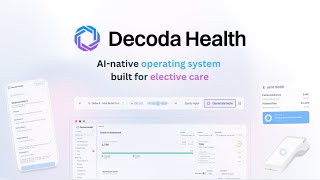
YouTube returned 6 videos for “Decoda Health”, and we withheld 5: 5 did not mention Decoda Health. Showing the 1 we can prove is about Decoda Health.
Official links
Tools that pair well with Decoda Health
Common stack mates teams adopt alongside Decoda Health, with the specific reason each pairing earns its keep.

Avoma
Avoma is an AI meeting assistant that records, transcribes, scores, and turns sales calls into coaching and forecast signals.

NectarVet
NectarVet is a cloud veterinary practice management platform whose AI turns dictated exams into SOAP notes and auto-generates invoices and client reminders.

CoVet
Veterinary AI scribe and copilot that turns consultations, dictation, and client phone calls into SOAP notes, visit summaries, and referral letters.
Featured Head-to-Head Comparisons
Decoda Health vs Codametrix
Decoda Health and CodaMetrix serve entirely different buyers. Decoda is the right choice for med spas and elective care clinics seeking an AI-native all-in-one EMR with front desk automation, while CodaMetrix is purpose-built for large health systems needing enterprise coding automation to reduce costs and denials. Choosing the wrong tool means missing core workflows—Decoda lacks hospital-grade coding, and CodaMetrix won't handle membership management or Instagram leads.
Decoda Health vs Rapidsos
Decoda Health and RapidSOS serve entirely different markets—med spas vs. emergency response—so a direct comparison is only useful for buyers evaluating niche-specific AI. Decoda excels for elective care clinics wanting an all-in-one AI EMR with marketing and inventory automation; RapidSOS is essential for 911 centers needing real-time device data and AI dispatch support. Choose based on your domain; no overlap.
Decoda Health vs Isomorphic Labs
Decoda Health and Isomorphic Labs are entirely incomparable in purpose. Decoda is an AI-native EMR for med spas, automating front desk and charting — ideal for elective care clinics wanting to streamline operations. Isomorphic Labs is an AI drug discovery powerhouse partnering with pharma giants on novel therapeutics. Choose based on your industry: healthcare services vs. pharmaceutical R&D.
Alternatives to Decoda Health
View all
Avoma
Avoma is an AI meeting assistant that records, transcribes, scores, and turns sales calls into coaching and forecast signals.

Frequently Asked Questions
Best-of guides
Used Decoda Health? Help shape our editorial sentiment research.