
Dim0
Dim0 is an open-source collaborative AI canvas where notes, mini-apps, and agents share one infinite board.
The architectural choice that sells Dim0 is where agent output lands: on the board as editable nodes, not in a scrolling chat pane. That single decision makes spatial context survive across sessions, and it's why we'd trial this over bolting ChatGPT next to Miro. The caveats are real — no documented third-party integration marketplace, no admin controls or SSO — so it fits individuals and small teams far better than enterprises.
Verified 3d ago · liveness 60/100 · cite: rightaichoice.com/tools/dim0
- Researchers mapping literature, sources, and analyses on one board
- Developers prototyping code and interactive mini-apps next to their notes
- Writers structuring narratives with diagrams and visual aids
- Small teams brainstorming in real time with a shared board-aware agent
- Users who need linear document editing like Google Docs or Notion pages
- Teams whose workflow depends on a large third-party integration marketplace
- Enterprises requiring formal admin controls, SSO, and vendor support contracts
We scan live Reddit threads, YouTube comments, X posts, G2 reviews and other communities — and hand you an honest verdict in under a minute.
- Honest verdict, not marketing
- Real pros & cons from real users
- Attributed quotes with receipts
3 free scans · no card needed
Skip Dim0 if your team lives in linear documents and expects a mature third-party integration marketplace — its strength is the board itself, not plugging into the rest of your stack.
AI requests are capped on the free tier and the paid tier only raises that limit — heavy agent use is the variable that pushes you to upgrade.
The published structure is a free cloud entry point and a low-cost paid tier that raises AI request limits (€6.99/month per the seed data, though the pricing page was not reachable this run — verify current numbers before committing). For a single researcher or a small team it undercuts per-seat canvas tools by a wide margin; the comparison flips only if you need enterprise admin controls or a large integration catalog, where Miro and Notion charge for things Dim0 does not yet publish.
In short
Dim0 — Dim0 is an open-source collaborative AI canvas where notes, mini-apps, and agents share one infinite board. Best for Researchers mapping literature, sources, and analyses on one board, Developers prototyping code and interactive mini-apps next to their notes, Writers structuring narratives with diagrams and visual aids. Free to start; paid plans from €6.99/mo.
What people actually say about Dim0 — is it worth it?
We scanned public community sources for Dim0 on Oct 18, 2026 and could not establish that the discussion we found is about this tool rather than something else sharing its name. Only 4 of the posts we fetched could be positively tied to Dim0. Rather than publish a sentiment score built on the wrong subject, we publish nothing here and re-run the scan.
Viability Score
How well maintained and how widely used is Dim0? Built from what the vendor actually publishes (docs, changelog, tutorials, integrations, pricing), whether the site is live, and how much real users discuss it. How we calculate this
Last calculated: October 2026
How we score →Key Features
- Infinite canvas with nested boards that fold like folders
- Board-aware AI agent reads the full canvas before acting
- Agent output written back as editable nodes on the board
- Web search and synthesis directly on the canvas
- Sandboxed code execution nodes
- Mini-app generation: describe a calculator, chart, or quiz and get a real interactive React app
- Real-time multiplayer with live cursors, names, avatars, and presence colors
- Shared agents: one person prompts, the whole room watches and refines
- Operational transforms with last-write-wins conflict resolution
- Rich notes: tags, math, toggles, sub-pages, code
- Mapify: convert notes to mind maps, schemas, or diagrams in one gesture
- Presentation mode: drop frames and Dim0 turns them into slides
- Freehand drawing with Excalidraw-style shapes
- Eight AI providers including Claude, OpenAI GPT, Gemini, Mistral, DeepSeek, Qwen, Kimi, and ChatGLM
- Self-hostable: MIT-licensed, local Postgres and local vector DB, your own model keys
About Dim0
Dim0 is an open-source, MIT-licensed AI canvas that treats the board itself as the interface. Notes, code, math, images, hand-drawn shapes, docs, widgets, and nested folders all live on one infinite surface as first-class nodes — and the AI can read every one of them. The agent reads your whole board before it acts, then searches the web, runs code in a sandbox, and writes results back as editable nodes next to your notes instead of burying them in a chat sidebar. Describe a calculator, chart, or quiz and Dim0 drops a real interactive React mini-app onto the board. Group work into nested boards that fold like folders, turn frames into slides with presentation mode, and use Mapify to convert notes into mind maps, schemas, or diagrams in one gesture. Rich notes cover tags, math, toggles, sub-pages, and code, edited by hand or drafted in place by the agent. Real-time multiplayer brings live cursors, names, avatars, and presence colors, plus shared agents where one person prompts and the whole room watches and refines. Edits sync through operational transforms with last-write-wins — the same approach Figma and Excalidraw use — so two people can edit the same note without merge conflicts. It suits researchers, developers, writers, and privacy-first teams who want a Miro-style canvas they can run themselves. Eight AI providers are supported (Claude, OpenAI GPT, Gemini, Mistral, DeepSeek, Qwen, Kimi, ChatGLM), self-hosting runs on local Postgres and a local vector DB with your own model keys, and notes are pure Markdown so boards export cleanly. Where Miro and Notion keep your thinking in their cloud, Dim0 hands you the codebase.
Behind the Verdict
Most canvas tools bolt AI onto a doc and call it done. Dim0 went the other direction: the canvas is the interface, and every node type is something the agent can read. We'd reach for this when the shape of the thinking matters — literature maps, architecture sketches, prototype pipelines — because the agent reads the whole board before acting and drops results back where you're already looking. Pick it if you want data custody the big canvas vendors don't offer. The codebase is public and self-hostable, with local Postgres, a local vector DB, and your own model keys. On the cloud side it's TLS on the wire, at-rest encryption on the database and uploads, no training on your boards, and no session replay on the canvas. Notes are pure Markdown, which means no proprietary export to fight later. Pass on it if your team lives inside linear documents. Dim0 is a canvas first; if you need Google-Docs-style flow, page-by-page editing, or comment threads on paragraphs, this will feel upside down. Same for teams whose workflow depends on a large integration marketplace — none are documented on the vendor page. And if you require formal admin controls, SSO, and a support contract, that's not what you're buying here. The closest alternative is Excalidraw, which gives you the infinite canvas and the openness but no notes and no board-aware agent. Miro has the canvas and the ecosystem but keeps your boards in its cloud. Notion has the notes and the ecosystem but no canvas. Dim0's pitch is that you stop choosing. Where it bites in practice: self-hosting is a real ops task, not a toggle, and running local Postgres plus a vector DB is on you. Shared agents are genuinely collaborative but they also mean a prompt from one teammate consumes one shared model quota, so the "one person
Researching Dim0? Get your full AI stack in 60 seconds.
Free, no signup — tell us your goal and get tools matched to your budget & existing stack.
Real-world workflow fit
Concrete scenarios for the personas Dim0 actually fits — and what changes day-one when you adopt it.
You drop six PDFs onto a new board, tag the notes you pull from each, then ask the board-aware agent to synthesize themes across them; Mapify converts the resulting note cluster into a mind map you can rearrange by hand.
Outcome: A literature map that lives on one canvas, with the AI's synthesis sitting as editable nodes next to the source notes rather than in a chat log you have to scroll back through.
You describe a small calculator or chart widget, get a React mini-app on the board, then open a code node beside it to wire in real data and run it in the sandbox.
Outcome: A working prototype on the same board as the design notes, with no context switching to an editor or a terminal.
You open a shared board, place frames around the sections of a product idea, prompt a shared agent while teammates watch and refine the output, then switch to presentation mode to walk through the frames as slides.
Outcome: A brainstorm and a presentation produced from the same canvas, with no export-and-rebuild step and no merge conflicts as people edit simultaneously.
Use Cases
- Map a literature review spatially, then have Mapify turn your notes into a mind map of themes.
- Prototype a data analysis pipeline with live code nodes and chart nodes on one board.
- Brainstorm product features with a remote team using shared agents and live cursors.
- Describe a quiz or calculator and get a working React mini-app placed next to your notes.
- Synthesize multiple PDFs and web searches into a structured summary node.
- Sketch a system architecture by connecting code snippets, diagrams, and agent-generated components.
- Build a slide deck by framing existing board content in presentation mode instead of exporting.
- Self-host the whole workspace on your own infrastructure with your own model keys.
Models Under the Hood
as of 2026-10-18
Limitations
- Dim0 is an open-source, MIT-licensed canvas that you can use on the web or self-host, but self-hosting asks for genuine technical comfort since you supply local Postgres, a vector DB, and your own model keys.
- The board-aware agent's usefulness scales with how much you put on the board — a sparse canvas gives it little to read.
- The live site advertises 8 AI models but does not enumerate per-provider capability differences, so you should test your preferred model against your own tasks.
- Real-time collaboration and shared agents are built on operational transforms with last-write-wins, which is a sound default but means a simultaneous edit to the same node resolves to one writer rather than merging both.
as of 2026-10-08
Verification history
We have re-verified Dim0 10 times since . Each pass re-reads the vendor's own pages and re-checks every listed field against that evidence; passes where nothing had changed are marked as such.
- — re-verified summary, description, our verdict, our analysis, pricing model, pricing tiers, features, integrations, who it suits, who should skip it
- — re-checked, vendor evidence unchanged
- — re-verified summary, description, our verdict, our analysis, pricing model, pricing tiers, features, integrations, who it suits, who should skip it
- — re-checked, vendor evidence unchanged
- — re-checked, vendor evidence unchanged
- — re-verified summary, description, our verdict, our analysis, pricing model, pricing tiers, features, integrations, who it suits, who should skip it
Showing the 6 most recent of 10 verification passes.
Free to cite with attribution — this page re-verifies continuously.
12-month cost
Project the real annual outlay, including the implied monthly cost when only an annual tier is published.
Vendor list price only. Add-on usage, seat overages, and contract minimums are surfaced under Hidden costs & gotchas.
Plans compared
For each published Dim0 tier: who it actually fits, and what it adds vs. the previous tier. Cross-reference the cost calculator above for projected annual outlay.
Free
$0/mo
Ideal for
A solo researcher, developer, or writer trying the canvas-agent workflow before committing any budget, or anyone on the fence about whether a spatial workspace beats their current tabs.
What this tier adds
Starting tier: free cloud access with nothing to set up and no card required, but AI request limits sit lower than the paid tier.
Basic
€6.99/mo
Ideal for
A regular user whose board-aware agent usage has outgrown the free request limit and who wants the full canvas, notes, mini-app, and collaboration feature set.
What this tier adds
Raises the AI request limit on top of all core features — canvas, notes, mini-apps, and collaboration — and can be started from your account whenever you hit the cap.
Where the pricing makes sense
The company stage and team size where Dim0's pricing actually pencils out — and where peers do it cheaper.
The published structure is a free cloud entry point and a low-cost paid tier that raises AI request limits (€6.99/month per the seed data, though the pricing page was not reachable this run — verify current numbers before committing). For a single researcher or a small team it undercuts per-seat canvas tools by a wide margin; the comparison flips only if you need enterprise admin controls or a large integration catalog, where Miro and Notion charge for things Dim0 does not yet publish.
Setup time & first value
How long it actually takes to get something useful out of Dim0 — broken out by persona, not the marketing-page minute.
Cloud: minutes — the site advertises free-to-start with nothing to set up, and you can pick a model and start placing nodes immediately. Team: add collaborators and the shared board works the same way for one person or fifty, so onboarding is a matter of inviting people rather than configuring anything. Self-hosted: plan on a real project, since you provision local Postgres and a vector DB and
Switching to or from Dim0
How to bring data in from common predecessors and how to get it back out — written for the switcher, not the buyer.
- →From Miro: rebuild boards as Dim0 canvases and gain the board-aware agent and MIT-licensed self-hosting that Miro doesn't offer.
- →From Notion: export pages and re-place them as rich note nodes on a canvas, then let Mapify turn page hierarchies into mind maps.
- →From Excalidraw: import your drawing habits directly — Dim0 uses Excalidraw-style freehand shapes — and add notes plus a board-reading agent around them.
- →From a ChatGPT-plus-notes workflow: stop pasting answers between tabs and let the agent write results back onto the board as editable nodes.
- ↗To Notion: export notes as Markdown, since Dim0 stores notes in pure Markdown with no proprietary format.
- ↗To Miro: export boards as data and rebuild on Miro if you need a mature integration catalog and formal admin controls.
- ↗To Excalidraw: hand-drawn shapes carry over conceptually, so sketch-heavy boards move with little friction.
- ↗To self-hosted Dim0: run it yourself with local Postgres and a vector DB and your own model keys if you want to stop using the cloud.
Resources & Guides
Tutorials & Learning
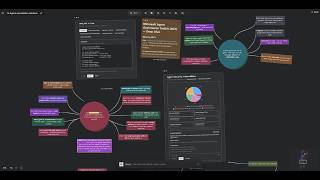
YouTube returned 6 videos for “Dim0”, and we withheld 5: 5 could not be judged, because “Dim0” is a single word that other videos use for other things. Showing the 1 we can prove is about Dim0.
Official links
Tools that pair well with Dim0
Common stack mates teams adopt alongside Dim0, with the specific reason each pairing earns its keep.

MarsX
Open-source dev platform that combines no-code, full-code, and AI with reusable full-stack MicroApps.

Formula Bot
Better Analyst (formerly Formula Bot) turns plain-English questions into charts, dashboards, and automated data workflows.

Replit Agent
Replit Agent turns a plain-English prompt into a running full-stack app inside your browser, then publishes it to a live Replit URL.
Featured Head-to-Head Comparisons
Dim0 vs Notable
Dim0 and Notable serve completely different worlds. If you need a flexible, open-source collaborative canvas for research, prototyping, or general creativity, pick Dim0. If you run a large healthcare system struggling with prior authorization, denials, and patient access automation, Notable is the specialized choice. They are not substitutes; your decision is simply which domain fits your work.
Dim0 vs Truleo
Truleo is purpose-built for law enforcement, turning siloed data into actionable intelligence with features like jail call analysis and automated briefings. Dim0 is a creative, open-source canvas for general productivity, perfect for knowledge workers who need a flexible, collaborative space. Choose Truleo if you're a police department; choose Dim0 for research, coding, or brainstorming.
Dim0 vs Locus Robotics
Locus Robotics and Dim0 serve completely different domains: Locus is a high-investment warehouse automation solution for logistics-heavy operations, while Dim0 is a free, open-source AI canvas for knowledge work. A buyer deciding between them is actually choosing between physical robotics and digital ideation. For warehouse operations, Locus with its new Array Physical AI is the obvious choice; for research, coding, or collaborative brainstorming, Dim0's infinite canvas and multi-model AI are excellent free tools.
Dim0 vs Presto Voice
Choose Presto Voice if you run a QSR chain and need a specialized drive-thru automation system with proven ROI and upselling. Choose Dim0 if you need a flexible, open-source AI canvas for brainstorming, coding, and note-taking across multiple AI models. They serve entirely different needs.
Alternatives to Dim0
View all
MarsX
Open-source dev platform that combines no-code, full-code, and AI with reusable full-stack MicroApps.
Formula Bot
Better Analyst (formerly Formula Bot) turns plain-English questions into charts, dashboards, and automated data workflows.

Replit Agent
Replit Agent turns a plain-English prompt into a running full-stack app inside your browser, then publishes it to a live Replit URL.
Frequently Asked Questions
Best-of guides
Used Dim0? Help shape our editorial sentiment research.