
Gigacatalyst
Gigacatalyst builds white-labeled AI dashboards, reports, and workflows inside your B2B SaaS, on your own APIs.
Gigacatalyst earns a pilot if per-customer dashboard and report requests are piling up behind engineering. The governance work is the differentiator: apps inherit your permissions, every call names the customer installation, and generated code is checked against actual API responses so fabricated records get rejected. It is narrow by design — you need documented APIs and a usable permission model, and complex stateful backend logic is out of scope. Compare against per-seat embedded analytics tools before you commit; Gigacatalyst scopes a pilot on your APIs and then quotes per deployment, so ask for the build-vs-extend and custom-app cost calculators to anchor the number.
Verified 5d ago · liveness 77/100 · cite: rightaichoice.com/tools/gigacatalyst
- B2B SaaS teams fielding per-customer dashboard and report requests that keep missing the roadmap
- Presales and solutions engineers who need a live, data-backed POC on the prospect's own workflows
- Customer success teams shipping custom workflows per account without an engineering ticket
- Implementation consultants turning each client's spreadsheet logic into a product feature that survives handover
- Teams wanting a general-purpose internal app builder rather than customer-facing embedded apps
- Products with no documented APIs or usable permission model to build a catalog from
- Workloads needing complex stateful backend logic beyond approved API calls and operations
We scan live Reddit threads, YouTube comments, X posts, G2 reviews and other communities — and hand you an honest verdict in under a minute.
- Honest verdict, not marketing
- Real pros & cons from real users
- Attributed quotes with receipts
3 free scans · no card needed
Skip Gigacatalyst if your product has no documented APIs or usable permission model to build a catalog from, or if your workload needs complex stateful backend logic beyond approved API calls and operations.
The Gigacatalyst platform has no published per-seat rate — you scope a pilot on your APIs and then get a per-deployment quote, so the number you budget depends on tenants, APIs, and how heavy your security review is.
Gigacatalyst platform pricing is quoted per deployment after a pilot scoped on your APIs — there is no published per-seat rate, and no charge for your end customers logging in, which is the cost that breaks internal tool builders when the users are customers. That structure fits mid-market and enterprise B2B SaaS with a lived per-customer dashboard problem. PumpGTM, the separate outbound product, is self-serve at $75/mo after a 7-day trial (list $99), month to month, cancel anytime, up to 3,000
In short
Gigacatalyst — Gigacatalyst builds white-labeled AI dashboards, reports, and workflows inside your B2B SaaS, on your own APIs. Best for B2B SaaS teams fielding per-customer dashboard and report requests that keep missing the roadmap, Presales and solutions engineers who need a live, data-backed POC on the prospect's own workflows, Customer success teams shipping custom workflows per account without an engineering ticket. Plans from $75/mo.
What's new in Gigacatalyst
Checked 6 days agoAcross the latest 5 updates: 1 launch and 4 news mentions.
PumpGTM: our new product for finding buyers who need you now
Gigacatalyst launched PumpGTM, a LinkedIn product for finding buyers with urgent need, and opened it to everyone.
Consensus vs Custom Demo Environments for Presales
Compares Consensus for repeatable presales education against custom demo environments built for prospect-specific workflows.
AI Dashboard Generators: What Actually Works in 2026
Separates real AI dashboard generation from chart-type autosuggestion, drawing a line between developer AI and customer-facing AI.
Demo Automation After Discovery: The Missing Handoff
Outlines how solutions engineering teams can automate custom enterprise demos at the point where discovery hands off.
Gigacatalyst Pricing vs Embedded Analytics Platforms: What SaaS Teams Actually Pay (2026)
Breaks down embedded analytics costs across seven platforms, contrasting per-tenant pricing with per-seat and per-session models.
What people actually say about Gigacatalyst — is it worth it?
We ran a structured research pass across product reviews, community discussions, and post-purchase forum threads to surface the patterns vendors won't publish themselves. Below: the recurring strengths, the hidden costs people mention most, and the cohort that consistently regrets adopting this tool.
18 mentions across 3 sources (Hacker News, Product Hunt, Lemmy) · researched Jul 3, 2026.
Average across the 3 sources that answered — each source counts once, not each post.
- +Empowers non-engineers to build features using natural language.
- +Reduces customization backlog and frees engineering for core roadmap.
- +Enterprise-grade security with RBAC and sandboxed execution.
- +Trains on your APIs and design language for native-looking features.
- +One-click sharing and internal app store for organization-wide reuse.
- −Risk of accumulating technical debt from customer-specific customizations.
- −No clear ownership when API changes break custom workflows.
- −Sales/CS teams may build features with poor judgment or scope creep.
- −Lack of independent reviews beyond launch hype makes reliability unproven.
- −Pricing only via contact — no transparency for budget planning.
- • No public pricing tiers — must engage sales to get a quote
- • Potential costs for API integrations, custom training, or support beyond basic
Viability Score
How well maintained and how widely used is Gigacatalyst? Built from what the vendor actually publishes (docs, changelog, tutorials, integrations, pricing), whether the site is live, and how much real users discuss it. How we calculate this
Last calculated: October 2026
How we score →Key Features
- Plain-English request to live dashboard, report, or workflow inside your product
- Full white-labeling via logo, type, color palette, spacing, and navigation with the Gigacatalyst mark hidden
- Apps inherit your existing permissions rather than adding a second auth model
- Each customer installation is isolated and named on every API call before it runs
- Generated code evaluated against API responses to reject fabricated records
- Auditable contract per app version so endpoint renames don't break reports
- Connect approved REST API routes and GraphQL typed operations
- Database connections to Postgres and MySQL
- Spreadsheet and CSV inputs read alongside database sources
- Excel and Google Sheets formulas converted into live apps
- Multi-sheet workbook logic mapped into one customer-ready workflow
- Call notes from Gong, Chorus, Granola, and Fathom turned into app specs
- Build the API catalog using Claude Code, Codex, or Cursor
- Role-based access for sensitive finance data
- White-labeled PDF and CSV exports with one-click sharing and scheduled delivery
About Gigacatalyst
Gigacatalyst is an embedded AI builder for B2B SaaS teams whose customers ask for dashboards, reports, and workflows that keep missing the roadmap. Your customer types a request in plain English — "show renewal risk by region and let each CSM assign a follow-up" — and Gigacatalyst generates the dashboard, report, or action inside your product using your approved APIs, metrics, and permissions. Discovery calls count too: notes from Gong, Chorus, Granola, and Fathom become app specs, and a dropped Excel workbook is read formula-by-formula and mapped into a live workflow — the site's inventory-transfer example folds 8 formulas across 2 sheets into a transfer recommendation app on NetSuite and Snowflake data with per-row Approve actions. The result lives in your UI under your logo, type, color palette, spacing, and navigation, with Gigacatalyst branding hidden. Governance is where it separates from generic app builders: apps inherit your access rules instead of adding a second permission model, every API call names the customer installation before it runs, and generated code is evaluated against what your API actually returns — the builder rejects fabricated records and shows an empty response as empty. Each app version keeps an auditable contract so renaming an endpoint means updating the catalog rather than rewriting every report. Named customers include UpKeep (over 1,000 customers using it daily) and Scalio.app (500 DAU within a month of a one-week integration). The company now sells two products: Gigacatalyst itself is scoped as a pilot on your APIs and then quoted per deployment, while PumpGTM — its outbound LinkedIn product for founders — is self-serve at $75/mo after a 7-day trial (list $99), covering up to 3,000 leads a month with extra users at $25/mo each.
Behind the Verdict
Gigacatalyst takes a specific position in the embedded analytics market: it does not sell you a charting library or a BI seat, it sells the ability to generate a customer-specific dashboard, report, or workflow inside your product from a plain-English request. The mechanics are what make it credible. Apps inherit your access rules rather than adding a second permission model, every API call names the customer installation before it runs, and generated code is evaluated against the records your API actually returns — fabricated data is rejected and an empty result renders as empty. Each app version keeps an auditable contract, so renaming an endpoint means updating the catalog rather than rewriting every report that referenced it. The input surface is wider than most competitors: approved REST routes, GraphQL typed operations, Postgres and MySQL, and Excel/CSV spreadsheets whose formulas get read and mapped into live workflows. Multi-sheet logic gets folded into one customer-ready app — the site's example merges 8 formulas across 2 sheets into a transfer recommendation app on NetSuite and Snowflake with per-row approvals. Discovery material is a first-class input too: Gong, Chorus, Granola, and Fathom call notes become app specs, and your team can build the API catalog with Claude Code, Codex, or Cursor. The white-labeling goes further than a logo swap — type, color palette, spacing, and navigation all match, and the "Powered by" mark is hidden. Proof points: UpKeep reports over 1,000 customers using it daily, and Scalio.app reported 500 DAU within a month of a one-week integration. Where it does not fit: if your product has no documented APIs or no usable permission model, there is nothing to build the catalog from. Workloads needing complex stateful backend logic beyond approved API calls and operations fall outside it. Adoption runs through a pilot and a security review rather than a self-serve signup on the platform itself — PumpGTM is the self-serve product, but it is outbound lead finding, not embedded analytics, and buyers who confuse the two will be surprised. The company is young (Y Combinator-backed), so weigh vendor maturity against incumbents. Before signing, run the build vs extend calculator and the custom app cost calculator that Gigacatalyst publishes, and compare per-deployment pricing against per-tenant and per-session embedded analytics models — the vendor's own 2026 breakdown contrasts these directly.
Researching Gigacatalyst? Get your full AI stack in 60 seconds.
Free, no signup — tell us your goal and get tools matched to your budget & existing stack.
Real-world workflow fit
Concrete scenarios for the personas Gigacatalyst actually fits — and what changes day-one when you adopt it.
A prospect's discovery call ends with three specific reporting asks. The SE pulls the Gong call notes into Gigacatalyst, which turns the notes into app specs, and builds a live dashboard on the prospect's own workflow shape using the product's approved APIs — then migrates that demo setup into the production implementation environment after the deal closes.
Outcome: A data-backed POC in the meeting instead of a generic demo, with no engineering ticket and no rebuild at implementation.
Three enterprise accounts each want a different view of the same underlying data. Each customer types the request in plain English inside the product, Gigacatalyst generates the dashboard using your approved APIs and permissions, and the apps inherit your access rules so CSMs only see their territory. Real usage gets tracked before anything is committed to the roadmap.
Outcome: Feature requests stop queuing behind engineering, and the team learns which custom views are actually used before productizing them.
A client runs inventory transfers out of a multi-sheet Excel workbook with 8 formulas. The workbook is dropped into Gigacatalyst, which reads the formulas, connects NetSuite and Snowflake data, and builds a transfer recommendation app with per-row Approve actions and customer access rules.
Outcome: Spreadsheet logic that survives handover as a live app instead of dying with the consultant's engagement.
Use Cases
- Turn a Gong call transcript into a working demo dashboard for a prospect in minutes.
- Automate creation of a multi-step POC workflow from a sales discovery note.
- Generate a branded custom report for an enterprise client without engineering involvement.
- Let customer success teams deploy per-client workspace configurations on demand.
- Reduce the feature request backlog by letting customers build their own dashboards.
- Migrate a demo setup directly into the production implementation environment.
- Translate an Excel transfer-planning workbook into an app with per-row approvals on NetSuite and Snowflake data.
- Track real usage of custom features before committing them to the product roadmap.
Models Under the Hood
as of 2026-10-18
Limitations
- Gigacatalyst relies on your product already having APIs, permissions, and business rules — if no APIs exist, there is nothing to build on, and the platform is scoped on your APIs before any quote.
- Workloads that need complex stateful backend logic beyond API calls and approved operations fall outside it.
- It is a young, Y Combinator-backed product, and the platform is quoted per deployment rather than sold at a published per-seat rate, so adoption runs through a pilot and a security review.
- The separately sold PumpGTM product is outbound lead finding, not embedded analytics — at $75/mo after a 7-day trial (list $99) for up to 3,000 leads a month, it solves a different problem.
as of 2026-10-13
Verification history
We have re-verified Gigacatalyst 10 times since . Each pass re-reads the vendor's own pages and re-checks every listed field against that evidence; passes where nothing had changed are marked as such.
- — re-verified summary, description, our verdict, our analysis, pricing model, pricing tiers, features, integrations, who it suits, who should skip it
- — re-verified summary, description, our verdict, our analysis, pricing model, pricing tiers, features, integrations, who it suits, who should skip it
- — re-verified summary, description, our verdict, our analysis, pricing model, pricing tiers, features, integrations, who it suits, who should skip it
- — re-verified summary, description, our verdict, our analysis, pricing model, pricing tiers, features, integrations, who it suits, who should skip it
- — re-verified summary, description, our verdict, our analysis, pricing model, pricing tiers, features, integrations, who it suits, who should skip it
- — re-checked, vendor evidence unchanged
Showing the 6 most recent of 10 verification passes.
Free to cite with attribution — this page re-verifies continuously.
12-month cost
Project the real annual outlay, including the implied monthly cost when only an annual tier is published.
Vendor list price only. Add-on usage, seat overages, and contract minimums are surfaced under Hidden costs & gotchas.
Where the pricing makes sense
The company stage and team size where Gigacatalyst's pricing actually pencils out — and where peers do it cheaper.
Gigacatalyst platform pricing is quoted per deployment after a pilot scoped on your APIs — there is no published per-seat rate, and no charge for your end customers logging in, which is the cost that breaks internal tool builders when the users are customers. That structure fits mid-market and enterprise B2B SaaS with a lived per-customer dashboard problem. PumpGTM, the separate outbound product, is self-serve at $75/mo after a 7-day trial (list $99), month to month, cancel anytime, up to 3,000
Setup time & first value
How long it actually takes to get something useful out of Gigacatalyst — broken out by persona, not the marketing-page minute.
Your team can start the self-serve PumpGTM product immediately after the 7-day trial signup. For the Gigacatalyst platform, expect days rather than hours to first value: you scope a pilot on your APIs, build the API catalog (Claude Code, Codex, or Cursor can help), and pass a security review before anything runs against customer data. Reference builds — a Gong transcript to demo dashboard, a
Switching to or from Gigacatalyst
How to bring data in from common predecessors and how to get it back out — written for the switcher, not the buyer.
- →From a manual BI workflow: connect your approved REST routes and databases, then have customers describe the dashboards they were filing tickets for.
- →From an existing spreadsheet process: drop the Excel or Google Sheets workbook into Gigacatalyst to read its formulas and map them into a live app.
- →From a custom-built internal dashboard tool: Gigacatalyst inherits your existing permissions rather than adding a second auth model, so the app runs against the same access rules.
- →From a presales demo environment: use the discovery notes from Gong, Chorus, Granola, or Fathom as the spec and migrate the demo setup into the production implementation environment.
- ↗To a per-seat embedded analytics platform: relevant if every account wants a similar standard dashboard and you would rather buy seats than generate per-customer apps — compare against the vendor's own 2026 cost
- ↗To in-house engineering: viable if the dashboard requests have stabilized into a small number of repeated shapes; Gigacatalyst's auditable per-version contract makes the generated logic readable for a rebuild.
- ↗To a generic internal app builder: fits if you stop selling the dashboards to customers and only need internal tools.
- ↗To PumpGTM: not a replacement — it is Gigacatalyst's separate outbound LinkedIn product for lead finding at $75/mo after a 7-day trial.
Integrations
Resources & Guides
Tutorials & Learning

Gigacatalyst - Customize your software to every user with AI (Backed by Y Combinator)
Gigacatalyst
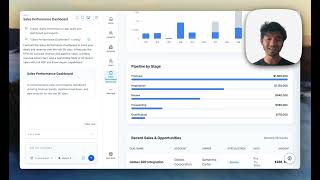
AI-Powered Dashboards, Reports, and BI with Gigacatalyst.com
Gigacatalyst

AI-Powered BI with Gigacatalyst: Natural language querying and beautiful designs
Gigacatalyst
YouTube returned 6 videos for “Gigacatalyst”, and we withheld 3: 3 could not be judged, because “Gigacatalyst” is a single word that other videos use for other things. Showing the 3 we can prove are about Gigacatalyst.
Official links
Tools that pair well with Gigacatalyst
Common stack mates teams adopt alongside Gigacatalyst, with the specific reason each pairing earns its keep.

Formula Bot
Better Analyst (formerly Formula Bot) turns plain-English questions into charts, dashboards, and automated data workflows.

Causal
Lucanet's xP&A platform for unified financial and operational planning in one live model across HRIS, ERP, and CRM data.
Domo
Domo prepares governed data for AI agents, then layers BI dashboards, workflows, and embedded analytics on top of it.
Featured Head-to-Head Comparisons
Gigacatalyst vs Locus Robotics
These aren't competitors — they don't share a buyer, a budget line, or a problem. If you run a 3PL or high-volume eCommerce warehouse with spiky volumes and you're paying pickers to walk, Locus Robotics is the shortlist candidate: AMRs plus LocusONE orchestration, deployed in your existing facility without fixed infrastructure, sold as a RaaS subscription you have to price out with sales against your labor math. If you sell B2B SaaS and your team keeps fielding per-customer dashboard and report requests that never make the roadmap, Gigacatalyst is the fit: plain-English requests become embedded, white-labeled apps running on your approved APIs and permissions. Pick by problem, not by comparison — nobody is choosing between a robot fleet and an embedded dashboard builder.
Gigacatalyst vs Presto Voice
Presto Voice is the clear choice for QSR chains wanting to automate drive-thrus and boost revenue via upselling. Gigacatalyst is ideal for B2B SaaS companies seeking to reduce feature request backlog by letting customers build custom functionality. They serve entirely different domains, so the decision depends on whether you run a restaurant chain or a SaaS platform.
Gigacatalyst vs Truleo
Truleo and Gigacatalyst serve entirely different markets—public safety vs. SaaS customization. Truleo is purpose-built for law enforcement to unify data and generate leads, while Gigacatalyst empowers SaaS teams to let customers build features without code. Choose Truleo if you're a police department drowning in siloed data; choose Gigacatalyst if you run a B2B SaaS and want to reduce feature requests and churn.
Alternatives to Gigacatalyst
View allFormula Bot
Better Analyst (formerly Formula Bot) turns plain-English questions into charts, dashboards, and automated data workflows.

Frequently Asked Questions
Best-of guides
Used Gigacatalyst? Help shape our editorial sentiment research.