Google Health AI
Google's AI ecosystem for health research, clinical tools, and consumer well-being.
Google Health AI is a compelling research and enterprise ecosystem, with standout tools like AlphaFold and promising clinical AI from Project AMIE. However, most offerings are research-stage and lack FDA clearance, so they're not ready for direct clinical deployment. Enterprises should evaluate Google Cloud's healthcare AI and radiology tools for workflow efficiency. For consumer health tracking, Fitbit or Pixel are your best bet. Consider IBM Watson Health or Microsoft Cloud for Healthcare if you need mature, FDA-cleared enterprise solutions.
Verified 5d ago · liveness 75/100 · cite: rightaichoice.com/tools/google-health-ai
- Healthcare organizations deploying AI for diagnostics and admin
- Researchers in biology and medicine needing AlphaFold
- Startups using Google's resources to scale health innovations
- Public health authorities needing data-driven insights
- Clinics needing a simple standalone health AI tool
- Privacy-sensitive buyers concerned about data policies
- Consumers seeking a direct-to-user AI health app
We scan live Reddit threads, YouTube comments, X posts, G2 reviews and other communities — and hand you an honest verdict in under a minute.
- Honest verdict, not marketing
- Real pros & cons from real users
- Attributed quotes with receipts
3 free scans · no card needed
Skip Google Health AI if you need a FDA-cleared clinical diagnostic tool or a standalone consumer health app, or if you're not ready to commit to the Google Cloud ecosystem and its data policies.
Google Cloud usage fees for healthcare API and AI services can scale with data volume and compute, with no clear cap unless you monitor usage.
Pricing for Google Health AI is contact-based and enterprise-focused. For startups, Google Cloud credits may be available, but costs grow with scale. Compared to specialized AI point solutions, Google offers a broad ecosystem but can be costlier due to cloud and data requirements. For individuals, Fitbit and Search are free or low-cost.
In short
Google Health AI — Google's AI ecosystem for health research, clinical tools, and consumer well-being. Best for Healthcare organizations deploying AI for diagnostics and admin, Researchers in biology and medicine needing AlphaFold, Startups using Google's resources to scale health innovations. Contact Sales pricing.
What people actually say about Google Health AI — is it worth it?
We ran a structured research pass across product reviews, community discussions, and post-purchase forum threads to surface the patterns vendors won't publish themselves. Below: the recurring strengths, the hidden costs people mention most, and the cohort that consistently regrets adopting this tool.
59 mentions across 4 sources (Hacker News, YouTube, Bluesky, Lemmy) · researched Jul 25, 2026.
Average across the 4 sources that answered — each source counts once, not each post.
- +AI coach shows empathy and adapts to chronic conditions without detailed explanation.
- +AlphaFold is a breakthrough in protein structure prediction for researchers.
- +Ecosystem integrates with Google Search, Pixel, Fitbit, and Cloud for broad reach.
- +Generative AI tools can reduce administrative burden for healthcare providers.
- +Open-source health tools and startup resources foster community innovation.
- −AI coach gives dangerous advice, like encouraging drinking during a relapse.
- −Response times are extremely slow—up to 90 seconds per interaction.
- −AI constantly forgets context from previous queries.
- −Imagines nonexistent features, such as migraine logging that doesn't work.
- −Data import from third-party trackers loses key metrics like calories burned.
- • Fitbit subscription required for AI coach
- • Cloud API usage fees based on volume
Viability Score
How well maintained and how widely used is Google Health AI? Built from what the vendor actually publishes (docs, changelog, tutorials, integrations, pricing), whether the site is live, and how much real users discuss it. How we calculate this
Last calculated: September 2026
How we score →Key Features
- Project AMIE conversational medical AI research
- AlphaFold protein structure prediction
- AI-powered radiology tools
- Generative AI for administrative workflows
- Open-source health data tools
- Google Search health information features
- Pixel and Fitbit health tracking
- Google Cloud healthcare API
- Health startups resource roadmap
- Women's cancer research AI tools
- Google Health Labs experimental features
- Google Maps health information
- YouTube health content
- Voice conversation support in Project AMIE
- Vision capabilities in radiology AI
About Google Health AI
Google Health AI is Google's umbrella initiative applying artificial intelligence and machine learning to health. It spans consumer products like Search and Fitbit, research tools such as AlphaFold, and clinical support research like Project AMIE. The goal is to help people live longer, healthier lives by providing accessible health information, advancing scientific discovery, and reducing administrative burden for healthcare providers. For researchers, AlphaFold accelerates biology breakthroughs; for clinicians, AI tools improve workflows and reduce paperwork; for individuals, Search offers curated health info and Fitbit tracks fitness. The ecosystem also supports developers via Google Cloud healthcare APIs and a resource roadmap. Unlike a single consumer app, Google Health AI is a collection of initiatives, most research-stage or enterprise-oriented, not yet FDA-cleared for direct patient use.
Behind the Verdict
Google Health AI is not a single product but a sprawling portfolio, which is both its strength and its weakness. On the plus side, the breadth is unmatched: AlphaFold has genuinely transformed structural biology, Project AMIE shows what conversational AI could do in clinical settings, and the consumer reach via Search and Fitbit is enormous. For researchers, AlphaFold's open database is a practical, day-one tool. For enterprises on Google Cloud, the healthcare API and gen AI admin tools can move the needle on documentation burden. For individuals, Fitbit and Search are solid, but they're not new. The weaknesses are real. Most clinical AI is research-stage — Project AMIE is still a research system, not a cleared product. There's no single 'Google Health AI' app you can buy or download. You're really buying into an ecosystem, which means you need Google Cloud expertise and a tolerance for roadmaps over finished goods. Privacy is a genuine concern for many buyers, given Google's data practices. And for clinics wanting a simple, off-the-shelf AI tool, this is not that. Where it fits: biology labs, health-tech startups building on Google Cloud, public health agencies, and individuals already in the Google ecosystem. Where it doesn't: privacy-sensitive organizations, clinics needing a turnkey clinical decision-support tool, and anyone wanting a standalone consumer health AI product.
Researching Google Health AI? Get your full AI stack in 60 seconds.
Free, no signup — tell us your goal and get tools matched to your budget & existing stack.
Real-world workflow fit
Concrete scenarios for the personas Google Health AI actually fits — and what changes day-one when you adopt it.
Wants to reduce documentation burden for clinicians
Outcome: Deploy generative AI tools integrated with Google Cloud to auto-draft clinical notes, saving hours per day per provider.
Needs to predict protein structures for a drug discovery project
Outcome: Use AlphaFold database to access predictions and integrate with Google Cloud for high-throughput analysis, accelerating research timelines.
Building a health app and needs scalable infrastructure
Outcome: Leverage Google Cloud healthcare API and startup resource roadmap to comply with regulations and scale rapidly.
Use Cases
- Patients find reliable health info via Google Search
- Researchers use AlphaFold for drug discovery
- Providers reduce documentation burden with generative AI
- Radiologists accelerate image analysis with AI
- Individuals track fitness and sleep with Fitbit
- Developers build health apps on Google Cloud
- Public health agencies disseminate info via YouTube
Models Under the Hood
as of 2026-08-30
Limitations
- Most tools are research stage and lack FDA clearance.
- Integration requires Google Cloud and technical expertise.
- No standalone consumer app.
- Search health info is not medically validated for individual diagnosis.
as of 2026-08-28
Verification history
We have re-verified Google Health AI 18 times since . Each pass re-reads the vendor's own pages and re-checks every listed field against that evidence; passes where nothing had changed are marked as such.
- — re-checked, vendor evidence unchanged
- — re-checked, vendor evidence unchanged
- — re-checked, vendor evidence unchanged
- — re-checked, vendor evidence unchanged
- — re-verified summary, description, our verdict, our analysis, pricing model, pricing tiers, features, integrations, who it suits, who should skip it
- — re-verified summary, description, our verdict, our analysis, pricing model, pricing tiers, features, integrations, who it suits, who should skip it
Showing the 6 most recent of 18 verification passes.
Free to cite with attribution — this page re-verifies continuously.
Where the pricing makes sense
The company stage and team size where Google Health AI's pricing actually pencils out — and where peers do it cheaper.
Pricing for Google Health AI is contact-based and enterprise-focused. For startups, Google Cloud credits may be available, but costs grow with scale. Compared to specialized AI point solutions, Google offers a broad ecosystem but can be costlier due to cloud and data requirements. For individuals, Fitbit and Search are free or low-cost.
Setup time & first value
How long it actually takes to get something useful out of Google Health AI — broken out by persona, not the marketing-page minute.
For researchers using AlphaFold database: instant access via web. For developers: hours to days to set up Google Cloud projects and APIs. For enterprises deploying clinical AI: months for integration, validation, and compliance.
Switching to or from Google Health AI
How to bring data in from common predecessors and how to get it back out — written for the switcher, not the buyer.
- →From legacy on-prem systems: Move to Google Cloud healthcare API, which supports interoperability standards like FHIR.
- →From in-house AI models: Adopt Google Cloud's AI tools for scalability and integration with Search, Maps, and other Google services.
- ↗To specialized AI vendors: Export data from Google Cloud to other platforms, but beware of data lock-in.
- ↗To open-source alternatives: Use open-source models (e.g., Llama) to replace Google's AI services, with effort on retraining and integration.
Integrations
Resources & Guides
Tutorials & Learning
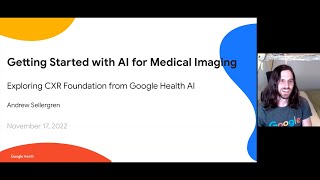
YouTube returned 6 videos for “Google Health AI”, and we withheld 5: 5 did not mention Google Health AI. Showing the 1 we can prove is about Google Health AI.
Official links
Tools that pair well with Google Health AI
Common stack mates teams adopt alongside Google Health AI, with the specific reason each pairing earns its keep.

Insilico Medicine
Generative AI drug discovery platform spanning target ID to clinical trials, with its own Phase III pipeline as proof.

Flatiron Health
Oncology real-world evidence platform that turns patient data into AI-powered cancer research insights.

Deep 6 AI
AI-driven clinical trial patient matching and recruitment from EMR data.
Alternatives to Google Health AI
View all
Insilico Medicine
Generative AI drug discovery platform spanning target ID to clinical trials, with its own Phase III pipeline as proof.

Flatiron Health
Oncology real-world evidence platform that turns patient data into AI-powered cancer research insights.

Frequently Asked Questions
Best-of guides
Used Google Health AI? Help shape our editorial sentiment research.