
Locus Robotics
Warehouse automation as a subscription: autonomous mobile robots plus the LocusONE orchestration platform.
Locus is the strongest pick when your constraint is change rather than density. Origin and Vector handle collaborative person-to-goods, Array adds robot-to-goods in the same LocusONE fleet, and 360+ sites means someone has already run your edge case. The Carhartt, MSK Pharma and S&S Activewear numbers are concrete enough to pressure-test. Recurring cost means low-volume sites struggle to make the math work.
Verified 11h ago · liveness 76/100 · cite: rightaichoice.com/tools/locus-robotics
- 3PL warehouses running spiky, multi-customer volumes across wholesale, retail and returns
- High-volume eCommerce, retail and apparel fulfillment centers scaling for peak
- Multi-level or mezzanine sites that cannot be rebuilt around fixed automation
- Healthcare, pharma, beauty and grocery operations with seasonal peaks and heavy returns
- Small warehouses with low daily pick volumes where a recurring subscription will not pay back
- Sites that need a fully lights-out, zero-human floor today — collaborative picking still staffs stations
- Dense storage operations that need grid-based goods-to-person density, where AutoStore is the direct comparison
We scan live Reddit threads, YouTube comments, X posts, G2 reviews and other communities — and hand you an honest verdict in under a minute.
- Honest verdict, not marketing
- Real pros & cons from real users
- Attributed quotes with receipts
3 free scans · no card needed
Skip Locus if your daily pick volume is low enough that a recurring RaaS subscription cannot pay back, or if you need a zero-human lights-out floor on day one — collaborative picking still staffs stations.
Scaled deployment sizes robots for your expected peak; a peak that overshoots your forecast can mean either a mid-contract fleet expansion or temporary labor alongside the fleet.
Locus prices as a custom Robots-as-a-Service subscription, scoped to fleet size and site count, which puts it in the same conversation as fixed automation CapEx projects but as an operating expense. It fits mid-size to large fulfillment operations — 3PLs, apparel, beauty, healthcare — that can keep 10+ robots busy. Below that threshold a recurring subscription rarely beats manual labor, and a standalone AMR vendor on a per-robot lease is the cheaper comparison.
In short
Locus Robotics — Warehouse automation as a subscription: autonomous mobile robots plus the LocusONE orchestration platform. Best for 3PL warehouses running spiky, multi-customer volumes across wholesale, retail and returns, High-volume eCommerce, retail and apparel fulfillment centers scaling for peak, Multi-level or mezzanine sites that cannot be rebuilt around fixed automation. Contact Sales pricing.
What people actually say about Locus Robotics — is it worth it?
We ran a structured research pass across product reviews, community discussions, and post-purchase forum threads to surface the patterns vendors won't publish themselves. Below: the recurring strengths, the hidden costs people mention most, and the cohort that consistently regrets adopting this tool.
12 mentions across 2 sources (YouTube, Lemmy) · researched Oct 22, 2026.
Weighted by the 12 posts each of 2 sources contributed.
- +Operators with live units report being genuinely positive about the robots' capabilities
- +No fixed infrastructure means it works in an existing building without grid rebuilds
- +RaaS subscription turns automation into an operating expense instead of capital spend
- +Robots absorb the walking, letting associates stay at a station and pick
- +API connects to 65+ WMS/ERP systems, so systems of record stay put
- −No clear public answer on how pick confirmation syncs back to inventory
- −Alternate bin locations reportedly unsupported, a blocker for high-SKU warehouses
- −Practically no independent reviews across Reddit, Hacker News or Stack Overflow
- −Most community discussion is dated 2020-2023 and predates Locus Array
- −Public requests for operator training courses suggest upskilling support is thin
- • Subscription is quote-only, so nothing is public until you engage sales
- • Site survey, integration work and workflow tuning may sit outside the headline subscription
- • Associate training and change management typically land on your team
- • Multi-year commitment risk: no capital asset at the end of the term
Viability Score
How well maintained and how widely used is Locus Robotics? Built from what the vendor actually publishes (docs, changelog, tutorials, integrations, pricing), whether the site is live, and how much real users discuss it. How we calculate this
Last calculated: October 2026
How we score →Key Features
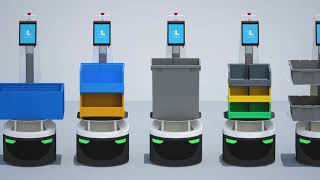
- Locus Origin collaborative robot for person-to-goods picking
- Locus Vector heavy-payload robot for oversized inventory and material transport
- Locus Array robot-to-goods: robots pick and consolidate orders directly in the aisle
- Array workflows: picking, putaway, replenishment, slotting, auto induct and drop-off, pick-and-pass
- LocusONE unified orchestration assigns tasks across robots, people and workflows in real time
- LocusIntelligence applied-AI layer behind task assignment and fleet decisions
- Collaborative workflows: picking, returns, putaway, sortation, replenishment, material transport
- Mixed fleet deployments scaling from 10 bots to 1,000+ robots at a single site
- Claimed up to 90% less unproductive walking and 2-3x productivity uplift in collaborative mode
- Claimed 99.9% pick accuracy and up to 2x storage density on Array
- API connectivity to 65+ unique WMS/ERP systems
- Robots-as-a-Service subscription bundling deployment, optimization, field services and 24/7 global support
- Quoted go-live under 90 days; 49-day deployment cited at S&S Activewear
- Real-time productivity and performance dashboards via LocusONE
- Mezzanine and multi-level picking without fixed infrastructure
About Locus Robotics
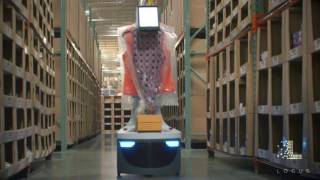
Locus Robotics sells warehouse fulfillment automation as a Robots-as-a-Service subscription rather than a capital build. The platform pairs autonomous mobile robots with LocusONE, the orchestration layer that assigns the next task across robots, people and workflows in real time, and LocusIntelligence, the applied-AI layer behind those decisions. Two flows cover the work. Collaborative fulfillment uses Locus Origin and Locus Vector — associates stay at the station while robots handle the travel, which Locus says eliminates up to 90% of unproductive walking and drives 2-3x productivity gains, with no fixed infrastructure. Key workflows span picking, returns, putaway, sortation, replenishment and material transport. Fully autonomous fulfillment runs on Locus Array, the robot-to-goods line launched as a new class of Physical AI. Robots pick and consolidate orders directly in the aisle across picking, putaway, replenishment, slotting, auto induct and drop-off, and pick-and-pass — Locus cites up to 90% lower labor costs, 99.9% pick accuracy and up to 2x storage density, pointing toward near lights-out fulfillment without the rigidity or CapEx of traditional automation. The company cites 360+ sites, 20,000+ robots across 20+ countries, 8B+ picks completed, and more than 150 customers serving 1,000+ brands, with mixed fleets scaling from 10 bots to 1,000+ at one site and go-live quoted under 90 days. Published case results include Carhartt via DHL Supply Chain (~200 UPH, 200% productivity increase, 110,000 units on one peak day), Ulta Beauty (75% less training time, 2x fleet during peak), MSK Pharma (63 robots across two sites, capacity reassigned between facilities in ~15 minutes) and S&S Activewear (49-day deployment). One API connects to 65+ unique WMS/ERP systems, so you keep your systems of record. That places Locus between manual labor and fixed grid-based goods-to-person: flexibility-first AMRs that work in your existing building, priced as an operating expense.
Behind the Verdict
Start with the constraint that actually hurts. If your problem is a building you can't rebuild, seasonal spikes you can't staff, or multi-customer volume that shifts week to week, Locus was designed for exactly that. Robots drop into existing aisles, go-live is quoted under 90 days (S&S Activewear did it in 49), and you can scale a fleet from 10 bots to 1,000+ at one site without pouring concrete. The RaaS structure is the real decision point. You're buying an operating expense with deployment, optimization, field services and 24/7 support bundled in, not a CapEx grid you'll depreciate for a decade. For a 3PL or a retailer facing peak, that converts a scary capital line into a line item you can defend to finance. What separates Locus from single-trick AMR vendors is the portfolio under one orchestration layer. Person-to-goods via Origin and Vector, robot-to-goods via Array, all managed by LocusONE — and Array, launched as Physical AI for aisle-level picking, putaway and replenishment, is the piece to interrogate in a demo if near lights-out is your ambition rather than assisted picking. Where it bites: Locus still staffs stations in collaborative mode. If you want a genuinely dark floor today, Array is the road, and you should pressure-test the 5 lb item ceiling against your SKU mix before committing. Dense storage is a different sport — if grid-based goods-to-person density is the goal, AutoStore is the direct comparison, and Locus won't match its cubic-foot efficiency. Low-volume sites are the other trap. A recurring subscription needs throughput to pay back; if you pick a few thousand units a day, the math rarely closes, and you're better served by a WMS upgrade or lighter automation. We'd also flag site survey as non-negotiable — narrow aisles and awkward
Researching Locus Robotics? Get your full AI stack in 60 seconds.
Free, no signup — tell us your goal and get tools matched to your budget & existing stack.
Real-world workflow fit
Concrete scenarios for the personas Locus Robotics actually fits — and what changes day-one when you adopt it.
A multi-customer site hits peak season with five tenants whose order profiles all spike at once and no room to add permanent headcount.
Outcome: Locus Origin and Vector robots absorb the travel while associates stay at pick stations; LocusONE rebalances tasks across the fleet as each customer's volume shifts, and the same fleet later handles putaway and returns.
Returns volume doubles after a launch and putaway backs up behind picking in the same aisles.
Outcome: LocusONE interleaves putaway, replenishment and returns tasks into the same robot fleet doing picking, so the backlog clears without pulling pickers off the line.
Two DCs serve overlapping regions and demand shifts between them by season, but headcount and robot capacity are fixed per building.
Outcome: The same Locus robots move between the two sites and are productive again in about 15 minutes, matching the pattern MSK Pharma reports with 63 robots across two facilities.
Use Cases
- Cut picker walking up to 90% while associates stay at a station, using Locus Origin or Locus Vector.
- Add robots dynamically for seasonal peaks instead of hiring and training temporary staff.
- Run putaway, returns, sortation and replenishment on the same fleet already doing picking.
- Shift robot capacity between two sites as demand moves — MSK Pharma did it in about 15 minutes.
- Deploy Locus Array for near lights-out picking and consolidation in high-throughput aisles.
- Pick from mezzanines and multi-level racking without rebuilding the building around fixed automation.
- Bring a new 3PL customer live fast: S&S Activewear deployed in 49 days.
Models Under the Hood
as of 2026-10-21
Limitations
- Locus is built for warehouse fulfillment, covering person-to-goods and robot-to-goods workflows rather than general material handling outside the four walls.
- Deployment and ongoing operation run through the Robots-as-a-Service model, with demos requested via the vendor rather than self-serve trials.
- Performance depends heavily on warehouse layout, SKU profile and operational process, and integration with existing WMS/ERP systems is stated as API connectivity rather than native connectors to every system.
- The 8B+ picks across 360+ sites and 22,000+ robots deployed are vendor-reported figures.
as of 2026-10-20
Verification history
We have re-verified Locus Robotics 111 times since . Each pass re-reads the vendor's own pages and re-checks every listed field against that evidence; passes where nothing had changed are marked as such.
- — re-checked, vendor evidence unchanged
- — re-verified summary, description, our verdict, our analysis, pricing model, pricing tiers, features, integrations, who it suits, who should skip it
- — re-checked, vendor evidence unchanged
- — re-checked, vendor evidence unchanged
- — re-checked, vendor evidence unchanged
- — re-checked, vendor evidence unchanged
Showing the 6 most recent of 111 verification passes.
Free to cite with attribution — this page re-verifies continuously.
12-month cost
Project the real annual outlay, including the implied monthly cost when only an annual tier is published.
Vendor list price only. Add-on usage, seat overages, and contract minimums are surfaced under Hidden costs & gotchas.
Where the pricing makes sense
The company stage and team size where Locus Robotics's pricing actually pencils out — and where peers do it cheaper.
Locus prices as a custom Robots-as-a-Service subscription, scoped to fleet size and site count, which puts it in the same conversation as fixed automation CapEx projects but as an operating expense. It fits mid-size to large fulfillment operations — 3PLs, apparel, beauty, healthcare — that can keep 10+ robots busy. Below that threshold a recurring subscription rarely beats manual labor, and a standalone AMR vendor on a per-robot lease is the cheaper comparison.
Setup time & first value
How long it actually takes to get something useful out of Locus Robotics — broken out by persona, not the marketing-page minute.
Origin and Vector are quoted as deploying in weeks rather than months, and Locus puts full go-live under 90 days — S&S Activewear went live in 49. A site survey and WMS API integration come first, so budget the integration work alongside the robot install. Array deploys in both greenfield and brownfield buildings.
Switching to or from Locus Robotics
How to bring data in from common predecessors and how to get it back out — written for the switcher, not the buyer.
- →From manual cart picking: keep your aisles and racking, add Origin or Vector robots and let LocusONE assign tasks to associates and robots.
- →From conveyor or fixed goods-to-person: run Locus in parallel on the workflows fixed automation does not cover well, such as returns and oversized items, before rebalancing.
- →From a different AMR vendor: LocusONE connects above your existing WMS/ERP via API, so the system of record does not change during the swap.
- ↗To grid-based goods-to-person (AutoStore): if your constraint shifts to raw storage density, the two architectures differ enough that you would be rebuilding aisle infrastructure.
- ↗To manual operation: robots can be removed from the fleet without touching fixed infrastructure, since Locus installs no conveyor or racking.
Integrations
Resources & Guides
Tutorials & Learning
Official links
Featured Head-to-Head Comparisons
Dox vs Locus Robotics
These are not competitors and no buyer should ever weigh them head-to-head. Locus Robotics sells a physical robots-as-a-service fleet for warehouse picking and putaway — you shortlist it against other AMR vendors like 6 River or Locus's goods-to-person rivals. Dox (Agent Zero) is a free, self-hosted open-source framework for running autonomous agents on your own machine — you shortlist it against other agent frameworks. If you run a fulfillment center and want to cut picker walking, call Locus. If you're a developer who wants inspectable agents with Docker sandboxing, install Agent Zero and pay nothing. There is no overlap in problem, budget, or buyer.
Lemma Platform vs Locus Robotics
These are not competitors and no buyer should be choosing between them. Lemma is free, open-source software your engineering team deploys to give one shared AI teammate a home for internal pages, tables, workflows, and approvals. Locus Robotics is a quoted hardware-and-orchestration subscription that puts autonomous mobile robots in a fulfillment center. If you arrived here comparing them, you almost certainly want one of two different conversations: an agent runtime for your team, or warehouse automation.
Clawputer vs Locus Robotics
These tools address completely different domains. Locus Robotics is a warehouse automation platform using AMRs and Physical AI to boost fulfillment productivity, ideal for high-volume 3PL and eCommerce operations. Clawputer is an AI assistant that lives in iMessage/Telegram with a persistent Linux sandbox—perfect for developers and executives wanting a proactive digital coworker. Choose based on your need: physical logistics or digital task automation.
Oh My Taiyiforge vs Locus Robotics
These are not competitors — don't run a bake-off. If you operate a fulfillment center with spiky, multi-customer volume and want automation without a CapEx build, Locus Robotics is the shortlist candidate: a RaaS AMR fleet with LocusONE orchestration, Locus Array Physical AI (Jan 2025), 65+ WMS/ERP connectors, and quoted go-live under 90 days. If you write software and want auditable AI code generation, oh-my-taiyiforge is free and takes a different decision entirely: install the plugin, get a nine-stage pipeline with TDD enforcement and human gates across four terminals. Budget dollars are the only overlap — and they belong to two different line items.
Tabbit Browser vs Locus Robotics
Locus Robotics and Tabbit Browser serve completely different domains. Go with Locus if you run a warehouse and need physical automation to boost picking productivity 2–3x via RaaS. Choose Tabbit if you're a knowledge worker wanting a free AI browser that organizes tabs, automates web tasks, and leverages Chinese LLMs. No overlap in use cases.
Arena Of Autonomous Threads vs Locus Robotics
There is no decision here. Locus Robotics is a capital-light but real operational commitment: autonomous mobile robots on your warehouse floor, orchestrated by LocusONE, sold as a subscription with field service attached. Arena-of-Autonomous-Threads is a free MIT Python sandbox you clone and run locally to watch LLM agents argue. One buyer is a fulfillment director sizing peak-season throughput; the other is a researcher logging sentiment drift. If you arrived looking for a cheaper alternative to Locus, this repo will not move a single tote.
Heoster Jarvis Ai Assistant vs Locus Robotics
These two never belong on the same shortlist, so don't force a winner. If you run a 3PL or high-volume fulfillment center losing hours to unproductive walking, Locus Robotics is the serious RaaS option — quoted pricing, WMS connectivity, and a cited 49-day deployment. If you're a developer who wants a forkable assistant with a real FAISS + Redis memory layer and multi-model routing, HarmoniCus is free to clone today — just expect to maintain it yourself with 116 stars of community behind it.
Lyto vs Locus Robotics
Locus Robotics is the clear choice for 3PL and eCommerce warehouses needing to boost fulfillment productivity 2-3x with scalable AMR fleets and advanced orchestration. Lyto is a lightweight browser tool for web automation tasks but cannot replace core warehouse operations. Your decision hinges on whether you need physical robot automation (Locus) or digital task automation (Lyto).
Omnigent vs Locus Robotics
These are not competitors and you should never be choosing between them. Locus Robotics is a capital-substitute purchase for a warehouse: AMR fleets plus LocusONE orchestration, priced as a RaaS subscription via sales, justified by 50-90% lower labor costs and 2-3x productivity claims. Omnigent is free open-source software that sits above coding agents — it enforces budgets, sandboxing and policy across Claude Code, Codex, Pi and ACP agents. A warehouse operator evaluating Locus has no reason to install a coding-agent harness, and a platform team shopping for agent governance has no reason to buy robots. The only legitimate use of this page is to confirm you are in the wrong comparison.
Local Operator vs Locus Robotics
Locus Robotics and Local Operator serve completely different automation needs: Locus automates physical warehouse picking with AMRs, ideal for high-volume 3PLs; Local Operator automates desktop software tasks via AI agents, perfect for solo devs or small teams. Choose Locus if you run a warehouse and need to scale order fulfillment; choose Local Operator if you want to offload repetitive computer work without cloud dependency.
Blurr vs Locus Robotics
Locus Robotics and Blurr serve entirely different domains: warehouse automation vs. Android device automation. If you run a 3PL or eCommerce fulfillment center needing to 2-3x productivity with flexible robots, Locus Robotics is the clear choice with its RaaS model and deep WMS integrations. If you’re a developer or QA engineer who wants to automate Android app interactions visually without APIs, Blurr’s freemium model and vision-language approach are ideal. There's no overlap, so the decision hinges on your problem space.
Tiptour Macos vs Locus Robotics
Locus Robotics is an enterprise-grade warehouse automation solution for 3PLs and eCommerce fulfillment centers seeking 2-3x productivity gains, while Tiptour Macos is an open-source voice-driven macOS automation tool for developers and power users. Choose Locus if you run a large-scale warehouse and need proven AMR technology; choose Tiptour if you want to control your Mac hands-free and integrate with AI coding agents.
Popular in Robotics & Physical AI



Frequently Asked Questions
Topics
Used Locus Robotics? Help shape our editorial sentiment research.